




Spotlights
Automotive Design Engineer, Vehicle Designer, Automotive Stylist, Automotive Concept Designer, Automotive Exterior Designer, Automotive Interior Designer, Automotive Clay Modeler, Automotive CAD Designer, Automotive Prototype Engineer, Automotive Design Consultant
Every year, ~100 million new motor vehicles are produced around the globe. Most of them are made by just 14 corporations (such as Ford, Toyota, GM, and Honda) that control the 60 top automobile brands. These companies employ the world’s greatest Automotive Designers, the visionaries behind the appearance and functional aspects of the cars, trucks, vans, and other vehicles we drive or ride in.
Automotive Designers are specialized industrial designers. They are not necessarily engineers, but they do work with engineers and require a deep understanding of materials, computer-aided design, and manufacturing processes. From initial sketches to final production, they focus on both form and function to create innovative, attractive vehicles for an already-crowded marketplace. They must also be aware of market trends to ensure the final product is something customers will want to buy!
- Creating innovative, visually appealing vehicle designs
- Contributing to the development of cutting-edge automotive technology
- Opportunities to work on a variety of vehicle types and styles
- Collaborating with multidisciplinary teams of engineers and designers
Working Schedule
Automotive Designers typically work full-time in design studios, with overtime needed on occasion. They may travel to manufacturing plants or testing facilities.
Typical Duties
- Research market trends and consumer preferences
- Brainstorm and conceptualize ideas for new vehicle designs
- Develop preliminary sketches and renderings
- Write design briefs outlining project goals, target buyers, and design requirements
- Collaborate with marketing teams to align designs with brand identity and market needs
- Work with engineering teams to assess design feasibility, costs, manufacturability, and technical constraints
- Work with UX/UI designers to integrate digital interfaces and connectivity features
- Use CAD software to develop technical drawings, blueprints, and digital 3D models
- Present concepts to stakeholders, clients, and potential customers for approval. Gather feedback to refine designs
- Conduct virtual simulations and testing to evaluate performance and aerodynamics
- Build full-scale prototypes to assess form, fit, and function
- Conduct physical testing and validation of prototypes in real-world conditions to validate design performance and safety
- Ensure compliance with safety and environmental regulations
- Review and approve final design iterations before production
- Monitor production processes to ensure designs are accurately translated into final products
Additional Responsibilities
- Participate in design competitions and exhibitions
- Collaborate with suppliers and manufacturers to select materials and components
- Engage in continuous professional development through workshops, courses, and industry events
- Contribute to strategic planning to align design goals with company objectives
- Incorporate sustainable design principles to minimize environmental impact
- Develop marketing and sales materials to support product launches
- Provide support for after-sales services such as maintenance and repair instructions
- Mentor and guide junior designers, sharing knowledge and best practices
An automobile begins as an idea long before it rolls off an assembly line. Automotive Designers imagine what future vehicles will look like, how they will feel to drive, and how they will meet the needs of different drivers. They blend creativity, engineering knowledge, technology, and an understanding of consumer preferences to design cars, trucks, SUVs, motorcycles, and other vehicles that are stylish, comfortable, functional, and safe.
A typical day might include:
- Researching automotive trends, consumer preferences, emerging technologies, and competing vehicle designs.
- Sketching new vehicle concepts, including exterior shapes, body styles, dashboards, interiors, and seating layouts.
- Creating digital vehicle models using computer-aided design (CAD) and 3D modeling software.
- Developing renderings and presentations to communicate design concepts to engineers, executives, and clients.
- Collaborating with automotive engineers, clay modelers, product planners, and manufacturing teams to ensure designs are practical.
- Building scale models or full-size clay models to evaluate vehicle proportions, shapes, and details.
- Selecting colors, materials, finishes, upholstery, trim, and other visual elements for vehicle interiors and exteriors.
- Reviewing prototypes and making adjustments based on feedback, safety requirements, aerodynamics, manufacturing limitations, and performance goals.
Soft Skills
- Attention to detail
- Communication
- Creativity
- Critical thinking
- Decision making
- Patience
- Persuasion
- Problem-solving
- Teamwork
- Time management
Technical Skills
- 2D graphic design tools like Adobe Illustrator, Photoshop, and InDesign
- Project management software like Microsoft Project, Trello, or Asana
- Collaboration tools such as Slack or Microsoft Teams
- Design plans and 3D models with AutoCAD, CATIA, SolidWorks, and Rhino
- Electrical systems, battery management, wiring, and integration of electronic components (using software like Altium Designer or EAGLE)
- Ergonomics and human factors engineering
- Human-machine interface design (Sketch, Adobe XD, or Axure RP)
- Knowledge of materials (e.g., metals, composites, plastics) and how they are used in vehicle manufacturing for casting, molding, and assembly
- Manufacturing constraints and lean manufacturing principles
- Photorealistic rendering and animations (KeyShot, V-Ray, or Lumion)
- Product lifecycle management software like Siemens Teamcenter or PTC Windchill
- Regulatory standards and compliance, including safety standards and environmental regulations
- Simulation software (ANSYS, Simulink) to test structural integrity, aerodynamics, and crashworthiness
- Sound design and acoustics tools such as EASE or SoundPLAN
- Surface modeling techniques (ICEM Surf or Alias Surface)
- Sustainability and eco-design
- Technical drawing and modeling skills (Alias and Blender)
- Vehicle dynamics and engineering principles (suspension systems, aerodynamics, powertrain components, etc.)
- Virtual reality and augmented reality tools for immersive design reviews (Unity, Unreal Engine, or Autodesk VRED)
- Automotive Exterior Designer
- Automotive Interior Designer
- Automotive Color and Materials Designer
- Automotive Concept Designer
- Automotive Digital Modeler
- Automotive Clay Modeler
- Automotive Transportation Designer
- Automotive Accessories Designer
- Electric Vehicle Designer
- Commercial Vehicle Designer
- Automotive manufacturers
- Design consultancies
- Engineering firms
- Independent design studios
The role of an Automotive Designer demands a unique blend of artistic vision and engineering knowledge. They must balance creativity with practicality, ensuring their designs are innovative and manufacturable. This requires collaboration with engineers to meet technical limitations and cost constraints.
The job is demanding, especially when there are tight deadlines or multiple projects being worked on. Designers have to stay flexible and able to shift focus between projects, as needed. But there’s nothing like seeing the results of their hard work when their designs are brought to life and are out there being driven on roads around the world. That tangible outcome provides a profound sense of accomplishment and pride! In addition, for those who reach star status within the community, their reputations can land them a measure of celebrity recognition and, of course, much higher pay.
The automotive design industry is changing faster than ever, with manufacturers around the world striving to outdo each other’s designs, technology, and performance. This competition accelerates the pace of change as companies push the boundaries to gain an edge. There’s an emphasis on sustainable and electric vehicle design, with automakers seeking to market eco-friendly vehicles made with sustainable materials and energy-efficient technologies.
Autonomous driving is also revolutionizing vehicle design, as designers must incorporate sensors and cameras while reimagining interiors for self-driving cars. Another trend is the focus on consumer user experience, which ties into factors such as digital connectivity, intuitive interfaces, and advanced infotainment systems.
When they were younger, Automotive Designers often enjoyed drawing and sketching, building models, and working on car restoration projects. They likely had a strong interest in art, design, and engineering.
Automotive Designers typically pursue a bachelor's degree in Industrial Design, Transportation Design, Automotive Design, or a related field. These programs develop the artistic, technical, and problem-solving skills needed to design vehicles that are visually appealing, comfortable, functional, and manufacturable.
- Transportation Design: Focuses specifically on designing cars, motorcycles, trucks, and other vehicles, including their exterior forms, interiors, proportions, and styling.
- Industrial Design: Provides a broader foundation in product design, sketching, ergonomics, 3D modeling, materials, prototyping, and manufacturing.
- Automotive Engineering: Provides technical knowledge of vehicle systems, mechanical components, performance, and engineering principles that can support automotive design work.
- Digital Modeling and CAD Training: Develops skills in software such as Alias, Blender, Rhino, Autodesk 3ds Max, and other tools used for vehicle modeling, visualization, and rendering.
- Drawing and Visualization: Builds the ability to sketch vehicle concepts, communicate proportions, perspective, surface details, and design ideas through traditional and digital techniques.
Students should also develop a strong portfolio featuring vehicle sketches, digital renderings, 3D models, design concepts, and completed projects. Internships with automotive manufacturers, transportation design studios, or vehicle development companies can help students gain industry experience and build professional connections.
- Take classes in art, drawing, geometry, physics, mathematics, computer graphics, and technology.
- Practice sketching cars, motorcycles, trucks, and other vehicles from different angles and perspectives.
- Learn the fundamentals of perspective drawing, proportions, shading, surface design, and color theory.
- Experiment with digital drawing, 3D modeling, and rendering software used for automotive design.
- Participate in art clubs, robotics clubs, engineering activities, design competitions, or automotive-related organizations.
- Study different vehicle brands, models, design languages, body styles, and automotive trends.
- Visit auto shows, car museums, automotive exhibitions, and vehicle design events to study real vehicles up close.
Create original vehicle concepts, including exterior designs, interior layouts, dashboards, and future mobility ideas.- Build physical models using clay, foam, cardboard, or other materials to practice shaping and developing vehicle forms.
- Pursue college projects involving transportation design, vehicle ergonomics, digital modeling, automotive interiors, or sustainable mobility.
- Look for internships or opportunities to work with automotive manufacturers, transportation design studios, automotive suppliers, or vehicle customization companies.
- Build a professional portfolio that showcases your sketches, design process, digital models, renderings, and finished vehicle concepts.
- Hands-on learning and internships with automotive manufacturers, transportation design studios, automotive suppliers, or vehicle development companies.
- Courses in transportation design, industrial design, automotive styling, sketching, perspective drawing, ergonomics, and product development.
- Opportunities to design cars, motorcycles, trucks, electric vehicles, and other forms of transportation through individual and team projects.
- Access to design studios, clay modeling workshops, fabrication facilities, digital modeling software, rendering tools, and 3D printing equipment.
- Strong connections to automotive manufacturers, vehicle design studios, mobility companies, and transportation industry professionals.
- Opportunities to participate in automotive design competitions, concept vehicle projects, exhibitions, and industry-sponsored design challenges.
- Exposure to modern automotive design technologies, including CAD software, 3D visualization, digital sculpting, virtual reality, and advanced rendering tools.
- Training in vehicle proportions, aerodynamics, materials, color and trim, interior design, manufacturing processes, and automotive safety considerations.
- Access to instructors with professional experience in transportation design, automotive styling, industrial design, or vehicle development.
- Opportunities to develop a professional portfolio showcasing vehicle sketches, exterior and interior concepts, digital models, renderings, clay models, and completed design projects.
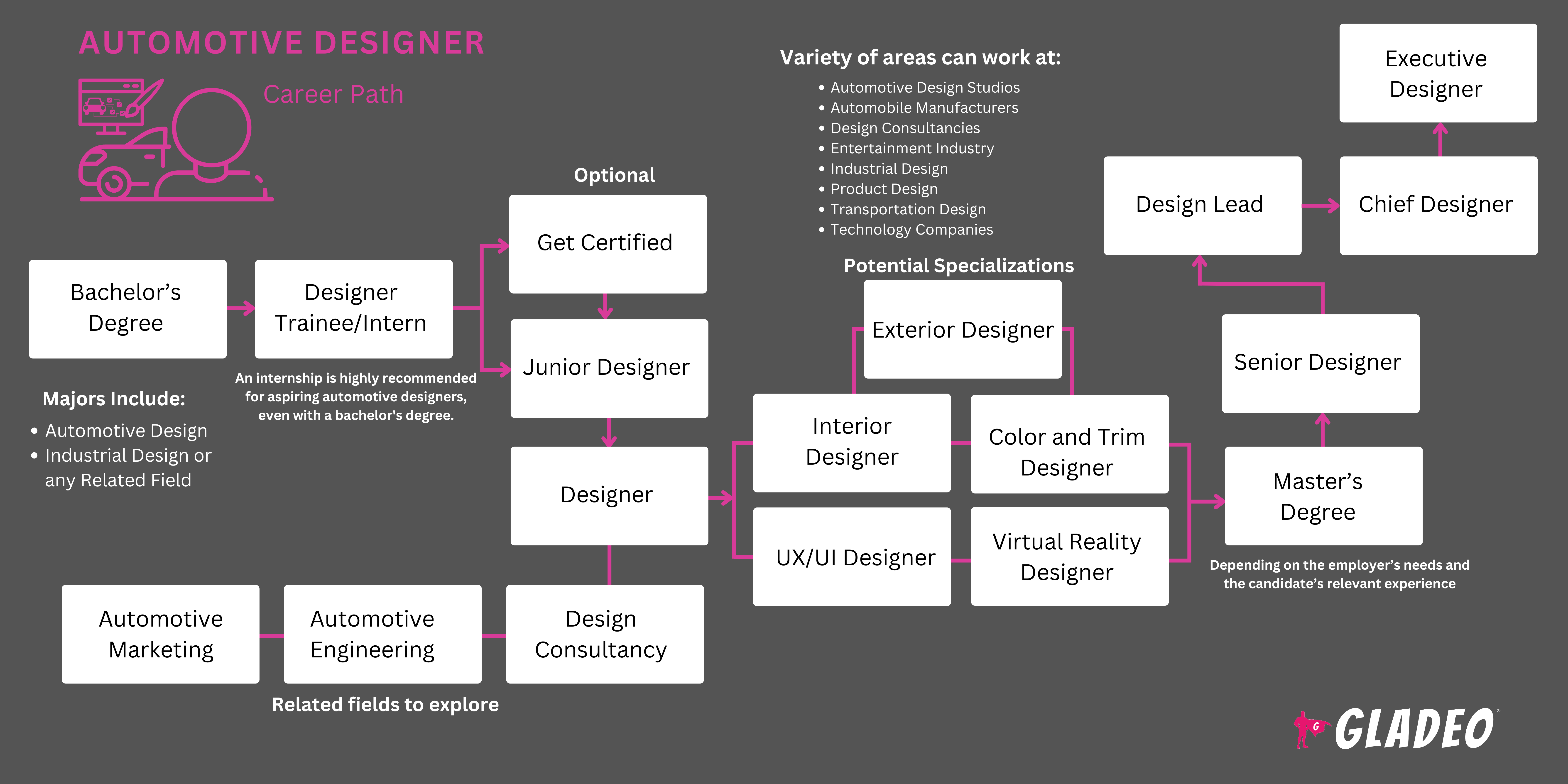
- Jobs like these are often found through networking, so make connections by going to professional association events. Let your network know you’re looking for work!
- Research potential employers and visit their career pages for job openings
- Apply for internships, apprenticeships, co-op programs, and entry-level positions
- Ask your academic program manager if they have ties with local employers or recruiters
- Explore job listings on portals such as Indeed, LinkedIn, and Glassdoor
- Use an Automotive Designer resume template to get ideas for formatting and phrasing
- Include relevant resume keywords such as:
- Automotive Design
- CAD Software (CATIA, AutoCAD, SolidWorks)
- 3D Modeling and Rendering
- Concept Development
- Design Prototyping
- Materials and Manufacturing Processes
- Ergonomics and Human Factors
- Project Management
- Team Collaboration
- Market Trend Analysis
- Create a digital portfolio showcasing your projects and contributions. Detail your roles, skills used, and the impact of your work
- Prepare for interviews by brushing up on relevant terminology and trends
- Ask former supervisors and college professors for references or recommendation letters
- Utilize your university’s career center for resume help, mock interviews, and job fairs
- Review potential job interview questions, such as “What techniques do you use to ensure your designs are both aesthetically pleasing and functional?” or “How do you incorporate feedback from stakeholders into your design process?”
- Stay informed about the industry. Be ready to discuss trends and technologies during interviews
- Dress professionally for job interviews
- Discuss advancement opportunities with your supervisor
- Volunteer for challenging projects to demonstrate your skill and adaptability
- Proactively seek additional education and training to benefit your career and employer
- Stay current with the latest software, tools, and methodologies
- Consider specialized certifications such as the Certified
Automotive Designer certificate or a graduate degree to deepen your expertise - Explore different areas within Automotive Design to broaden your expertise. For example, if you usually only work on cars, try designing trucks, vans, or buses
- Travel to other countries to learn about their design programs and styles. Study the work of the industry’s top designers
- Build strong relationships with colleagues, managers, and stakeholders
- Mentor junior colleagues or interns to develop leadership skills
- Consider switching employers to advance your career. Move to cities known for automobile manufacturing jobs such as Detroit, Michigan; Toledo, Ohio; Arlington, Texas; Louisville, Kentucky; and Chattanooga, Tennessee.
- Keep active in professional associations to grow your network and reputation. Go to conferences, volunteer to serve on committees, and contribute scholarly articles to industry journals or publications
Websites
- Auto & Design
- Automotive Design & Production
- Automotive Design Organization
- Automotive Engineering Magazine (SAE International)
- Automotive Testing Technology International
- Automotive World Magazine
- Car Design News
- IEEE Xplore
- Industrial Designers Society of America
- International Journal of Design
- International Journal of Vehicle Design
- Journal of Intelligent and Connected Vehicles
- Journal of Mechanical Design
- ScienceDirect
- Society of Automotive Engineers
- SpringerLink
Books
- 100 Cars That Changed the World: The Designs, Engines, and Technologies That Drive Our Imaginations, by Auto Editors of Consumer Guide
- Car Design Yearbook, by Stephen Newbury
- Concept Cars: Designing the Future, by Publications International Ltd.
- Dream Cars: Chronicle of Design and Performance, by Publications International Ltd.
- How to Design Cars Like a Pro by Tony Lewin
- Introduction to Modern Vehicle Design, by Julian Happian-Smith
Automotive design is a highly sought-after career option, and students must be competitive and knowledgeable about future trends such as electric and autonomous vehicles, eco-friendly designs, and ever-changing consumer preferences. If you’re curious about a few alternative careers to explore, check out our list below!
- Advanced Driver-Assistance Systems Engineer
- Automotive Aerodynamics Engineer
- Automotive Ergonomics Specialist
- Automotive Powertrain Engineer
- Automotive Safety Systems Designer
- Automotive Software Engineer
- Battery Systems Engineer
- CAD Technician
- Chassis Engineer
- Concept Artist
- Connected Vehicle Engineer
- Digital Modeler
- Electrical Engineer
- Electric Vehicle (EV) Engineer
- Environmental Engineer
- Fuel Cell Engineer
- Graphic Designer
- Human Factors Engineer
- Industrial Designer
- Infotainment Systems Engineer
- Manufacturing Engineer
- Materials Scientist
- Mechanical Engineer
- Mechatronics Engineer
- Process Engineer
- Product Designer
- Research Scientist
- Robotics Engineer
- Safety Engineer
- Thermal Systems Engineer
- Transmission Engineer
- User Experience (UX) Designer
- Vehicle Dynamics Engineer
- Virtual Reality (VR) Specialist
Newsfeed

Featured Jobs
Online Courses and Tools
Annual Salary Expectations
New workers start around $46K. Median pay is $67K per year. Highly experienced workers can earn around $91K.