





Spotlights
Building Custodian, Building Service Worker, Building Services Technician, Cleaner, Custodian, Floor Technician, Heavy Duty Custodian, Institutional Custodian, Janitor, Maintenance Technician, Facility Attendant
Every day, custodial workers create safe, welcoming, and spotless environments where people learn, work, and gather. From schools to office buildings, hospitals to theaters, their work is the unseen foundation that keeps public spaces healthy and inviting for everyone.
Custodial workers clean and maintain buildings by sweeping, mopping, scrubbing floors, washing walls and windows, and emptying trash. They often handle routine maintenance tasks, restock supplies in restrooms, and ensure that heating or cooling equipment runs smoothly. They coordinate with building managers, maintenance staff, and sometimes safety personnel to keep the facility in top condition.
Using cleaning chemicals, power equipment, and various tools, custodial workers follow strict safety procedures and cleaning standards. Their role is essential because a clean environment helps prevent illness, protects building materials, and supports productivity and comfort for all occupants.
- Knowing you make public spaces safe and pleasant for thousands of people.
- Seeing immediate results from your work—clean floors, shining windows, and fresh spaces.
- Being a critical part of a team that keeps schools, hospitals, and offices running smoothly.
- Developing skills in maintenance, safety, and equipment operation that open doors to other careers.
Working Schedule
Custodial workers often work full-time hours, which may include early mornings, evenings, nights, weekends, or holidays to clean buildings when they are unoccupied. Some custodians have regular daytime shifts, especially in schools or hospitals. The work environment varies from offices to industrial settings, often requiring standing, bending, and physical activity. Many custodial workers are employed by schools, hospitals, or cleaning companies, and some work as freelancers or contract workers. Deadlines and schedules can be strict to ensure buildings are ready for use on time.
Typical Duties
- Sweep, mop, scrub, or vacuum floors to keep them clean and safe.
- Clean and disinfect restrooms, replenishing supplies like soap and paper towels.
- Empty trash bins and dispose of waste properly.
- Wash windows, walls, and glass surfaces to remove dirt and smudges.
- Operate floor cleaning machines, buffers, or carpet shampooers safely and effectively.
- Mix cleaning chemicals according to instructions to prepare solutions.
- Report any maintenance or repair needs to supervisors.
- Remove snow, leaves, or debris from sidewalks and entrances during winter or bad weather.
- Clean and maintain heating, ventilation, and air conditioning (HVAC) equipment like furnaces and boilers when required.
- Follow health and safety protocols to handle chemicals and equipment properly.
- Set up and break down furniture or equipment for events or cleaning access.
- Maintain cleaning carts and inventory of supplies.
Additional Responsibilities
- Perform routine maintenance tasks, like replacing light bulbs or fixing minor leaks.
- Assist with pest control efforts by cleaning and maintaining sanitary conditions.
- Follow security procedures while working in buildings, including locking doors and activating alarms.
- Help with moving furniture or equipment within the facility when needed.
- Communicate any safety hazards or incidents to management promptly.
- Participate in training sessions on new cleaning methods or safety regulations.
- Support other team members during busy periods or special projects.
- Keep records of cleaning schedules and maintenance activities.
A custodial worker’s day often starts by reviewing assigned cleaning areas and gathering necessary supplies. They may inspect the building for any immediate issues like spills or trash overflow that need urgent attention.
Midday usually involves deep cleaning tasks such as scrubbing floors, washing windows, and restocking restrooms. They might use floor buffers or carpet cleaners, working methodically to ensure all areas meet cleanliness standards. Communication with building supervisors or maintenance staff helps coordinate repairs or special requests.
In the afternoon or evening, custodial workers often focus on finishing tasks, emptying trash, and preparing the building for the next day. They may assist with event setups or manage snow removal. Before leaving, they ensure equipment and supplies are secured and report any concerns to their managers.
Soft Skills
- Attention to detail
- Reliability and punctuality
- Good communication
- Ability to follow instructions
- Problem-solving
- Physical stamina
- Time management
- Teamwork
- Adaptability
- Safety awareness
- Customer service orientation
- Self-motivation
Technical Skills
- Knowledge of cleaning chemicals and their safe use
- Operation of floor cleaning machines and buffers
- Basic maintenance skills for minor repairs
- Proper waste disposal techniques
- Use of personal protective equipment (PPE)
- Familiarity with safety regulations
- Mixing cleaning solutions accurately
- Record-keeping for cleaning schedules
- Use of communication tools like radios or software
- Handling heating and cooling equipment
- Institutional Custodian: Works in schools, hospitals, or government buildings focusing on public health and safety.
- Heavy Duty Custodian: Handles large-scale cleaning projects and maintenance in industrial or commercial buildings.
- Floor Technician: Specializes in floor care including waxing, buffing, and carpet cleaning.
- Building Service Worker: Provides general cleaning and maintenance in office or retail spaces.
- Maintenance Custodian: Combines cleaning duties with more technical repair and upkeep tasks.
- Janitor: Performs routine cleaning and minor repairs in residential or business facilities.
- Specialty Cleaner: Focuses on specific cleaning needs like hazardous waste, crime scenes, or biohazards.
- Event Custodian: Cleans and prepares venues before, during, and after events.
- Public schools
- Hospitals and healthcare facilities
- Office buildings and corporate campuses
- Hotels and hospitality venues
- Industrial plants and warehouses
- Government buildings and agencies
- Cleaning services companies
- Shopping malls and retail stores
- Transportation hubs like airports and train stations
- Residential apartment complexes
- Sports arenas and stadiums
- Museums and libraries
Custodial work can involve physically demanding tasks such as lifting, bending, and standing for long periods. Workers often face exposure to cleaning chemicals and may need to wear protective gear to ensure safety.
The hours can be unconventional; many custodians work early mornings, late nights, or weekends to avoid disrupting building occupants. Meeting tight cleaning deadlines is common, especially in high-traffic or critical environments like hospitals.
Custodial workers must be prepared for repetitive tasks and sometimes uncomfortable conditions, such as handling waste or working outdoors in bad weather. However, their work directly contributes to health, safety, and comfort for countless people every day.
- Increased use of eco-friendly and green cleaning products to reduce environmental impact.
- Adoption of advanced cleaning technologies such as automated floor scrubbers and robotic cleaners.
- Growing emphasis on sanitation due to public health concerns, especially after the COVID-19 pandemic.
- Use of digital tools and software to schedule tasks and track maintenance.
- More specialized training in handling hazardous materials and biohazards.
- Integration of custodial work with facility management systems for better efficiency.
- Rising demand for custodial workers in healthcare and education sectors.
- Focus on sustainability, including waste reduction and recycling initiatives.
- Greater recognition of custodial workers’ role in workplace safety and wellness.
- Expansion of contract cleaning services for large facilities.
Many custodial workers enjoyed hands-on activities as kids, like organizing their rooms, helping with chores, or fixing things around the house. They often showed an early interest in keeping spaces neat and orderly.
They might have liked working with tools, solving small problems, or helping others by cleaning or maintaining shared spaces at school or community centers. These early habits build the foundation for a career focused on service and upkeep.
Most custodial worker positions require a high school diploma or equivalent, along with on-the-job training. Some roles may need additional certifications or specialized training depending on the facility's requirements.
Students can take courses in relevant subjects such as:
- Basic biology or health science
- Chemistry (for understanding cleaning agents)
- Safety education and first aid
- Industrial technology or maintenance
- Environmental science
- Communication skills
- Physical education to build stamina
- Workplace ethics and responsibility
- Computer basics for digital scheduling
- Customer service
Hands-on experience is crucial for custodial workers, often gained through internships, part-time jobs, or volunteer work. Building a strong portfolio of reliability, safety awareness, and attention to detail helps open doors to better positions. Many custodial workers advance by taking specialized training or certifications.
- Join school clubs or volunteer groups focused on community service or facility maintenance.
- Take courses in health, safety, and basic chemistry to understand cleaning products.
- Practice responsibility by managing chores or helping maintain school facilities.
- Develop physical fitness to handle the demands of the job.
- Learn basic computer skills for scheduling and communication.
- Seek part-time jobs or internships in cleaning or maintenance roles.
- Attend workshops on workplace safety and first aid.
- Build good habits with punctuality and teamwork.
- Research local certifications that may improve job prospects.
- Network with custodial staff or facility managers to learn about the career.
- Look for programs offering hands-on training in cleaning and maintenance.
- Choose schools that provide health and safety education relevant to custodial work.
- Verify that programs include instruction on chemical handling and equipment use.
- Seek programs connected to local employers or apprenticeship opportunities.
- Consider certifications in OSHA safety standards or green cleaning methods.
- Ensure the program teaches communication and teamwork skills.
- Check for courses on basic building maintenance.
- Prioritize programs with good student support and career counseling.
- Find training that covers digital tools for task management.
- Look for programs emphasizing physical fitness and ergonomics.
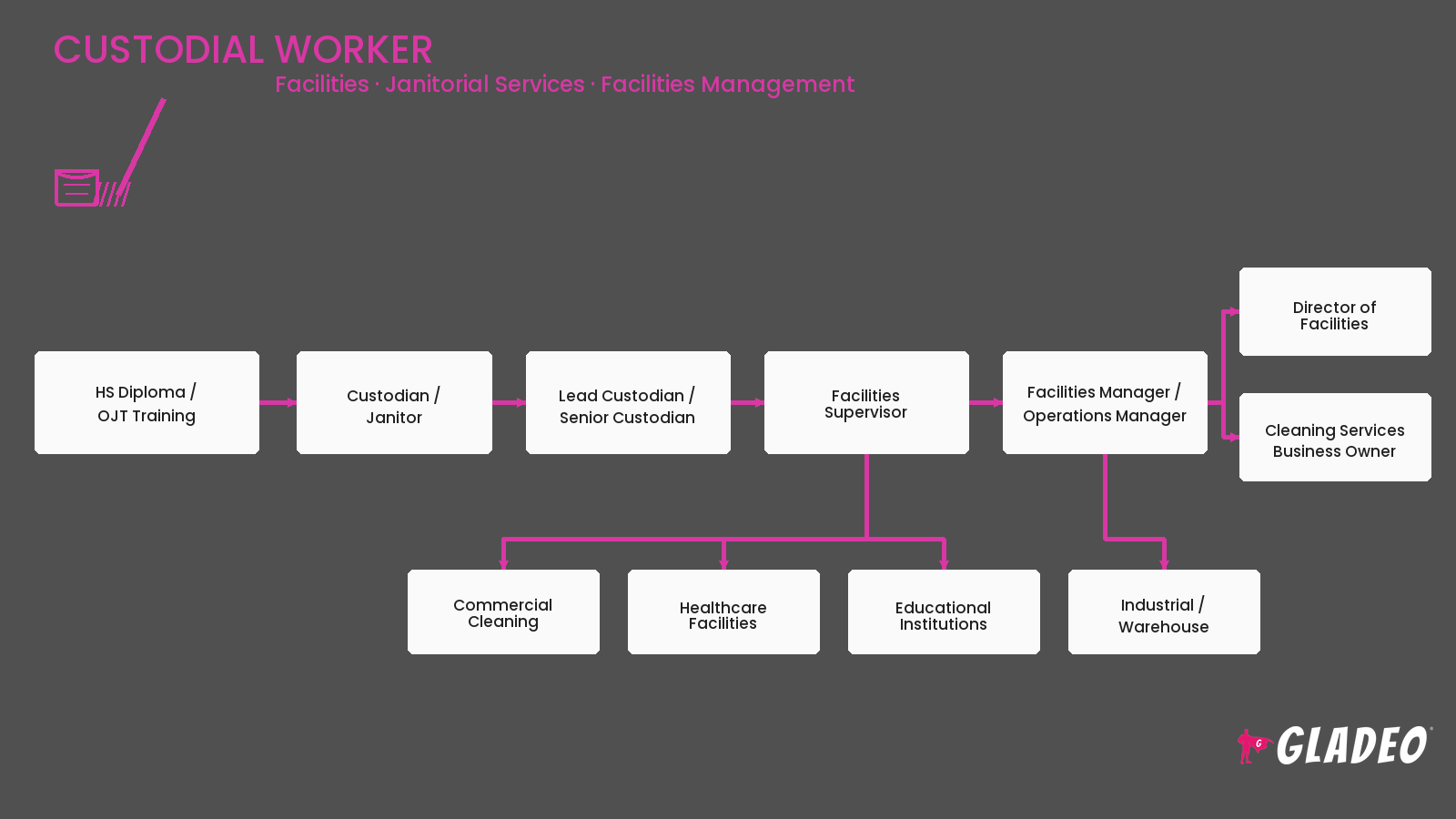
- Apply to entry-level custodial or janitorial positions at schools, hospitals, or office buildings.
- Volunteer to help maintain community centers or local facilities.
- Create a simple resume highlighting reliability, work ethic, and any prior experience.
- Ask for references from teachers, coaches, or previous employers.
- Prepare for interviews by practicing answers about safety and teamwork.
- Learn how to use basic cleaning tools and supplies before starting.
- Show willingness to work flexible hours, including nights or weekends.
- Demonstrate attention to detail during job trials or interviews.
- Keep a positive attitude and be open to learning on the job.
- Seek feedback regularly to improve skills and performance.
- Maintain a clean and organized work area to impress supervisors.
- Express interest in learning maintenance or technical skills to advance.
- Master all cleaning techniques and safety protocols.
- Build positive relationships with supervisors and team members.
- Seek additional training or certifications in facility maintenance or safety.
- Volunteer for extra duties or special projects to gain experience.
- Develop skills in equipment operation and minor repairs.
- Stay updated on new cleaning technologies and methods.
- Consider leadership roles like lead custodian or shift supervisor.
- Network with facility management professionals for advancement opportunities.
Websites:
- International Sanitary Supply Association (ISSA) - issa.com
- Building Service Contractors Association International (BSCAI) - bscai.org
- Occupational Safety and Health Administration (OSHA) - osha.gov
- Cleaning Management Institute - cleaninginstitute.org
- National Institute for Occupational Safety and Health (NIOSH) - cdc.gov/niosh
- Green Cleaning Network - greencleaningnetwork.org
- Janitorial Store - janitorialstore.com
- Facility Cleaning Decisions - facilitycleaningdecisions.com
- International Facility Management Association (IFMA) - ifma.org
- Environmental Protection Agency (EPA) - epa.gov
- American Cleaning Institute - cleaninginstitute.org
- LinkedIn Custodial Groups and Forums
- YouTube channels on cleaning and maintenance techniques
- Local community college or vocational school websites
Books:
- Cleaning and Care of Facilities by William A. Scott
- The Complete Guide to Cleaning & Maintenance by Michael J. O’Neill
- Green Cleaning: Natural Recipes for a Healthy Home by Karyn Siegel-Maier
- Janitorial Management: A Practical Guide by Steve Sipes
- The Facility Manager’s Guide to Safety and Security by John W. Henderson
If a custodial career isn’t the perfect fit, your skills in maintenance, organization, and safety open doors to many related jobs that still make a difference in keeping spaces functional and comfortable.
- Facility Maintenance Technician
- Groundskeeper or Landscaper
- Housekeeping Supervisor
- Building Inspector
- Waste Management Worker
- Security Officer
- Pest Control Technician
- Environmental Services Worker
- HVAC Technician
- Event Setup Crew Member
Newsfeed

Featured Jobs
Online Courses and Tools
Annual Salary Expectations
New workers start around $29K. Median pay is $35K per year. Highly experienced workers can earn around $39K.