






Spotlights
Business Intelligence Analyst, Reporting Analyst, Data Insights Analyst, Quantitative Analyst, Data Reporting Specialist, Analytics Associate
Every day, businesses, governments, hospitals, schools, and organizations generate enormous amounts of data. From online purchases and social media activity to customer feedback and sales reports, information is constantly being collected. But raw data alone doesn’t tell a story—that’s where a Data Analyst comes in.
Data Analysts transform large sets of numbers and information into meaningful insights that help organizations make smarter decisions. They collect, organize, clean, and analyze data to identify trends, patterns, and opportunities that might otherwise go unnoticed.
A major part of the job involves turning complex information into reports, dashboards, charts, and presentations that managers and executives can use to guide strategy and planning. They work closely with business leaders, technology teams, researchers, and other professionals to solve problems and improve performance!
- Solving real-world problems using data and analytical thinking.
- Helping organizations make smarter and more effective decisions.
- Discovering trends and insights that can improve products, services, and operations.
- Working in a fast-growing field with opportunities across nearly every industry.
- Combining technology, mathematics, and business knowledge in meaningful ways.
- Creating visual reports and dashboards that make complex information easy to understand.
- Having strong career growth opportunities in analytics, business intelligence, and data science.
- Contributing to innovations that improve efficiency, customer satisfaction, and organizational success.
Working Schedule
Most Data Analysts work standard office hours in corporate offices, government agencies, healthcare organizations, educational institutions, or technology companies. However, project deadlines, reporting cycles, or major business initiatives may occasionally require overtime. Much of the job is computer-based and involves analyzing datasets, creating reports, and presenting findings to stakeholders.
Typical Duties
- Collect, organize, and clean data from multiple sources to ensure accuracy and reliability.
- Analyze datasets to identify trends, patterns, and business opportunities.
- Create reports, dashboards, and data visualizations for decision-makers.
- Interpret analytical results and communicate findings to non-technical audiences.
- Monitor key performance indicators (KPIs) and track organizational performance.
- Use statistical tools, databases, and spreadsheet software to support analysis.
Additional Responsibilities
- Collaborate with managers, researchers, and business teams to solve operational challenges.
- Develop and improve data collection methods and reporting processes.
- Ensure data quality, security, and compliance with organizational policies.
- Assist in forecasting, budgeting, and strategic planning initiatives.
- Stay current on analytics tools, data visualization techniques, and industry trends.
- Support advanced analytics, business intelligence, or data science projects when needed.
A day in the life of a Data Analyst is like being a detective for numbers. Every morning, they dive into data collected from sources such as sales reports, customer surveys, website activity, healthcare records, or business operations. Their job is to organize the information, look for patterns, and uncover insights that can help answer important questions. Why are customers buying certain products? What trends are emerging? How can an organization improve its performance? Each dataset holds clues waiting to be discovered.
Once the analysis is complete, Data Analysts transform their findings into charts, dashboards, and reports that tell a clear story. They meet with managers, business leaders, and other teams to explain what the data means and recommend actions based on the results. Whether helping a company increase sales, improving services at a hospital, or supporting a school's decision-making process, Data Analysts use information to solve problems and help organizations make smarter choices for the future.
Soft Skills:
- Attention to detail
- Confidentiality and ethics
- Communication (explaining reports to non-experts)
- Problem-solving
- Organization
- Time management
- Critical thinking
- Customer service skills
Technical Skills:
- Knowledge of data entry and database management
- Reporting software and data visualization tools
- Financial analysis basics
- Risk assessment methods
- Understanding of data privacy laws and regulations
- Cybersecurity awareness
- Record-keeping
- Compliance documentation
- Business Data Analyst – Focuses on helping companies make better decisions by analyzing sales, operations, and customer data.
- Financial Data Analyst – Works with banking, investment, and company financial data to study performance, risks, and profitability.
- Healthcare Data Analyst – Analyzes patient records, treatment outcomes, and hospital operations to improve healthcare services.
- Marketing Data Analyst – Studies customer behavior, advertising results, and campaign performance to help businesses improve marketing strategies.
- Operations Data Analyst – Looks at internal processes like supply chains, logistics, and production to improve efficiency and reduce costs.
- HR (Human Resources) Data Analyst – Analyzes employee data such as hiring trends, performance, and retention to support workforce planning.
- Sports Data Analyst – Evaluates player statistics, team performance, and game strategies to support coaches and sports organizations.
- Business and corporate companies
- Banks and financial institutions
- Healthcare organizations and hospitals
- Government agencies and public sector offices
- Tech companies and software startups
- E-commerce and retail businesses
- Marketing and advertising agencies
- Insurance companies
- Educational institutions and research organizations
- Consulting and business intelligence firms
Digital transformation is reshaping the role of Data Analysts as organizations increasingly rely on real-time data and automated analytics tools. Cloud-based platforms now allow analysts to access and process large datasets faster than ever, while artificial intelligence and machine learning tools help identify patterns, predict trends, and reduce manual work in data cleaning and reporting.
Another major trend is the growing importance of data privacy, ethics, and responsible data use. With stricter regulations and increasing awareness of digital privacy, Data Analysts must ensure that information is handled securely and transparently. At the same time, there is a rising demand for data-driven decision-making across all industries—from business and healthcare to education and technology—making the role of Data Analysts more essential than ever in helping organizations stay competitive and informed.
Working as a Data Analyst comes with the expectation of accuracy, consistency, and strong attention to detail. Companies rely on analysts to turn large and sometimes messy datasets into clear, reliable insights that support important decisions. This means you are expected to meet deadlines, handle pressure during reporting periods, and communicate findings in a way that both technical and non-technical teams can understand. Continuous learning is also expected, since tools, software, and data systems are always evolving.
In terms of sacrifices, the job can involve long hours in front of a computer, especially when cleaning data, fixing errors, or preparing urgent reports. It also requires patience, because data is not always complete or straightforward, and results often need multiple checks before they are finalized. At times, you may need to set aside your own ideas and focus instead on what the data shows, even if it is not the outcome you expected. In return, you gain the satisfaction of knowing your work directly influences decisions that shape businesses, services, and real-world outcomes.
Data Analysts often had a natural curiosity for patterns, numbers, and problem-solving when they were younger. They may have enjoyed activities like solving puzzles, playing strategy games, or working on math problems that required logical thinking. Many liked organizing things such as tracking scores, keeping lists, or creating charts and graphs just for fun. They often enjoyed subjects like math, computer studies, or science where answers could be discovered through careful analysis.
They were also the type of students who liked asking “why” and “how” questions, especially when looking at trends or information. Some may have enjoyed using computers, exploring spreadsheets, or analyzing game statistics, sports results, or data from everyday life. At their core, they were curious learners who enjoyed finding patterns and making sense of information others might overlook.
The educational path to becoming a Data Analyst typically includes a bachelor’s degree, although some enter the field through certifications, bootcamps, or related work experience. Common degree programs include data science, statistics, computer science, information technology, business analytics, economics, or mathematics. Strong analytical thinking, problem-solving ability, and computer skills are just as important as formal education.
Common course subjects include:
- Statistics and probability
- Data analysis and data mining
- Computer programming (Python, R, or SQL)
- Database management systems
- Mathematics (algebra, calculus, and quantitative reasoning)
- Business intelligence and analytics
- Data visualization tools (Excel, Tableau, Power BI)
- Economics and business fundamentals
- Machine learning basics
- Communication and technical writing
- Information systems and data management
- Ethics and data privacy
Many aspiring Data Analysts gain practical experience through internships, capstone projects, or entry-level roles such as data assistant or reporting specialist. Hands-on experience with real datasets is highly valued, especially in building dashboards, cleaning data, and creating reports for decision-making.
Students can also strengthen their skills through online learning platforms such as Coursera, edX, and LinkedIn Learning. Popular certifications include Google Data Analytics Professional Certificate, Microsoft Data Analyst Associate, and other short courses in SQL, Python, and data visualization tools, which help improve job readiness and career opportunities.
- Take strong math courses such as algebra, geometry, statistics, and calculus
- Enroll in computer science, business, and economics classes to build technical and business knowledge
- Strengthen communication skills through English, writing, and speech or debate classes
- Take electives in data science, information technology, or statistics if available
- Learn programming basics such as Python, SQL, or Excel for data handling and analysis
- Practice using data visualization tools like spreadsheets and dashboards
- Consider pursuing a college degree in data science, statistics, computer science, business analytics, or economics
- Gain real-world experience through internships, part-time jobs, or school projects involving data or research
- Explore online courses from platforms like Coursera, edX, Udemy, or LinkedIn Learning on data analysis and visualization
- Join school clubs such as math club, computer club, or research groups to build analytical skills
- Develop strong organizational habits like tracking personal data, budgets, or school performance trends
- Stay updated by reading articles on technology, business trends, and data-driven decision-making
- Build a portfolio of projects (charts, reports, or analyses) to showcase your skills to future employers
- Courses in data analysis, statistics, business analytics, and computer science
- Training in essential tools such as Excel, SQL, Python, R, Tableau, and Power BI
- Hands-on projects using real datasets to build a strong professional portfolio
- Internship opportunities in companies such as tech firms, banks, government offices, or research organizations
- Exposure to real-world data problems and business case studies
- Instructors with experience in data science, analytics, or business intelligence
- Strong focus on both technical skills and business decision-making
- Networking opportunities with professionals in data, technology, and business fields
- Access to modern software, databases, and data visualization tools
- Programs that include teamwork, research projects, and data storytelling practice
- Portfolio development support for resumes, internships, and job applications
- Curriculum that encourages critical thinking, problem-solving, and real-world data interpretation
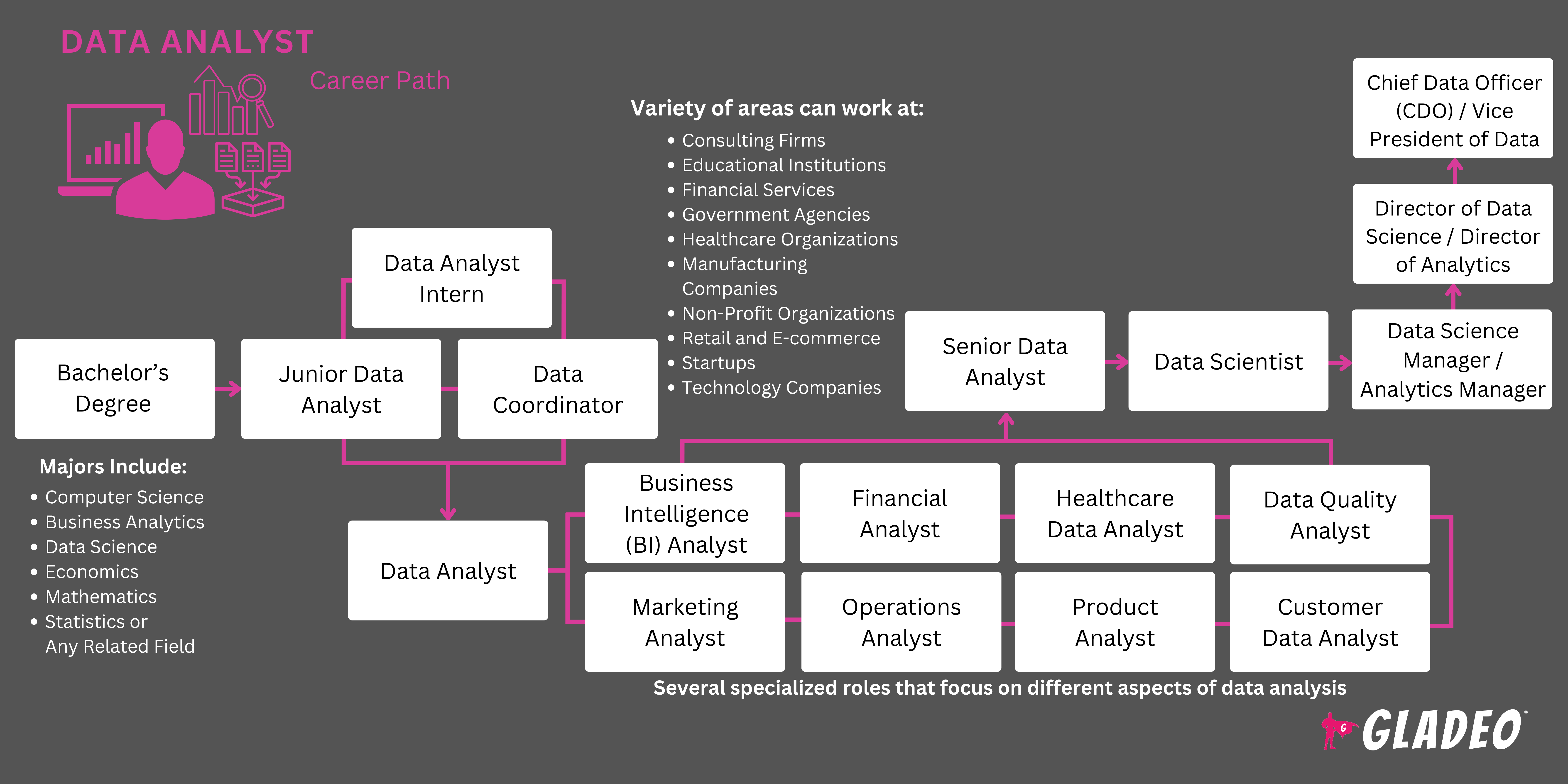
- Search job portals such as LinkedIn, Indeed, Glassdoor, and company websites for entry-level roles like Data Analyst, Junior Data Analyst, Reporting Analyst, or Business Intelligence Assistant
- Build hands-on experience through internships, school projects, capstone work, or freelance data analysis tasks
- Practice using essential tools such as Excel, SQL, Python, Tableau, and Power BI to strengthen technical skills
- Create a portfolio showcasing dashboards, data visualizations, reports, and real-world data projects
- Earn beginner-friendly certifications such as Google Data Analytics, Microsoft Data Analyst Associate, or other online data courses
- Network with professionals in data analytics, IT, or business intelligence through LinkedIn or informational interviews
- Use school or university career services for resume reviews, interview preparation, and job fairs
- Prepare a strong resume highlighting analytical skills, attention to detail, problem-solving, and technical expertise
- Practice common interview tasks such as case studies, SQL queries, Excel exercises, and data interpretation questions
- Stay updated on industry trends like AI in analytics, data visualization tools, and business intelligence systems
- Emphasize transferable skills such as communication, teamwork, organization, and critical thinking
- Apply consistently and tailor each application to match the job description and required skills
- Master data analysis tools and platforms such as Excel, SQL, Python, Tableau, and Power BI, and stay updated with new features and technologies
- Strengthen your skills in data cleaning, data visualization, statistical analysis, and business intelligence to produce higher-quality insights
- Ask supervisors or senior analysts for feedback to improve your reporting accuracy, storytelling, and technical skills
- Earn advanced certifications in data analytics, machine learning, or business intelligence to specialize and increase career opportunities
- Take initiative in solving complex data problems and volunteer for high-impact projects within your organization
- Show strong collaboration skills by working effectively with teams across business, marketing, finance, or IT departments
- Mentor interns or junior analysts by guiding them in tools, processes, and best practices in data handling
- Build expertise in data governance, privacy, and ethical data use to become a trusted professional
- Share insights through presentations, dashboards, or internal reports to demonstrate leadership and communication skills
- Explore related career paths such as Data Scientist, Business Intelligence Analyst, or Analytics Consultant
- Stay open to new roles, promotions, or company transfers that offer more responsibility and growth opportunities
- Continuously learn new technologies and industry trends such as AI-driven analytics and automation tools
Websites:
- Kaggle
- Towards Data Science (Medium)
- DataCamp Community
- Coursera
- edX
- freeCodeCamp
- Stack Overflow
- GitHub
- Analytics Vidhya
- Google Data Analytics Resources
- Microsoft Learn (Data & AI)
- IBM SkillsBuild
- Tableau Public
- Power BI Community
- Mode Analytics SQL Tutorial
- Dataquest Blog
- StatQuest (YouTube)
- Krish Naik (YouTube)
- Alex The Analyst (YouTube)
- Ken Jee (YouTube)
- Data.gov (open datasets for practice)
Books:
- Python for Data Analysis by Wes McKinney
- Storytelling with Data by Cole Nussbaumer Knaflic
- Naked Statistics by Charles Wheelan
- The Data Warehouse Toolkit by Ralph Kimball
- SQL for Data Analysis by Cathy Tanimura
- An Introduction to Statistical Learning by Gareth James et al.
- Data Science for Business by Foster Provost & Tom Fawcett
- Practical Statistics for Data Scientists by Peter Bruce & Andrew Bruce
Data Analysts play a key role in helping organizations understand information, solve problems, and make data-driven decisions. But this career path isn’t the perfect fit for everyone, so here are some related occupations you might also consider exploring!
- Business Intelligence Analyst
- Statistician
- Data Scientist
- Operations Research Analyst
- Financial Analyst
- Market Research Analyst
- IT Support Specialist
- Database Administrator
- Quality Assurance Analyst
- Risk Analyst
Newsfeed

Featured Jobs
Online Courses and Tools
Annual Salary Expectations
New workers start around $79K. Median pay is $108K per year. Highly experienced workers can earn around $147K.