





Spotlights
Film Director, Television Director, Stage Director, Video Director, Creative Director, Theatre Director, Broadcast Director, Multimedia Director, Production Director, Cinematic Director, Drama Director, Live Event Director
The moment a movie grips your emotions, a TV show captivates your attention, or a stage production leaves you breathless, a Director's vision is at the heart of it all. Directors shape stories into unforgettable experiences that move audiences worldwide.
Directors lead the creative journey of a production, overseeing everything from interpreting scripts and guiding actors to collaborating with cinematographers, designers, and editors. Every day involves making decisions that impact the story, pacing, and emotional impact, ensuring that the final product aligns with their artistic vision.
Using a blend of creative insight and technical knowledge, Directors work with cameras, lighting setups, editing suites, and rehearsal spaces to bring stories to life. Their role is crucial in turning ideas into coherent, compelling narratives that resonate with viewers or audiences in theaters, on screens, or live venues.
- Seeing a story come alive through your vision and leadership.
- Collaborating with talented cast and crew to create art that moves people.
- Influencing culture and sparking conversations through powerful storytelling.
- Experiencing the thrill of live or filmed performance reaching audiences worldwide.
Working Schedule
Directors often work irregular hours, including evenings and weekends, especially during rehearsals, shoots, or live performances. They can work on a freelance basis or be employed by studios, theaters, or production companies. Deadlines and production schedules can create intense pressure, but the work environment is highly creative and collaborative.
Typical Duties
- Interpreting scripts to develop a clear creative vision.
- Casting actors and guiding their performances.
- Collaborating with screenwriters, producers, cinematographers, and designers.
- Planning and overseeing rehearsals and production schedules.
- Directing camera shots, lighting setups, and scene blocking.
- Reviewing footage or live rehearsals and providing feedback.
- Making creative decisions on editing, sound, and visual effects.
- Ensuring the final product matches the intended tone and message.
- Problem-solving unexpected challenges during production.
- Managing budgets and coordinating with production staff.
- Communicating vision clearly to cast and crew.
- Approving final edits or performances before release.
Additional Responsibilities
- Attending production meetings and pitch sessions.
- Adapting scripts or scenes to improve storytelling.
- Negotiating contracts or schedules with actors and crew.
- Staying updated on industry trends and new technologies.
- Mentoring assistant directors and interns.
- Promoting the production during marketing events.
- Ensuring safety and compliance on set or stage.
- Handling last-minute creative changes or reshoots.
Mornings often start by reviewing scripts, storyboards, or footage to plan the day's work and prepare notes for the cast and crew.
Midday typically involves leading rehearsals, directing scenes on set, or working closely with the cinematographer and designers to capture the desired shots or stage setups.
Afternoons and evenings focus on reviewing takes, collaborating with editors or sound designers, and attending production meetings to adjust schedules or solve problems, often wrapping up late to ensure everything stays on track.
Soft Skills
- Creative vision and storytelling ability
- Strong leadership and decision-making
- Excellent communication and collaboration
- Problem-solving under pressure
- Adaptability and flexibility
- Attention to detail
- Time management and organization
- Emotional intelligence and empathy
- Negotiation and conflict resolution
- Team-building and motivation
- Critical thinking
- Patience and persistence
Technical Skills
- Script analysis and interpretation
- Understanding of camera and lighting techniques
- Knowledge of editing software and post-production processes
- Familiarity with stage and set design
- Proficiency with storyboarding and shot planning
- Basic sound design and music integration
- Budgeting and scheduling tools
- Use of rehearsal and blocking techniques
- Knowledge of safety protocols on set
- Ability to work with visual effects teams
- Film Director: Directs movies for cinema and digital platforms.
- Television Director: Oversees TV show episodes and broadcasts.
- Stage Director: Manages live theater productions.
- Commercial Director: Creates advertisements and branded content.
- Music Video Director: Crafts visual stories for music artists.
- Documentary Director: Leads non-fiction storytelling projects.
- Live Event Director: Coordinates live broadcasts or performances.
- Animation Director: Guides animated film or series production.
- Film studios
- Television networks
- Theater companies
- Production houses
- Advertising agencies
- Streaming platforms
- Music video production companies
- Live event production firms
- Animation studios
- Independent film production
- Broadcasting corporations
- Education institutions with performing arts programs
Directors often face intense deadlines and high expectations to deliver compelling content that satisfies producers, audiences, and stakeholders. They must handle creative differences and sudden issues calmly, balancing artistic goals with practical constraints.
Working hours can be long and unpredictable, especially during shooting or opening nights. Directors may spend days away from home on location or immersed in post-production, requiring stamina and commitment.
Sacrifices include managing stress from responsibility over large teams and budgets, and sometimes dealing with public criticism. However, the passion for storytelling and impact on audiences drives many Directors through these challenges.
- Increasing use of digital technology and virtual production techniques.
- Growing importance of diversity and inclusion in storytelling.
- Rise of streaming platforms changing distribution and viewing habits.
- Use of AI tools in editing and pre-visualization.
- Hybrid live and virtual events expanding director roles.
- Greater collaboration across international teams.
- Focus on immersive experiences like VR and AR.
- Environmental sustainability in production practices.
- Demand for faster production turnaround times.
- More opportunities for independent and self-produced projects.
Future Directors often loved storytelling through plays, short films, or writing stories as kids. They enjoyed organizing group activities and imagining how scenes could come to life visually.
They tended to be curious about movies and TV shows, asking questions about how stories were made and experimenting with cameras, editing apps, or drama classes to explore their creativity.
Directors usually pursue degrees in film, theater, communications, or related creative arts fields. Hands-on experience through internships, student films, and theater productions is essential to develop directing skills and build a portfolio.
Students can take courses in relevant subjects such as:
- Film production
- Theater directing
- Screenwriting
- Cinematography
- Editing and post-production
- Acting and performance studies
- Visual storytelling
- Media studies
- Lighting and sound design
- Communication skills
Beyond formal education, aspiring Directors benefit from continuous learning on set, networking with industry professionals, and creating their own projects to refine their voice and approach.
- Participate in drama club or school theater productions.
- Take courses in art, media, and creative writing.
- Learn to use video cameras and editing software.
- Join film or media production clubs.
- Attend workshops or summer programs focused on directing.
- Create short films or plays with friends.
- Study storytelling techniques and scriptwriting.
- Seek internships with local theaters or media companies.
- Build a portfolio of work and showreels.
- Stay informed about film and theater trends.
- Look for programs with strong hands-on production opportunities.
- Choose schools with faculty who are experienced directors or industry professionals.
- Check for access to professional film or theater equipment.
- Find programs that offer internships or industry connections.
- Ensure curriculum covers both technical and creative skills.
- Consider programs with collaborative projects across disciplines.
- Evaluate the school's alumni success in directing careers.
- Look for opportunities to direct student films or plays.
- Find programs that teach emerging technologies like virtual production.
- Choose schools that encourage networking and mentorship.
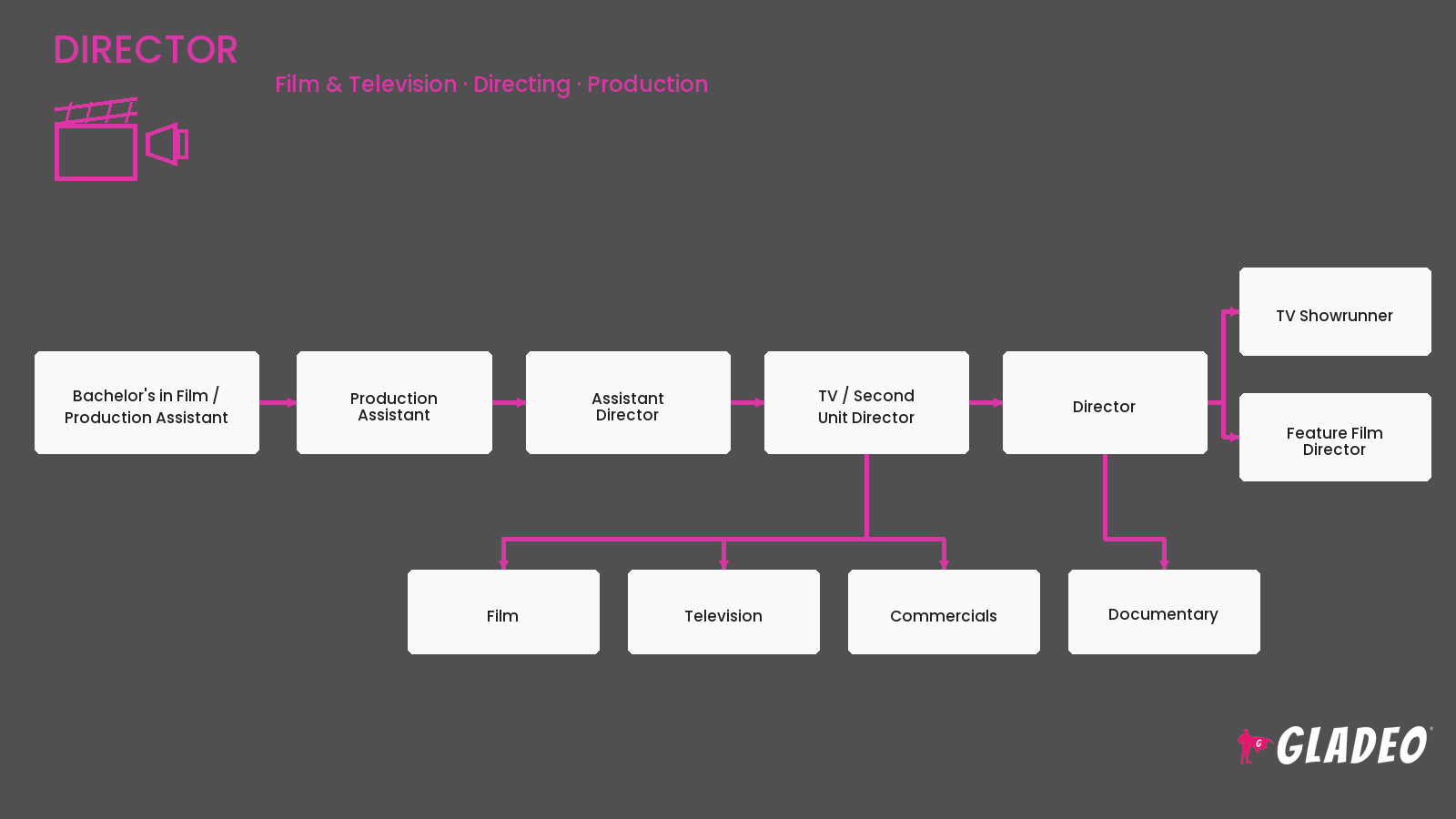
- Assist on student or independent film sets to observe directing process.
- Volunteer in community theater to gain rehearsal experience.
- Work as a production assistant to learn set operations.
- Create your own short films to practice storytelling and leadership.
- Shadow experienced directors during shoots or rehearsals.
- Take on small directing projects like school plays or web videos.
- Build a reel showcasing your directing style and versatility.
- Network with peers and professionals in film and theater.
- Apply for internships with production companies or theaters.
- Learn to communicate your vision clearly to actors and crew.
- Research and practice time management on set or stage.
- Seek feedback to improve your directing approach.
- Master various aspects of production including editing and cinematography.
- Build a strong network of collaborators and mentors.
- Develop a unique creative voice and style.
- Take on larger, more complex projects over time.
- Gain experience in different directing environments (film, TV, theater).
- Stay updated on industry trends and technologies.
- Pursue awards and recognition to enhance reputation.
- Consider producing or writing to expand creative control.
Websites:
- Directors Guild of America (DGA) - dga.org
- American Film Institute (AFI) - afi.com
- The Academy of Motion Picture Arts and Sciences - oscars.org
- Stage Directors and Choreographers Society - sdcs.org
- Film Independent - filmindependent.org
- Theatre Communications Group - theatercommunications.com
- Sundance Institute - sundance.org
- ScreenCraft - screencraft.org
- No Film School - nofilmschool.com
- IndieWire - indiewire.com
- MovieMaker Magazine - moviemaker.com
- Creative COW - creativecow.net
- British Film Institute - bfi.org.uk
- Film School Rejects - filmschoolrejects.com
Books:
- Directing: Film Techniques and Aesthetics by Michael Rabiger
- On Directing Film by David Mamet
- The Director's Craft: A Handbook for the Theatre by Katie Mitchell
- Film Directing Shot by Shot by Steven D. Katz
- The Visual Story: Creating the Visual Structure of Film, TV and Digital Media by Bruce Block
If directing isn't the right fit or opportunities are limited, many related careers allow you to use your creative and leadership talents in the entertainment industry.
- Producer
- Screenwriter
- Cinematographer
- Editor
- Stage Manager
- Casting Director
- Film Critic
- Art Director
- Script Supervisor
- Broadcast Technician
Newsfeed

Featured Jobs
Online Courses and Tools