





Spotlights
Energy Analyst, Building Performance Auditor, Sustainability Auditor, Home Energy Assessor, Energy Efficiency Consultant, Energy Inspector, Energy Consultant, Energy Management Specialist, Residential Energy Auditor, Commercial Energy Auditor, Energy Evaluator, HVAC Energy Auditor
Every day, Energy Auditors help people and businesses save money and protect the planet by making buildings more energy-efficient. When you walk into a home or office that feels comfortable without wasting energy, that’s the result of their detailed inspections and smart recommendations.
Energy Auditors inspect buildings to identify how energy is used and where it’s wasted. They measure things like insulation quality, heating and cooling system efficiency, lighting, and air leaks. Working with homeowners, business owners, contractors, and utility companies, they gather data through specialized equipment and then analyze it to suggest improvements that reduce energy bills and environmental impact.
Using tools like blower doors, infrared cameras, and energy modeling software, Energy Auditors create clear reports that help clients understand exactly what changes will save energy and money. Their work supports cleaner, greener communities while making buildings more comfortable and affordable to operate.
- Helping families and businesses cut energy costs and save money every month.
- Contributing to environmental protection by reducing carbon footprints and energy waste.
- Using technology and problem-solving skills to diagnose and fix real-world energy issues.
- Seeing tangible results when clients implement recommendations and enjoy improved comfort and efficiency.
Working Schedule
Energy Auditors often work full-time during regular business hours, but schedules can be flexible depending on client needs. They spend time both indoors inspecting buildings and in offices analyzing data and writing reports. Some Energy Auditors work independently as consultants while others are employed by utility companies, government agencies, or environmental organizations. Deadlines can be driven by client projects, grant programs, or regulatory requirements, so time management and adaptability are important.
Typical Duties
- Conduct on-site building inspections to assess energy use and efficiency.
- Use diagnostic tools like blower doors and infrared cameras to identify leaks and insulation problems.
- Interview building owners or occupants to understand energy habits and concerns.
- Measure heating, ventilation, and air conditioning (HVAC) system performance.
- Analyze collected data using energy modeling software to estimate savings potential.
- Prepare detailed reports with findings and specific recommendations for improvements.
- Advise clients on energy-saving upgrades such as insulation, lighting, windows, and appliances.
- Stay updated on local energy codes, rebates, and incentive programs.
- Collaborate with contractors and utility representatives to coordinate energy efficiency projects.
- Educate clients about energy conservation strategies and benefits.
- Track project progress and verify energy savings after improvements are made.
- Maintain records and documentation for audits, compliance, or certification purposes.
Additional Responsibilities
- Participate in community outreach or educational programs about energy efficiency.
- Assist in grant writing or funding applications related to energy projects.
- Develop or update auditing protocols and checklists.
- Recommend renewable energy options like solar panels when appropriate.
- Provide training or mentorship to junior auditors or interns.
- Stay informed about new technologies and industry trends in energy efficiency.
- Support sustainability goals of organizations by aligning audits with broader strategies.
- Conduct follow-up assessments to measure long-term energy performance improvements.
In the morning, an Energy Auditor reviews the day’s schedule and prepares equipment needed for site visits. They might study building blueprints or previous audit reports to understand the property before arriving. Clear communication is key as they confirm appointments and clarify client goals for the inspection.
Midday is often spent on-site conducting detailed inspections. The auditor uses diagnostic tools, takes measurements, and notes areas where energy is wasted. They interact with occupants to gather lifestyle information affecting energy use and sometimes troubleshoot unexpected issues on the spot.
In the afternoon or evening, the auditor returns to the office to analyze data collected with software tools. They compile findings into organized reports and develop recommendations tailored to client budgets and priorities. Collaboration with contractors or utility representatives may occur to plan next steps or schedule improvements.
Soft Skills
- Attention to detail
- Strong communication skills
- Problem-solving mindset
- Customer service orientation
- Critical thinking
- Time management
- Adaptability
- Curiosity about technology and sustainability
- Patience and persistence
- Collaboration and teamwork
- Analytical thinking
- Ethical responsibility
Technical Skills
- Use of blower door testing equipment
- Infrared thermography operation
- Energy modeling software proficiency
- Understanding of HVAC systems
- Knowledge of building codes and energy standards
- Data analysis and interpretation
- Report writing and documentation
- Familiarity with lighting and appliance efficiency
- Use of digital measurement tools
- Basic knowledge of renewable energy systems
- Residential Energy Auditor: Focuses on homes and small buildings to improve household energy use.
- Commercial Energy Auditor: Evaluates offices, retail spaces, and larger buildings for efficiency upgrades.
- Industrial Energy Auditor: Assesses factories and manufacturing plants to optimize energy consumption.
- Utility Energy Auditor: Works for utility companies to support rebate programs and customer energy assessments.
- Building Performance Auditor: Conducts comprehensive evaluations including air quality and moisture issues alongside energy use.
- Sustainability Auditor: Integrates energy analysis with broader environmental impact assessments.
- Energy Management Specialist: Focuses on ongoing monitoring and management of energy use in facilities.
- Renewable Energy Auditor: Specializes in evaluating and recommending renewable energy installations and integrations.
- Energy consulting firms
- Utility companies
- Government energy departments
- Environmental nonprofits
- Construction and remodeling companies
- Real estate firms
- Building inspection agencies
- Manufacturing companies
- Educational institutions
- Renewable energy companies
- Property management firms
- Financial institutions offering green loans
Energy Auditors often face pressure to deliver accurate, actionable findings within tight deadlines, especially when working on government-funded projects or rebate programs. They need to balance technical detail with clear communication for clients who may not have technical backgrounds.
The job usually requires traveling to various sites, sometimes in extreme weather or cramped spaces like attics and crawlspaces. Auditors may work long days when managing multiple projects or preparing reports for clients and regulators simultaneously.
While much of the work is independent, Energy Auditors must collaborate closely with clients, contractors, and utility representatives. They need to stay current with evolving energy codes, technologies, and incentive programs, which demands ongoing learning and adaptability.
- Increasing use of smart home technology and IoT devices for real-time energy monitoring.
- Growing demand for renewable energy integration in building audits.
- Advances in thermal imaging and diagnostic equipment for more precise assessments.
- Expansion of government incentives and rebates encouraging energy efficiency upgrades.
- Development of automated energy modeling software with AI support.
- Rising awareness of environmental impact driving more organizations to conduct audits.
- Shift toward sustainability certifications like LEED and ENERGY STAR.
- Integration of energy audits with indoor air quality and health assessments.
- Remote auditing technologies and virtual consultations gaining popularity.
- Data analytics and big data use to identify energy saving patterns across buildings.
Kids interested in how things work around the house, especially heating, cooling, and appliances, often show early curiosity about energy use. They might enjoy experiments with electricity, building projects, or learning about environmental issues.
Young people who like solving puzzles, working with tools, and helping others save money or protect nature may find Energy Auditing a natural fit. Interest in science, math, and technology also supports success in this field.
To become an Energy Auditor, students typically pursue a combination of college education, technical training, and hands-on experience. Degrees in environmental science, engineering, or energy management provide a solid foundation, while specialized certification programs teach auditing techniques and equipment use.
Students can take courses in relevant subjects such as:
- Environmental Science
- Physics (focus on thermodynamics)
- Introduction to Energy Systems
- Building Science and Construction
- HVAC Fundamentals
- Sustainable Design
- Data Analysis and Statistics
- Computer Applications in Energy Management
- Technical Writing
- Renewable Energy Technologies
Hands-on experience through internships, apprenticeships, or entry-level positions is crucial to develop practical skills. Building a portfolio of audits and becoming certified by recognized organizations can significantly improve job prospects.
- Take advanced math and science courses, especially physics and environmental science.
- Join clubs or programs focused on sustainability, engineering, or robotics.
- Learn basic computer skills and software applications.
- Volunteer for community energy or environmental projects.
- Seek summer internships or job shadowing with energy companies or auditors.
- Develop strong writing and communication skills.
- Explore courses in drafting or CAD for building plans.
- Attend career fairs and talk with professionals in the energy sector.
- Research online resources and certification programs.
- Consider dual enrollment or early college credit in related subjects.
- Improve problem-solving and critical thinking abilities.
- Practice organizing and managing projects.
- Look for programs offering hands-on training with diagnostic tools like blower doors and infrared cameras.
- Choose courses that include building science and HVAC system education.
- Seek programs with partnerships or connections to local utility companies for internships.
- Verify if the program prepares students for certification exams such as those from the Building Performance Institute (BPI).
- Consider schools with sustainability or energy management degree options.
- Check if the curriculum covers current energy codes and rebate programs.
- Find programs that emphasize data analysis and report writing skills.
- Look for instructors with industry experience and strong professional networks.
- Evaluate opportunities for fieldwork or real-world project experience.
- Select programs that provide career placement support or networking events.
- Ensure the program teaches both residential and commercial energy auditing methods.
- Confirm access to modern software and energy modeling tools.
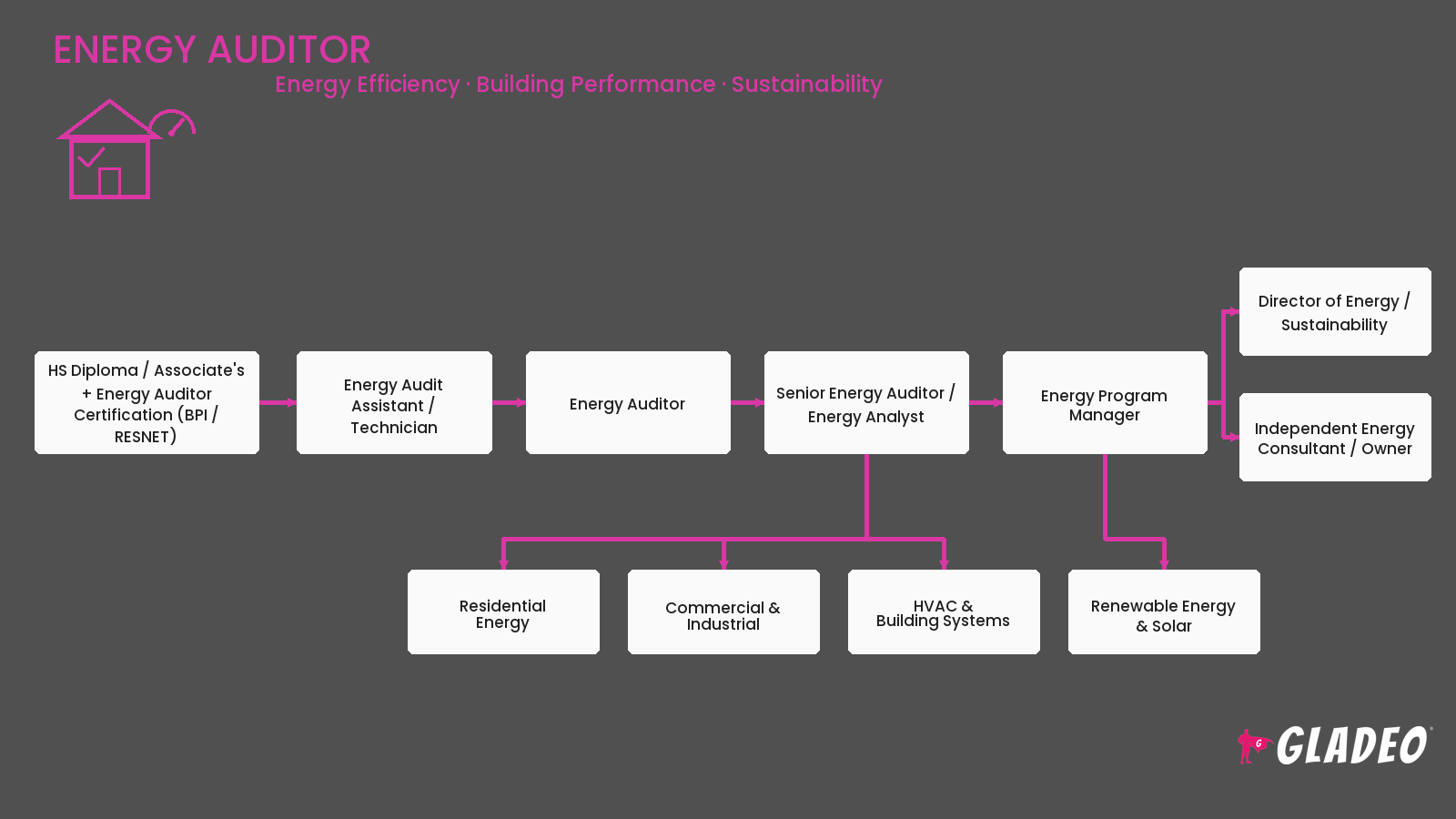
- Apply for internships or entry-level roles with energy consulting firms or utility companies.
- Volunteer to assist experienced Energy Auditors during inspections.
- Build a portfolio documenting audits you’ve participated in.
- Earn relevant certifications like BPI Building Analyst.
- Develop proficiency with auditing tools and software through practice.
- Network with professionals at industry events and online forums.
- Stay updated on local energy regulations and incentive programs.
- Practice clear communication skills for client interactions.
- Seek feedback to improve report accuracy and clarity.
- Participate in community outreach to develop presentation skills.
- Stay organized to manage multiple projects effectively.
- Keep learning about emerging energy technologies and trends.
- Gain advanced certifications in specialized areas such as HVAC or commercial energy management.
- Develop expertise in renewable energy systems and sustainability consulting.
- Build a strong professional network through industry associations and conferences.
- Take leadership roles in projects or within organizations.
- Expand skills in data analytics and software applications.
- Consider additional education such as a master’s degree in environmental management.
- Contribute to developing industry standards or policies.
- Transition into related roles like energy manager or sustainability coordinator.
Websites:
- Building Performance Institute (bpi.org)
- Association of Energy Engineers (aeecenter.org)
- Residential Energy Services Network (resnet.us)
- U.S. Green Building Council (usgbc.org)
- Energy Star (energystar.gov)
- Home Energy Pros (homeenergypros.org)
- International Code Council (iccsafe.org)
- American Council for an Energy-Efficient Economy (aceee.org)
- National Renewable Energy Laboratory (nrel.gov)
- Energy.gov – Office of Energy Efficiency & Renewable Energy
- Green Building Advisor (greenbuildingadvisor.com)
- Environmental Protection Agency (epa.gov)
- Clean Energy States Alliance (cleanenergystates.org)
- National Association of State Energy Officials (naseo.org)
Books:
- Energy Auditing by Albert Thumann
- Residential Energy: Cost Savings and Comfort for Existing Buildings by John Krigger and Chris Dorsi
- The Home Energy Diet by Paul Scheckel
- Practical Energy Efficiency by Dilip Sarkar
- Green Building and Remodeling For Dummies by Eric Corey Freed
If an Energy Auditor career doesn’t feel like the perfect fit, there are many related roles that still focus on energy, environment, and building performance.
- Environmental Technician
- HVAC Technician
- Sustainability Consultant
- Building Inspector
- Renewable Energy Technician
- Energy Manager
- Construction Manager
- Facilities Manager
- Green Building Designer
- Environmental Scientist
Newsfeed

Featured Jobs
Online Courses and Tools