






Spotlights
Otolaryngologist, ENT Surgeon, Ear, Nose, and Throat Specialist, Otologist, Rhinologist, Laryngologist, Head and Neck Surgeon, Audiologist (related), Pediatric ENT Specialist, Facial Plastic Surgeon, ENT Physician, Otolaryngology Consultant
Imagine hearing a beautiful song, breathing fresh air, or speaking clearly during an important conversation. ENT specialists make these everyday experiences possible by diagnosing and treating conditions that affect your ears, nose, throat, and related structures.
ENTs, or otolaryngologists, examine patients with issues ranging from ear infections and hearing loss to sinus problems and voice disorders. They collaborate closely with audiologists, speech therapists, nurses, and other medical professionals to develop treatment plans that often blend medical therapy with surgical interventions. Whether performing delicate surgeries or managing chronic illnesses, they work to restore and improve patients’ vital senses and breathing functions.
Using advanced diagnostic tools, endoscopes, microscopes, and surgical instruments, ENTs combine deep medical knowledge and precise skills to address complex problems. Their role is crucial as they directly impact patients’ quality of life — enabling people to hear, breathe, speak, and swallow with ease and confidence.
- Helping patients regain essential senses like hearing and smell transforms lives.
- Performing surgeries that can relieve chronic pain or restore function offers a powerful sense of accomplishment.
- Building trusting relationships with patients and guiding them through recovery.
- Working at the intersection of medicine and surgery, constantly learning and applying cutting-edge techniques.
Working Schedule
ENT specialists typically work in hospitals, clinics, or private practices, often balancing scheduled appointments with emergency cases. Their workdays can be long and sometimes include on-call hours for urgent patient needs. While many ENTs have regular office hours, surgical days and hospital rounds may extend their schedule, requiring flexibility and stamina.
Typical Duties
- Conduct detailed patient histories and physical exams focusing on ear, nose, and throat health.
- Order and interpret diagnostic tests like imaging scans, hearing tests, and endoscopic evaluations.
- Diagnose a wide range of disorders including infections, allergies, tumors, and structural abnormalities.
- Develop treatment plans that may include medication, therapy, or surgery.
- Perform surgeries such as tonsillectomies, sinus surgeries, or cochlear implants.
- Collaborate with audiologists and speech therapists for comprehensive patient care.
- Manage chronic conditions like sleep apnea or voice disorders.
- Educate patients and families about disease prevention and treatment options.
- Monitor patient progress and adjust treatment as needed.
- Stay updated on medical advancements and research in otolaryngology.
- Document all patient interactions and treatment plans thoroughly.
- Coordinate referrals to other specialists when necessary.
Additional Responsibilities
- Participate in medical research and clinical trials to improve ENT treatments.
- Train medical students, residents, or fellows in otolaryngology techniques.
- Maintain compliance with healthcare regulations and safety protocols.
- Attend conferences and continuing education courses to stay current.
- Manage or contribute to practice administration and quality improvement.
- Engage in community health education about ENT health.
- Advocate for patient needs within multidisciplinary care teams.
- Use electronic health records efficiently for documentation and communication.
Mornings often begin with reviewing patient charts and preparing for surgeries scheduled that day, ensuring all necessary equipment and staff are ready.
Midday may include seeing patients in the clinic for consultations, follow-ups, or urgent care visits, performing physical exams and ordering tests.
Afternoon and evening can involve performing surgeries, collaborating with nurses and anesthesiologists in the operating room, and updating patient records. The day might end with discussing complex cases with colleagues or responding to emergency calls.
Soft Skills
- Excellent communication to explain diagnoses and treatments clearly.
- Empathy for patients experiencing discomfort or anxiety.
- Strong problem-solving to diagnose complex or rare conditions.
- Attention to detail during exams and surgeries.
- Patience to work with children and nervous patients.
- Teamwork collaborating with diverse healthcare professionals.
- Adaptability to handle emergencies and changing schedules.
- Emotional resilience under pressure.
- Critical thinking to evaluate symptoms and test results.
- Time management balancing clinic and surgery demands.
- Dexterity for precise surgical procedures.
- Commitment to lifelong learning in a fast-evolving field.
Technical Skills
- Proficiency with endoscopic and microscopic equipment.
- Surgical skills specific to head and neck anatomy.
- Interpreting audiological and imaging test results.
- Knowledge of anesthesia and patient monitoring during surgery.
- Use of electronic health records software.
- Understanding of pharmacology related to ENT conditions.
- Performing diagnostic procedures like laryngoscopy and nasal endoscopy.
- Application of laser and minimally invasive surgical techniques.
- Skill in patient airway management.
- Ability to conduct and interpret allergy testing.
- General ENT Specialist: Provides broad care for adult and pediatric ENT conditions.
- Pediatric Otolaryngologist: Focuses on ENT issues in infants and children.
- Otologist/Neurotologist: Specializes in ear disorders, hearing loss, and balance problems.
- Rhinologist: Concentrates on nose and sinus diseases.
- Laryngologist: Treats vocal cord and throat disorders.
- Head and Neck Surgeon: Manages tumors and reconstructive surgery in the head and neck area.
- Facial Plastic Surgeon: Performs cosmetic and reconstructive facial surgeries.
- Allergy Specialist (within ENT): Handles allergic conditions impacting ENT health.
- Hospitals with ENT departments
- Specialty ENT clinics
- Academic medical centers
- Private otolaryngology practices
- Research institutions
- Rehabilitation centers
- Children’s hospitals
- Public health agencies
- Medical device companies
- Professional medical societies
- Urgent care centers
- Telemedicine providers
ENT specialists face high-pressure situations, especially during surgeries and emergency cases where precise decisions can be life-changing. The need for accuracy and calm under stress is constant.
Work hours can be long and irregular, with on-call nights and weekends common, particularly in hospital settings. Balancing patient care and personal time requires strong time management and dedication.
Sacrifices include the emotional challenge of dealing with serious illnesses and the physical demands of standing in surgery for hours. Continuous education and staying updated on medical advances is mandatory, requiring ongoing commitment.
- Increasing use of minimally invasive and robotic surgeries in ENT procedures.
- Advancements in cochlear implants and hearing restoration technologies.
- Growth of telemedicine for remote patient consultations.
- Integration of 3D imaging and printing for surgical planning.
- Emphasis on multidisciplinary care teams for complex cases.
- Development of personalized medicine approaches based on genetics.
- Expansion of allergy and immunotherapy treatments related to ENT.
- Improved diagnostic tools like high-definition endoscopy.
- Focus on patient experience and recovery speed in treatment plans.
- Research into new treatments for chronic sinusitis and sleep apnea.
Many future ENTs show early interest in biology, anatomy, and helping others, often enjoying science fairs and medical kits during childhood. Curiosity about how the body works and fascination with the senses, like hearing and smell, are common.
They often enjoy problem-solving activities and have a steady hand and patience, which are important for later surgical work. Empathy toward family or friends with health issues can spark a desire to pursue medicine, especially specialties that improve quality of life through restoring basic functions.
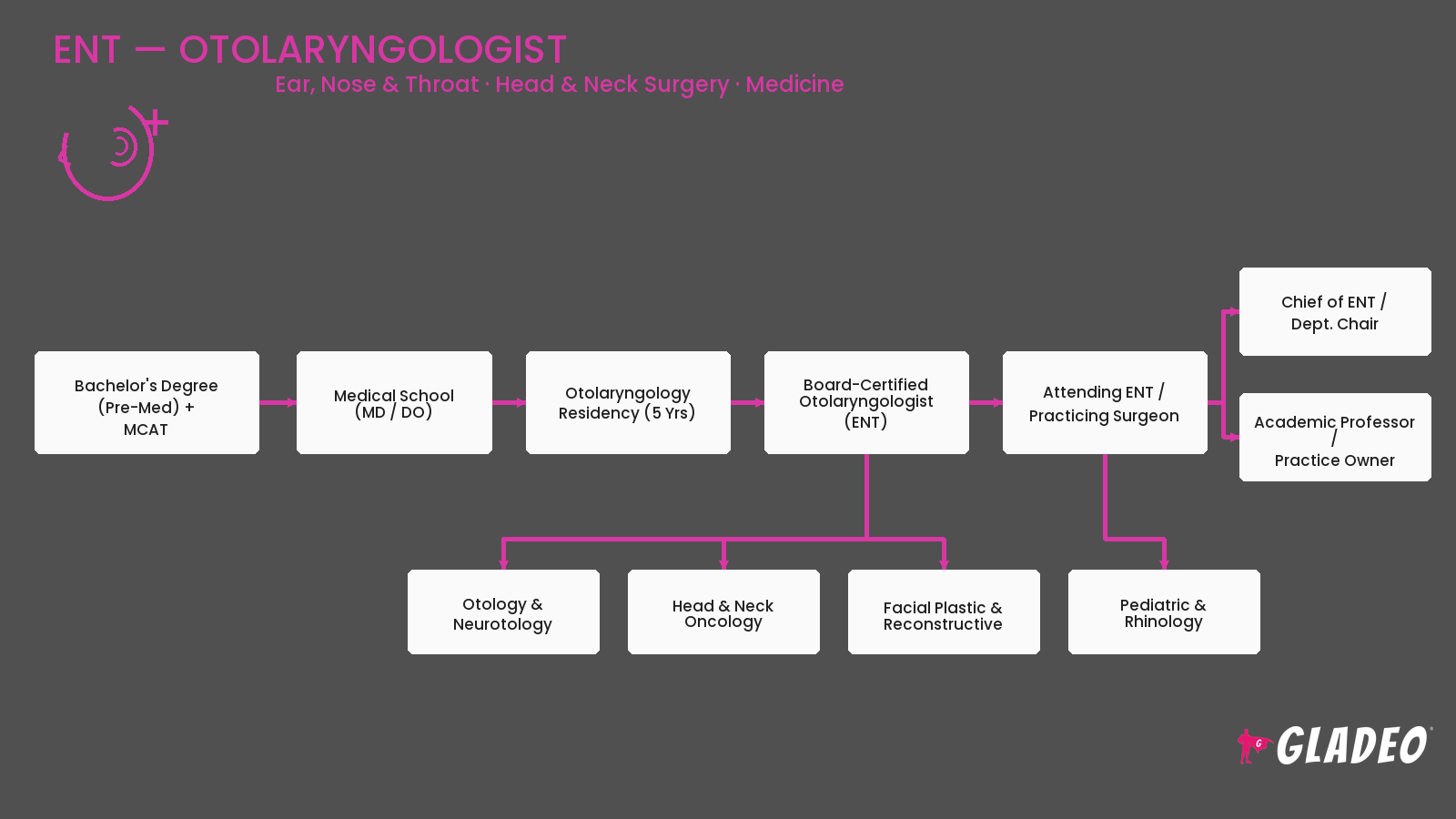
Becoming an ENT specialist requires extensive education, starting with a bachelor's degree followed by medical school and then specialized residency training in otolaryngology. Many ENTs also pursue fellowships to focus on sub-specialties.
Students can take courses in relevant subjects such as:
- Biology and Human Anatomy
- Chemistry
- Physics and Math
- Health Sciences
- Medical Terminology
- Psychology
- Microbiology
- Physiology
- Genetics
- Public Speaking and Communication
Hands-on clinical experience is crucial, so participating in internships, volunteering at hospitals, and shadowing ENT physicians during high school and college can provide valuable insight. Building a strong academic record and preparing for medical school entrance exams are essential steps on this path.
- Take advanced science and math classes to build a strong foundation.
- Join health or science clubs to explore medicine early.
- Volunteer at local hospitals or clinics to gain exposure.
- Seek out summer programs focused on health careers.
- Develop strong communication and teamwork skills.
- Practice problem-solving and critical thinking activities.
- Prepare for standardized tests like the MCAT in college.
- Build relationships with mentors in healthcare fields.
- Participate in research projects if possible.
- Explore anatomy through online courses or cadaver labs in college.
- Choose accredited pre-med or health science programs with strong science curricula.
- Look for schools offering research opportunities and clinical internships.
- Consider programs with partnerships to medical schools for smoother transitions.
- Check that programs provide training in communication and ethics.
- Seek institutions with simulation labs or hands-on anatomy learning.
- Find schools with supportive advising and mentoring for medical careers.
- Attend info sessions and talk to current students or alumni.
- Evaluate program resources like libraries and technology.
- Prioritize programs that encourage interdisciplinary learning.
- Confirm faculty have experience in otolaryngology or related fields.
- Ensure opportunities for shadowing or volunteering in ENT settings.
- Look for programs that prepare you for medical school entrance exams.
- Apply for internships or volunteer roles in hospitals or ENT clinics to gain firsthand experience.
- Shadow ENT doctors to understand daily responsibilities and workflow.
- Pursue entry-level positions such as medical assistant or scribe in healthcare settings.
- Build a portfolio documenting your medical exposure and relevant skills.
- Attend medical career fairs and network with healthcare professionals.
- Seek mentorship from practicing ENTs or other physicians.
- Prepare for medical school entrance exams with focused study plans.
- Join pre-med student organizations to develop leadership and teamwork.
- Participate in research projects related to otolaryngology or general medicine.
- Develop strong communication skills through public speaking or presentations.
- Gain CPR and basic life support certifications.
- Learn to use electronic health records and medical software.
- Complete medical school and successfully match into an otolaryngology residency program.
- Excel in residency by mastering clinical and surgical skills.
- Pursue fellowship training to specialize in areas like pediatric ENT or head and neck surgery.
- Publish research and present at medical conferences to build professional reputation.
- Network with peers and leaders in otolaryngology for career opportunities.
- Consider board certification to demonstrate expertise and commitment.
- Seek leadership roles in clinical or academic settings.
- Stay current with continuing medical education and new technologies.
Websites:
- American Academy of Otolaryngology-Head and Neck Surgery (AAO-HNS) - https://www.entnet.org
- American Board of Otolaryngology - https://www.aboto.org
- Association of Otolaryngology Administrators - https://www.ent-administrators.org
- Society of University Otolaryngologists - https://www.societyuo.org
- American Rhinologic Society - https://www.american-rhinologic.org
- American Head and Neck Society - https://www.ahns.info
- American Society of Pediatric Otolaryngology - https://www.entkids.org
- Hearing Loss Association of America - https://www.hearingloss.org
- National Institute on Deafness and Other Communication Disorders - https://www.nidcd.nih.gov
- Medscape Otolaryngology News - https://www.medscape.com/otolaryngology
- ENT Journal - https://journals.lww.com/entjournal
- Head and Neck Journal - https://onlinelibrary.wiley.com/journal/10974645
- Otolaryngology Clinics of North America - https://www.oto.theclinics.com
- Auditory Research Foundation - https://www.auditoryresearchfoundation.org
Books:
- Cummings Otolaryngology: Head and Neck Surgery by Paul W. Flint
- Ballenger's Otorhinolaryngology: Head and Neck Surgery by James B. Snow Jr.
- Head and Neck Surgery — Otolaryngology by Byron J. Bailey
- Meyer's Otolaryngology by Ronald G. Crystal
- Essentials of Otolaryngology by Anil K. Lalwani
If becoming an ENT specialist isn’t the right fit, there are many related careers in healthcare that still focus on helping patients with ear, nose, throat, and communication issues.
- Audiologist: Specializes in hearing and balance disorders through non-surgical methods.
- Speech-Language Pathologist: Helps patients improve communication and swallowing.
- Allergist/Immunologist: Treats allergies that affect ENT health.
- General Practitioner: Provides primary care and referrals for ENT issues.
- Nurse Practitioner specializing in ENT care.
- Physician Assistant in otolaryngology clinics.
- Medical Technologist working with diagnostic tests.
- Physical Therapist focusing on head and neck rehabilitation.
- Medical Researcher studying ENT diseases.
- Healthcare Administrator managing ENT departments or clinics.
Newsfeed

Featured Jobs
Online Courses and Tools