





Spotlights
Water Resources Engineer, Wastewater Treatment Engineer, Air Quality Engineer, Remediation Engineer, Environmental Project Engineer, Solid and Hazardous Waste Engineer, Stormwater Engineer, Sustainability Engineer, Environmental Compliance Engineer, Environmental Consultant, Water Quality Engineer, Process Engineer (Environmental)
Every time you turn on a tap and the water is clean, flush a toilet and the waste disappears safely, or breathe easy near a factory that used to belch smoke, you are benefiting from the work of an Environmental Engineer. These engineers are the people who figure out how to keep air, water, and soil healthy while the world keeps building, manufacturing, and growing. They have helped bring rivers back to life, cleaned up toxic sites so kids can play on them again, and kept communities safe from floods and contaminated drinking water. If you have ever wanted a job where your math and science skills directly protect people and the planet, this is it!
Environmental Engineers design, build, and improve the systems that control pollution and protect public health. One week they might be sizing a treatment plant that will clean a town's drinking water, the next they are walking a former gas station with a drilling crew to figure out how far underground contamination has spread, and the week after that they are presenting at a community meeting to explain what a new factory will do to local air quality. They work side by side with civil and chemical engineers, scientists, city officials, regulators, construction crews, plant operators, lawyers, and everyday residents who care about what is in their water and air. Their job is part detective work, part design, and part translation, because the best solution on paper only works if the community and the regulators understand it and trust it.
To do all this, Environmental Engineers use computer models that simulate how pollution moves through rivers, groundwater, and the atmosphere, mapping software that shows where problems are concentrated, design programs that lay out pipes and treatment tanks, and field instruments that measure what is actually in a sample. They rely on chemistry, biology, fluid mechanics, and a deep knowledge of environmental laws like the Clean Water Act and the Clean Air Act. Their work matters because pollution rarely announces itself. A well-designed system quietly keeps thousands or even millions of people healthy every single day, and a poorly designed one can cause harm that lasts for generations.
- Seeing a polluted river, contaminated site, or struggling water system become safe and healthy because of a solution you designed
- Protecting the health of entire communities, including neighborhoods that have been overlooked or harmed by pollution in the past
- Working on a huge variety of projects, from massive treatment plants to cutting-edge clean energy, recycling, and water reuse technology
- Getting to combine outdoor fieldwork, hands-on problem solving, and big-picture design in a career that grows more important every year
Working Schedule
Most Environmental Engineers work full-time, usually around 40 hours a week, and the day is often split between an office, where they run models, design systems, and write reports, and out in the field, where they visit construction sites, treatment plants, factories, landfills, or contaminated properties. Fieldwork means boots, hard hats, safety vests, and sometimes early mornings, bad weather, or travel to remote locations. Deadlines for permits, regulatory submissions, and construction milestones can bring occasional long weeks, and emergencies such as chemical spills, floods, or a plant failure can mean being called in outside normal hours. Many Environmental Engineers work for consulting firms, which means juggling several projects for different clients at once, while others work for a single city, utility, factory, or government agency and focus on that organization's systems for years. Remote and hybrid options exist for the design and report-writing portions of the job, but site visits keep the work grounded in the real world.
Typical Duties
- Designing water and wastewater treatment systems, including the tanks, filters, pumps, and pipes that make them work
- Collecting and analyzing air, water, and soil samples to find out what contaminants are present and how much
- Developing plans to clean up contaminated sites, such as former factories, gas stations, and landfills, through approaches like soil removal, groundwater treatment, and bioremediation
- Using computer models to predict how pollution will spread through rivers, groundwater, or the atmosphere
- Designing stormwater systems, including green infrastructure like rain gardens and wetlands, to reduce flooding and keep runoff clean
- Preparing environmental impact assessments that explain how a proposed project could affect land, water, air, and wildlife
- Writing permit applications and compliance reports for regulators at the federal, state, and local level
- Designing waste management and recycling systems, including landfill gas capture and hazardous waste handling
- Evaluating industrial processes and recommending changes that cut emissions, reduce waste, or save water and energy
- Inspecting facilities and construction sites to make sure systems are built and operating correctly
- Estimating project costs, schedules, and materials, and comparing the costs and benefits of different solutions
- Responding to environmental emergencies by assessing the damage and guiding cleanup crews
Additional Responsibilities
- Presenting findings at community meetings, city council hearings, and public comment sessions in language non-experts can follow
- Supervising technicians, field scientists, drillers, and construction crews on project sites
- Working with attorneys and regulators on enforcement actions, consent agreements, and legal disputes involving pollution
- Mentoring junior engineers and interns, and reviewing their calculations and drawings
- Writing proposals and bidding for new projects when working for a consulting firm
- Keeping up with changing regulations and new science, such as emerging contaminants like PFAS
- Training plant operators and facility staff on new equipment and procedures
- Collaborating with environmental justice groups, tribal nations, and community organizations to make sure projects serve the people most affected
An Environmental Engineer's morning might begin in the office, checking overnight data from a treatment plant's monitoring system or reading lab results that came back from a site they sampled last week. If a number looks off, such as a spike in nitrogen leaving a wastewater plant or a sample showing a contaminant above the legal limit, the engineer digs in right away, comparing it to past readings and calling the operators to find out what changed. The rest of the early hours might go to updating a model of how groundwater is moving under a former dry-cleaning site, or drawing a revised layout for a new set of clarifier tanks after a reviewer's comments.
By midday, many Environmental Engineers are in the field. One day it might mean pulling on steel-toed boots to meet a drilling crew installing monitoring wells and logging soil samples as the drill brings them to the surface. Another day it could mean walking a construction site to check that erosion controls are keeping mud out of a creek, or standing beside a plant operator as a new membrane filter system is started up for the first time. They take notes, photos, and measurements, talk with the crew about problems, and make quick decisions when conditions on the ground do not match the drawings.
Afternoons are often about turning data and ideas into decisions. The engineer might write up the field results for a report to the state environmental agency, run a cost comparison between two cleanup options for a client, or prepare slides for an evening community meeting about a proposed project. They answer questions from project managers, return calls to regulators, and meet with the design team to check that everything lines up before a permit deadline. Before heading home, they may review a junior engineer's calculations, update the project schedule, and line up tomorrow's site visit.
Soft Skills
- Curiosity about how natural systems and human systems affect each other
- Analytical thinking and creative problem solving when no two sites are alike
- Clear writing, since reports and permits are a huge part of the job
- Public speaking and the ability to explain complex science to non-experts
- Teamwork across engineers, scientists, contractors, and community members
- Patience and persistence when permits, data, and approvals move slowly
- Attention to detail, because small errors in calculations can mean big consequences
- Ethical judgment and the courage to speak up when public health is at stake
- Project and time management across multiple deadlines
- Adaptability to changing weather, site conditions, and regulations
- Negotiation and diplomacy when working with regulators, clients, and neighbors who may disagree
- Cultural awareness and empathy for communities affected by pollution
Technical Skills
- Chemistry, biology, and fluid mechanics applied to water, air, and soil
- Design of treatment processes, including filtration, disinfection, biological treatment, and membrane systems
- Environmental modeling software such as EPANET, SWMM, HEC-RAS, MODFLOW, and AERMOD
- Computer-aided design programs such as AutoCAD and Civil 3D
- Geographic information systems (GIS) such as ArcGIS or QGIS for mapping and spatial analysis
- Data analysis in Excel, Python, R, or MATLAB
- Field sampling methods and understanding of laboratory analysis results
- Knowledge of environmental regulations, including the Clean Air Act, Clean Water Act, Safe Drinking Water Act, RCRA, and the Superfund law
- Hazardous materials and site safety training, such as 40-hour HAZWOPER training
- Technical report writing, cost estimating, and permit preparation
- Water and Wastewater Engineer: Designs the plants, pipes, and processes that deliver clean drinking water and treat sewage before it returns to rivers and oceans
- Remediation Engineer: Investigates and cleans up contaminated soil and groundwater at old industrial sites, gas stations, and military bases
- Air Quality Engineer: Designs emission controls, models how pollutants spread through the atmosphere, and helps factories and power plants meet clean air standards
- Solid and Hazardous Waste Engineer: Plans landfills, recycling programs, composting systems, and safe handling of dangerous materials
- Stormwater and Water Resources Engineer: Manages rainfall, flooding, and runoff using pipes, ponds, wetlands, and green infrastructure
- Environmental Compliance Engineer: Works inside a factory or utility to make sure operations follow permits and regulations, and finds ways to cut waste
- Sustainability and Climate Engineer: Helps organizations reduce their carbon footprint, design for resilience, and adopt cleaner energy and materials
- Environmental Health and Safety Engineer: Protects workers and nearby communities from chemical, noise, and other environmental hazards
- Environmental and civil engineering consulting firms
- City and county public works and water departments
- Water and wastewater utilities
- State environmental agencies and departments of natural resources
- Federal agencies such as the Environmental Protection Agency, the Army Corps of Engineers, and the Department of Energy
- Manufacturing plants, refineries, and chemical companies
- Mining, oil and gas, and power generation companies
- Renewable energy and clean technology startups
- Waste management and recycling companies
- Environmental non-profits and watershed organizations
- Research universities and national laboratories
- Law firms, insurance companies, and real estate developers that need environmental expertise
Environmental Engineers carry real responsibility. Their designs and decisions affect public health, so the work demands accuracy, honesty, and careful documentation. A miscalculated treatment process or an overlooked contaminant can have serious consequences, which is why engineers double-check their work, follow strict standards, and often need a professional license before signing off on designs. The pressure can build when a project is behind schedule, a regulator is waiting on a report, or a client would rather not hear what the data say.
The job is also not always glamorous. Fieldwork can mean working in rain, heat, mud, and cold, around heavy equipment, odors, and potentially hazardous materials, always with safety gear and training. Paperwork is a major part of the job, including permits, regulatory reports, and meeting minutes, and progress can feel slow because cleanup projects and approvals often take years. Travel to project sites can be frequent, especially for consulting engineers, and emergencies do not wait for business hours.
There is also an emotional side. Environmental Engineers sometimes work in communities that have been harmed by pollution for decades, and they have to listen to frustration and fear while delivering realistic timelines and solutions. They must balance what is technically ideal with what is affordable, legal, and acceptable to the people affected. Those who thrive in this field are able to stay hopeful, keep learning, and celebrate the long-term wins, like a river reopened to fishing or a school cleared of contamination, even when the work is complicated.
- Growing focus on PFAS, often called forever chemicals, and other emerging contaminants in drinking water, driving new treatment technologies
- Nationwide efforts to find and replace lead pipes and upgrade aging water and sewer infrastructure
- Water reuse and recycling, including turning treated wastewater into drinking water or industrial supply in drought-prone regions
- Green infrastructure such as rain gardens, permeable pavement, and restored wetlands to manage stormwater and flooding
- Climate resilience planning for floods, wildfires, drought, sea level rise, and extreme heat
- Carbon capture, methane capture from landfills and farms, and engineering for cleaner industrial processes
- Expanding recycling and circular economy systems, including recovery of materials from electronics and electric vehicle batteries
- Use of drones, satellites, low-cost sensors, and real-time monitoring to detect pollution faster
- Data science, machine learning, and digital twins that help treatment plants run more efficiently and predict problems
- Greater attention to environmental justice, making sure the benefits of clean air and water reach every neighborhood
- Resource recovery from wastewater, such as capturing energy, nutrients, and clean water instead of treating sewage as waste
Many Environmental Engineers grew up playing in creeks, tide pools, and backyards, collecting water samples in jars, catching tadpoles, and wondering where the water went when it flowed down the storm drain. They were the kids who joined nature clubs, organized trash cleanups, tested the pH of the pond for a science fair, or built a model water filter out of sand, gravel, and charcoal. Camping, fishing, hiking, and gardening were often favorites, as was a love of experiments in chemistry and earth science class.
Others found their spark through a problem close to home, such as a polluted local river, a news story about contaminated drinking water, or a smoggy day that made it hard to breathe. They tended to enjoy building things as much as studying them, from dams in the sandbox to Lego cities and Minecraft worlds with working water systems. What united them was a mix of love for the outdoors, a knack for math and science, and a strong feeling that things should be fixed when they are broken.
Environmental Engineers need at least a bachelor's degree in environmental engineering, civil engineering, chemical engineering, or a closely related field, which usually takes four years. Programs accredited by ABET are the standard, and they cover chemistry, biology, fluid mechanics, and design, along with a capstone project where students tackle a real problem. Many students also pursue a master's degree, which can deepen their expertise in areas like water treatment, air quality, or remediation, and is common for those moving into specialized or research-focused roles.
Most Environmental Engineers also work toward professional licensure. The path usually starts with passing the Fundamentals of Engineering (FE) exam near graduation, working under licensed engineers for about four years, and then passing the Principles and Practice of Engineering (PE) exam. A PE license allows engineers to sign and seal designs and is often required for senior roles in consulting and public agencies.
Students can take courses in relevant subjects such as:
- Calculus, Differential Equations, and Statistics
- General Chemistry and Environmental Chemistry
- Environmental Microbiology and Biology
- Fluid Mechanics and Hydraulics
- Water and Wastewater Treatment Design
- Hydrology and Groundwater
- Air Pollution Control Engineering
- Solid and Hazardous Waste Management
- Environmental Law, Policy, and Ethics
- Geographic Information Systems and Computer-Aided Design
Hands-on experience matters just as much as classroom learning. Internships and co-ops with consulting firms, utilities, or government agencies give students a chance to join field crews, work with real data, and see how projects move from idea to construction. Undergraduate research in a water or air quality lab, student chapters of professional groups, and design competitions help build skills and connections that employers love to see.
Early in their careers, engineers learn through on-the-job training, shadowing experienced colleagues, and completing required training such as the 40-hour HAZWOPER safety course for hazardous waste sites. Continuing education never really stops, since regulations, technologies, and scientific understanding keep evolving.
- Take as much math and science as you can, including algebra, geometry, trigonometry, chemistry, biology, physics, and calculus if available
- Enroll in AP or dual-enrollment courses in Environmental Science, Chemistry, and Calculus to get a head start
- Join or start an environmental club, a Science Olympiad team, or a robotics team and take on a hands-on building role
- Test your local creek, pond, or tap water through a citizen science program or a school science fair project
- Volunteer with watershed groups, river cleanups, community gardens, or recycling programs to see environmental work up close
- Tour a local water treatment plant, landfill, or wastewater facility, since many offer public tours for students
- Ask your city's public works department or a local engineering firm about job shadowing or summer internships
- Learn free tools like QGIS or Google Earth Engine, and practice basic Excel or Python to work with data
- Attend summer programs in engineering or environmental science at nearby colleges
- Join student chapters of organizations like Engineers Without Borders, ASCE, or the Water Environment Federation while in college
- Seek out research opportunities with professors studying water quality, air pollution, or sustainability
- Practice writing and public speaking, since you will explain technical findings to many different audiences
- ABET accreditation for the engineering degree, which is important for licensure
- Strong labs in water chemistry, environmental sampling, and treatment processes
- Faculty with real-world experience and active research in areas that interest you, such as water, air, or remediation
- Required or well-supported internship and co-op programs with local consulting firms, utilities, and agencies
- A capstone design course where teams solve a real environmental problem for a real client
- Strong FE exam pass rates and guidance on the path to PE licensure
- Opportunities for undergraduate research and access to field equipment
- Active student chapters of professional organizations, with speakers and site visits
- Options for a combined bachelor's and master's degree if you want to specialize
- A location near diverse environmental projects, such as coastlines, large rivers, or industrial regions
- Career services with strong connections to consulting firms, public agencies, and clean technology companies
- Financial aid, scholarships, and paid research positions for engineering students
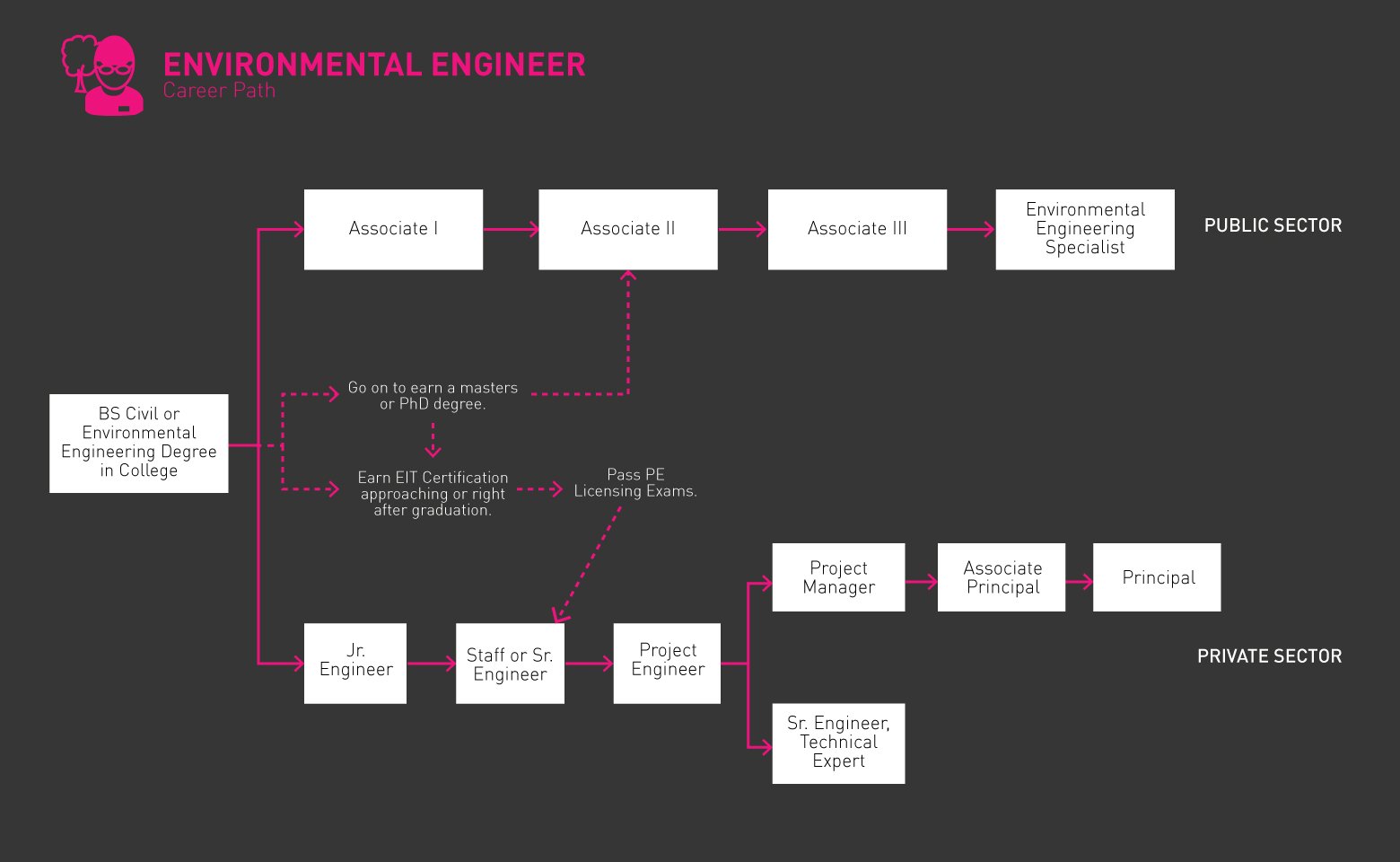
- Complete at least one or two internships or co-ops before graduation, since many lead directly to job offers
- Search for entry-level titles such as Staff Engineer, Environmental Engineer I, Project Engineer, Engineer in Training, Environmental Scientist, or Field Engineer
- Browse job boards like Indeed and LinkedIn, plus career pages at engineering consulting firms, city utilities, and state environmental agencies
- Check government job sites for federal, state, and municipal engineering and environmental positions
- Pass the Fundamentals of Engineering exam before or soon after graduation and list your EIT status on your resume
- Complete 40-hour HAZWOPER training and any other safety training that makes you ready for field work
- Highlight your capstone, research, and lab projects with specific results, such as the pollutant removal rate you achieved
- Show off technical skills like AutoCAD, GIS, Python, and modeling software on your resume and in a simple online portfolio
- Attend career fairs and local chapter meetings of ASCE, WEF, AWWA, or the Air and Waste Management Association to meet hiring managers
- Network with professors, alumni, and guest speakers, who often hear about openings before they are posted
- Prepare to talk about teamwork, fieldwork, and how you handle safety and ethics in interviews
- Be open to starting in field-heavy or compliance-focused roles, which build experience and often lead to design and project management
- Build a strong technical foundation in a specialty such as water treatment, remediation, air quality, or stormwater
- Earn your Professional Engineer license, which unlocks senior responsibility and the ability to sign and seal designs
- Take on increasing responsibility, from calculations and drawings to leading design tasks, managing budgets, and running whole projects
- Develop communication and client skills, since senior engineers spend much of their time presenting, negotiating, and building trust
- Pursue certifications or advanced degrees, such as a master's, project management credentials, or LEED and sustainability certifications
- Build a reputation for reliable, honest, and clear work that clients and regulators trust
- Move into roles such as Senior Engineer, Project Manager, Technical Specialist, Department Head, or Principal
- Stay active in professional organizations, present at conferences, and mentor younger engineers to grow your network and influence
Websites:
- American Academy of Environmental Engineers and Scientists (AAEES) - www.aaees.org
- American Society of Civil Engineers (ASCE) - asce.org
- Water Environment Federation (WEF) - wef.org
- American Water Works Association (AWWA) - awwa.org
- Air and Waste Management Association (A&WMA) - awma.org
- Engineers Without Borders USA - ewb-usa.org
- National Society of Professional Engineers (NSPE) - nspe.org
- NCEES (FE and PE exam information) - ncees.org
- ABET - abet.org
- Society of Women Engineers (SWE) - swe.org
- Solid Waste Association of North America (SWANA) - swana.org
- National Ground Water Association (NGWA) - ngwa.org
- U.S. Environmental Protection Agency (student and career resources) - epa.gov
- Environmental Science and Technology (American Chemical Society journal) - pubs.acs.org/journal/esthag
Books:
- Introduction to Environmental Engineering by Mackenzie L. Davis and David A. Cornwell
- Environmental Engineering: Fundamentals, Sustainability, Design by James R. Mihelcic and Julie Beth Zimmerman
- Wastewater Engineering: Treatment and Resource Recovery by George Tchobanoglous, H. David Stensel, Ryujiro Tsuchihashi, and Franklin Burton
- Silent Spring by Rachel Carson
- A Civil Action by Jonathan Harr
If you find that being an Environmental Engineer isn't the right fit, your skills in science, design, and protecting public health transfer to many related careers.
- Civil Engineer
- Chemical Engineer
- Environmental Scientist
- Hydrologist
- Environmental Health and Safety Specialist
- Water Treatment Plant Operator
- Sustainability Consultant
- Renewable Energy Engineer
- Urban and Regional Planner
- Environmental Policy Analyst
Newsfeed

Featured Jobs
Online Courses and Tools
Annual Salary Expectations
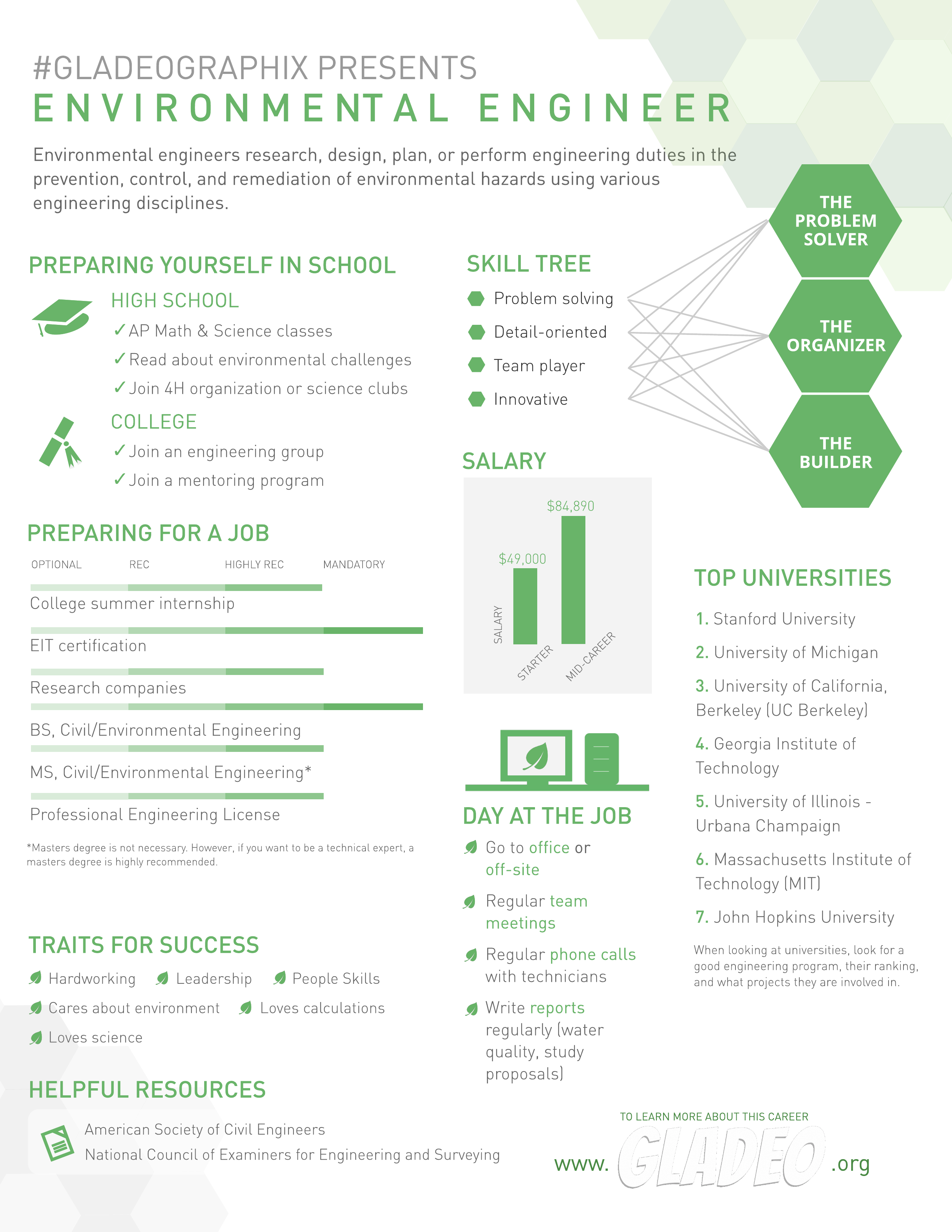
New workers start around $78K. Median pay is $100K per year. Highly experienced workers can earn around $125K.