





Spotlights
Ethnobotanist, Traditional Medicine Researcher, Herbal Pharmacologist, Natural Products Chemist, Medicinal Plant Specialist, Pharmacognosist, Botanical Pharmacologist, Indigenous Medicine Scientist, Complementary Medicine Researcher, Plant-based Drug Researcher, Ethnopharmacology Analyst, Natural Remedies Researcher
Imagine discovering natural medicines hidden in the plants and traditions of cultures around the world—medicines that could lead to new treatments for diseases and improve global health. Ethnopharmacologists unlock these secrets by studying how different communities use plants and natural substances to heal.
Ethnopharmacologists spend their days researching traditional remedies, collecting plant samples, and analyzing their chemical compounds. They work closely with indigenous healers, botanists, chemists, and healthcare professionals to document how cultures use natural remedies. Their goal is to identify active ingredients that could become modern medicines or therapies, making an impact on healthcare and preserving cultural knowledge.
Using laboratory techniques like chromatography and spectroscopy alongside fieldwork methods, ethnopharmacologists carefully analyze natural substances for safety and effectiveness. Their role is crucial in bridging ancient wisdom with modern science, helping to create new drugs and promote sustainable use of natural resources.
- Contributing to medical breakthroughs by discovering new natural medicines.
- Preserving and respecting indigenous knowledge and cultural heritage.
- Collaborating with diverse experts and communities worldwide.
- Seeing traditional remedies validated and integrated into modern healthcare.
Working Schedule
Ethnopharmacologists often balance time between field research—traveling to remote areas to engage with local communities—and laboratory work analyzing samples. Their schedule can be irregular, with long hours during research trips and deadlines for publishing findings or grant proposals. Many work in universities, research institutions, or biotech companies, while others spend extended periods in the field. Deadlines and funding cycles can add pressure, but the work environment is intellectually stimulating and often involves international collaboration.
Typical Duties
- Conduct fieldwork to collect plant and natural product samples from various cultures.
- Interview and collaborate with indigenous healers and traditional practitioners.
- Document traditional uses of plants and natural remedies through detailed notes and recordings.
- Analyze chemical compounds of natural substances using lab instrumentation.
- Test biological activity and safety of plant extracts in research labs.
- Publish research findings in scientific journals and present at conferences.
- Develop databases and catalogs of medicinal plants and their uses.
- Ensure ethical research practices respecting indigenous rights and biodiversity.
- Collaborate with pharmacologists, botanists, and healthcare providers.
- Apply for research grants and manage project budgets.
- Educate students or community members about ethnopharmacology.
- Review and stay updated on relevant scientific literature.
Additional Responsibilities
- Advocate for sustainable harvesting and conservation of medicinal plants.
- Work with legal teams on intellectual property and benefit-sharing agreements.
- Teach university courses or conduct workshops on ethnopharmacology.
- Participate in interdisciplinary teams for drug development projects.
- Assist in policy-making related to traditional medicine and natural products.
- Mentor junior researchers or interns.
- Engage in public outreach to raise awareness about traditional medicine.
- Contribute to the development of ethical guidelines for research involving indigenous knowledge.
Mornings often begin reviewing field notes or lab data from previous days, planning the day's experiments or interviews, and coordinating with team members. Ethnopharmacologists might prepare equipment or organize sample collections before heading out.
Midday is typically spent in labs conducting chemical analyses using instruments like mass spectrometers or preparing plant extracts for testing. Alternatively, if in the field, they engage directly with community members, learning about traditional remedies and documenting their uses carefully and respectfully.
Afternoons might involve data interpretation, writing research reports, or participating in meetings with collaborators. Some days end with virtual conferences or seminars, discussing findings or brainstorming new study directions. Balancing lab and fieldwork requires adaptability and strong communication skills.
Soft Skills
- Curiosity and passion for learning about cultures and natural science.
- Excellent communication and interviewing skills.
- Cultural sensitivity and respect for indigenous knowledge.
- Strong critical thinking and analytical abilities.
- Patience and persistence during long research processes.
- Teamwork and collaboration across disciplines.
- Ethical judgment and integrity.
- Organizational skills for managing complex projects.
- Adaptability to field and laboratory environments.
- Attention to detail in data collection and analysis.
- Problem-solving mindset for scientific challenges.
- Effective public speaking and writing skills.
Technical Skills
- Knowledge of botanical identification and taxonomy.
- Proficiency with laboratory techniques like chromatography and spectroscopy.
- Experience with data analysis software and research databases.
- Familiarity with ethnographic research methods.
- Understanding of pharmacology and toxicology principles.
- Competence in chemical extraction and compound isolation.
- Ability to document and catalog plant specimens.
- Use of GIS and mapping tools for fieldwork.
- Grant writing and scientific publishing skills.
- Knowledge of ethical standards and legal regulations in research.
- Academic Ethnopharmacologist: Conducts research primarily in universities and publishes scholarly work.
- Industry Researcher: Works in pharmaceutical or biotech companies developing plant-based drugs.
- Field Ethnopharmacologist: Focuses on collecting data directly from indigenous communities and natural habitats.
- Regulatory Specialist: Ensures compliance with laws on natural products and indigenous rights.
- Conservation Ethnopharmacologist: Works on protecting biodiversity and sustainable harvesting.
- Educator: Teaches ethnopharmacology and related subjects at academic institutions.
- Policy Advisor: Helps shape healthcare and environmental policies involving traditional medicine.
- Consultant: Advises companies or organizations on ethnopharmacology-related projects.
- Universities with pharmacology or anthropology departments
- Biotechnology and pharmaceutical companies
- Government research agencies
- Nonprofit organizations focused on traditional medicine
- Herbal product manufacturers
- Environmental conservation groups
- Museums and botanical gardens
- Healthcare institutions integrating complementary medicine
- International health organizations
- Agricultural research centers
- Cultural heritage organizations
- Academic journals and publishing houses
Ethnopharmacologists face intense pressure to conduct ethical research that respects indigenous communities while advancing scientific knowledge. Fieldwork can be physically demanding, involving travel to remote or challenging environments where conditions may be unpredictable. Deadlines for publishing and grant submissions add mental stress, requiring excellent time management and resilience.
Working hours vary widely; field research might require weeks away from home with long days spent collecting samples and interviewing, while lab work often involves standard hours but can extend into nights when experiments require continuous monitoring. Balancing academic responsibilities like teaching or conferences adds complexity to schedules.
Sacrifices include time away from family and friends during field trips, financial uncertainty especially in academia or nonprofit sectors, and the emotional challenge of navigating cultural differences and ethical dilemmas. Staying current with rapidly evolving science and maintaining funding support are ongoing demands.
- Growing interest in natural and plant-based medicines worldwide.
- Advancements in analytical chemistry improving compound identification.
- Stronger emphasis on ethical research and benefit-sharing with indigenous communities.
- Integration of ethnopharmacology with biotechnology for drug discovery.
- Use of digital tools and databases to catalog traditional knowledge.
- Increased collaboration between scientists, indigenous groups, and policymakers.
- Focus on sustainability and conservation of medicinal plants.
- Expansion of complementary and alternative medicine in healthcare.
- Global health challenges driving new research into traditional remedies.
- Greater public awareness and acceptance of ethnopharmacology findings.
Many ethnopharmacologists were fascinated by nature, plants, and healing traditions from a young age. They often enjoyed exploring outdoors, collecting herbs, or experimenting with natural remedies inspired by family or cultural heritage. A curiosity about how different cultures live and heal is a common early trait.
They might have also been drawn to science, especially biology or chemistry, excelling in school subjects that explained how living things work. Early experiences like traveling, learning new languages, or volunteering with community health projects often spark their passion for ethnopharmacology.
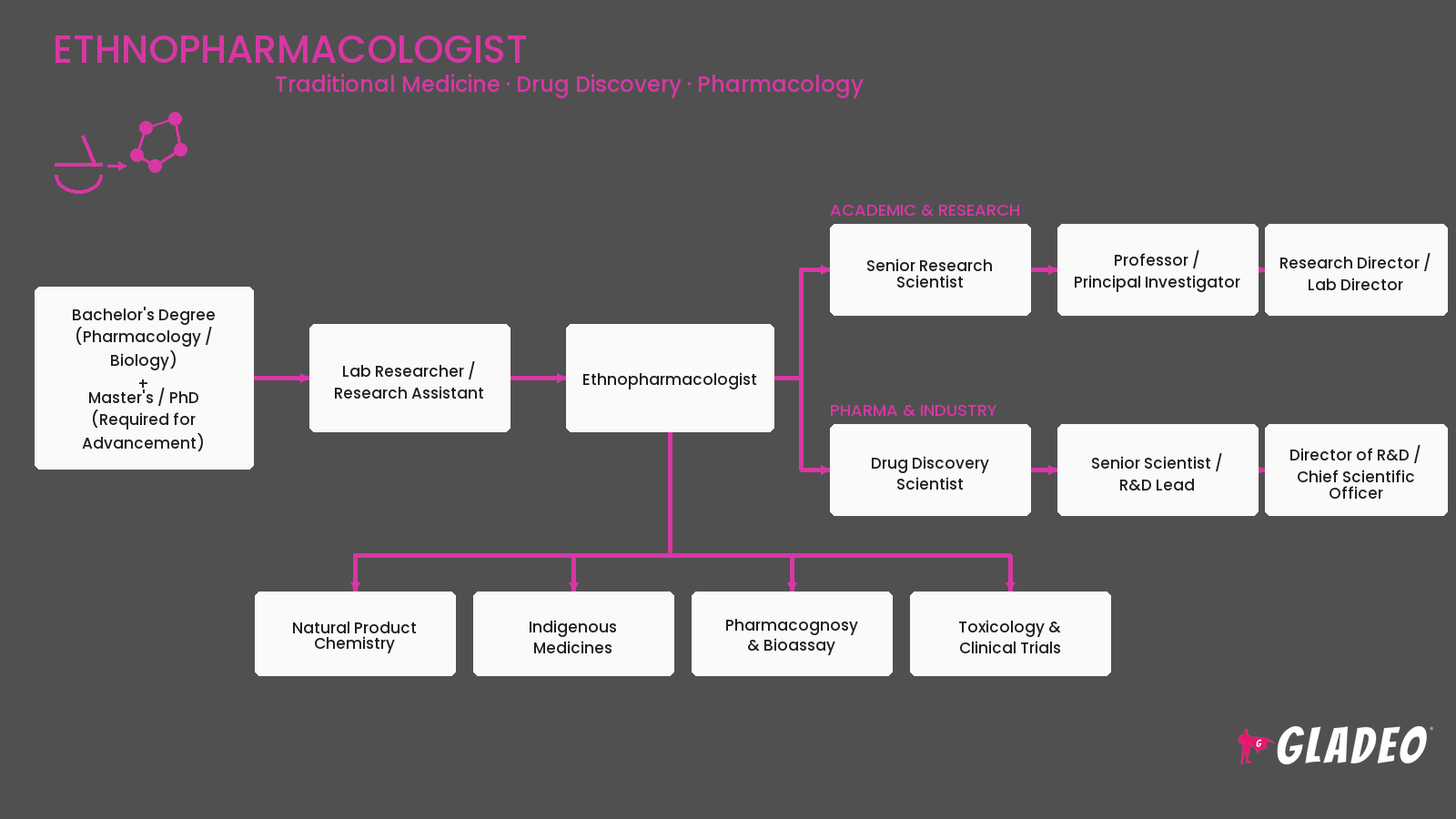
Becoming an ethnopharmacologist usually requires advanced education in biology, pharmacology, anthropology, or related fields. A bachelor's degree is essential, often followed by graduate studies (master's or PhD) focusing on ethnobotany, pharmacognosy, or natural product chemistry. Hands-on research experience and interdisciplinary training strengthen your expertise.
Students can take courses in relevant subjects such as:
- Biology and Botany
- Chemistry and Organic Chemistry
- Pharmacology and Toxicology
- Anthropology and Cultural Studies
- Ethnobotany and Ethnopharmacology
- Research Methods and Statistics
- Environmental Science and Conservation
- Biochemistry
- Herbal Medicine and Natural Products
- Scientific Writing and Communication
Gaining practical experience through internships, fieldwork, or lab assistant positions is key to building skills and professional networks. Developing a strong research portfolio and collaborating with experienced mentors during graduate studies can open doors to career opportunities. Lifelong learning is essential, as ethnopharmacology bridges multiple scientific disciplines that continue to evolve.
- Take advanced science courses such as biology, chemistry, and environmental science.
- Enroll in anthropology or cultural studies electives if available.
- Participate in science fairs or research projects focused on plants or health.
- Join clubs related to biology, chemistry, or cultural exchange.
- Volunteer or intern at botanical gardens, museums, or healthcare settings.
- Learn a second language to communicate with diverse communities.
- Explore summer programs or workshops in ethnobotany or pharmacology.
- Read books and articles on traditional medicine and natural products.
- Develop strong writing and research skills through school assignments.
- Seek mentorship from science teachers or local researchers.
- Practice ethical awareness and cultural sensitivity in group activities.
- Stay curious about global health and environmental issues.
- Look for programs offering interdisciplinary studies combining biology, chemistry, and anthropology.
- Choose schools with strong research facilities and active fieldwork opportunities.
- Check if the program has partnerships with indigenous organizations or conservation projects.
- Prioritize courses that teach lab techniques and field research methods.
- Seek programs with faculty experienced in ethnopharmacology or related specialties.
- Consider programs that encourage internships or study abroad experiences.
- Evaluate the availability of funding or scholarships for research projects.
- Look for programs offering training in ethical research and intellectual property laws.
- Ensure access to modern analytical equipment like mass spectrometers and chromatographs.
- Choose schools with vibrant academic communities and networking events.
- Check for alumni success in ethnopharmacology careers.
- Find programs that support student publications and conference participation.
- Apply for internships or assistant positions in university research labs.
- Volunteer for field research projects or botanical surveys.
- Build a portfolio documenting your research and fieldwork experiences.
- Network with professors and professionals at conferences and seminars.
- Seek entry-level roles in pharmaceutical or biotech companies focusing on natural products.
- Participate in citizen science projects related to plants or traditional medicine.
- Gain experience with lab instruments and data analysis software.
- Improve language skills to work with diverse communities.
- Attend workshops on research ethics and grant writing.
- Publish or present your early research findings.
- Join professional organizations for mentorship and resources.
- Develop strong communication skills for interviews and presentations.
- Pursue graduate degrees (Master’s, PhD) to specialize and increase research opportunities.
- Publish research in respected scientific journals.
- Build collaborations across disciplines and international partners.
- Secure funding through grants and fellowships.
- Gain experience leading your own projects or teams.
- Present at conferences and become a recognized voice in the field.
- Teach and mentor students to expand influence.
- Stay current with emerging technologies and evolving ethical standards.
Websites:
- Society for Economic Botany (www.econbot.org)
- American Society of Pharmacognosy (www.pharmacognosy.us)
- International Society for Ethnopharmacology (www.ethnopharmacology.org)
- National Institutes of Health - National Center for Complementary and Integrative Health (www.nccih.nih.gov)
- Centers for Disease Control and Prevention (www.cdc.gov)
- Botanical Society of America (www.botany.org)
- World Health Organization - Traditional Medicine (www.who.int/health-topics/traditional-complementary-and-integrative-medicine)
- Ethnobotany Research & Applications (ethnobotanyjournal.org)
- Phytochemical Society of Europe (www.phytochemicalsociety.org)
- Environmental Protection Agency (www.epa.gov)
- International Society of Ethnobiology (ethnobiology.org)
- National Geographic - Plants and Medicine (www.nationalgeographic.com/science/article/plants-and-medicine)
- American Botanical Council (www.herbalgram.org)
- Science Magazine - Ethnopharmacology Section (www.sciencemag.org)
Books:
- Ethnopharmacology: A Reader by Michael J. Balick and Paul Alan Cox
- Plants, People, and Culture: The Science of Ethnobotany by Michael J. Balick and Paul Alan Cox
- Medicinal Plants of the World by Ben-Erik van Wyk and Michael Wink
- Pharmacognosy and Pharmacobiotechnology by Ashutosh Kar
- The Way of Herbs by Michael Tierra
If ethnopharmacology isn’t the exact path you take, many related careers let you explore plants, health, and culture in exciting ways. These options can use your skills in research, science, and cultural understanding.
- Pharmacist
- Botanist
- Pharmacologist
- Medical Scientist
- Anthropologist
- Herbalist
- Environmental Scientist
- Toxicologist
- Biochemist
- Public Health Researcher
Newsfeed

Featured Jobs
Online Courses and Tools