




Spotlights
Artist, Ceramic Artist, Designer, Fiber Artist, Fine Craft Artist, Furniture Maker, Glass Artist, Glass Blower, Goldsmith, Hand-Weaver, Exhibit Artist, Visual Artist, Gallery Artist, Studio Artist, Fine Artist, Contemporary Artist
Exhibiting Artists (aka Exhibit Artists) are creative professionals who produce original works of art and have them displayed in public or private venues such as galleries, museums, and art fairs.
Their creations can range from paintings and photographs to sculptures or mixed media installations. Their primary goal, aside from selling their work to make money, is to communicate ideas and engage viewers. Through their work, they explore aesthetic concepts, offer visual commentary on issues, and contribute to the cultural landscape.
Unlike most other career paths, this profession is not straightforward or predictable. It requires creative talent, perseverance, and a solid grasp of the business side of the art world, including marketing, sales, and networking with galleries, curators, and collectors.
Exhibiting Artists might devote months to creating artworks with no guarantees their work will be displayed or sold. They must find suitable galleries willing to organize exhibitions, and sometimes the galleries charge rent for the space (along with a commission on any pieces sold).
Once an exhibition space is secured, the artists must prepare and transport their pieces to the gallery where they will be showcased. They frequently participate in opening receptions where they speak with the public, potential buyers, and art critics in attendance. All in all, it can be a rewarding field, but there’s also a heavy amount of uncertainty and the possibility of financial struggles as artists strive to grow their reputation!
- Expressing creativity and personal vision through art
- Engaging with audiences and receiving feedback
- Having one’s work appreciated and valued in exhibitions
- Opportunities for travel and exposure to different art scenes
Working Schedule
Exhibiting Artists often work independently at home or in studios. They usually set their own hours and might have intense periods of work leading up to exhibitions. Travel is necessary to transport their art pieces and to attend shows.
Typical Duties
- Develop creative ideas for making original art
- Create sketches, templates, or models to work from
- Establish a budget to purchase supplies
- Select materials to use, based on color, texture, durability, and other factors
- Develop art pieces in various media (i.e., painting, sculpture, photography, etc.). Shape, join, or cut materials as needed
- Generate cohesive bodies of work for exhibitions. Prepare documentation such as descriptions, press releases, invitations, and promotional materials
- Take photos during the creation process and after the pieces are completed
- Develop portfolios to showcase pieces to galleries and collectors
- Collaborate with galleries and curators to organize and plan exhibitions, including group shows or theme-related shows, if suitable
- Handle logistics such as framing, transportation, and installation of art pieces
- Obtain specialized art insurance, if needed
- Display work at galleries, auctions, fairs, museums, print publications, and online markets
- Maintain an online presence via websites and social media
- Interact with the public and potential buyers, especially at exhibition openings
Additional Responsibilities
- Stay current with art trends
- Participate in artist residencies and workshops
- Apply for grants and funding
- Network with other artists, collectors, and art professionals
- Manage applicable business aspects, including marketing, sales, networking, accounting, paying taxes, etc.
- Note, there are many tax considerations to consider, including but not limited to:
- Accounting and legal fees
- Advertising and promotion costs
- Associated business fees
- Commissions paid to galleries
- Income taxes from sales
- Insurance (including automobile insurance since artists must transport their work)
- Studio and gallery space rent expenses
- Supplies, materials, and equipment
- Travel expenses
An artwork can begin with a simple idea, a personal experience, or a desire to express something about the world. Exhibiting Artists create original works and share them with the public through art galleries, museums, exhibitions, art fairs, and other venues. They use different materials, techniques, and creative approaches to communicate ideas, evoke emotions, and encourage people to see things from new perspectives. Their work combines artistic talent, experimentation, self-expression, and the ability to present and promote their creations.
A typical day might include:
- Developing artistic concepts and researching subjects, themes, historical references, or social issues for new artwork.
- Creating original paintings, sculptures, photographs, illustrations, installations, mixed-media pieces, or digital artworks.
- Experimenting with different materials, tools, colors, textures, and artistic techniques to develop a distinctive style.
- Sketching ideas, preparing preliminary designs, and planning the size, composition, and presentation of artworks.
- Visiting art galleries, museums, exhibitions, and cultural events to explore new ideas and stay informed about artistic trends.
- Photographing, documenting, and organizing completed artworks for portfolios, exhibition applications, and promotional materials.
- Preparing artwork for display by selecting frames, mounting pieces, arranging installations, and creating labels or descriptions.
- Communicating with gallery owners, curators, exhibition organizers, collectors, and other artists about upcoming opportunities.
- Participating in art exhibitions, gallery openings, artist talks, workshops, and public demonstrations.
- Promoting artwork through personal websites, social media, online art platforms, and professional networks.
- Managing artwork sales, commissions, exhibition schedules, shipping arrangements, and other business responsibilities.
- Reviewing feedback from viewers, critics, and fellow artists to reflect on their work and develop future projects.
Soft Skills
- Communication skills
- Creativity
- Customer-oriented
- Discipline
- Good color vision
- Independence
- Motivation
- Negotiation
- Networking
- Outgoing personality
- Patience
- Persistence
- Persuasion
- Resilience
- Salesmanship
- Time management
Technical Skills
The technical skills needed depend on the medium that the artist prefers. For example:
- In painting, Exhibiting Artists might work with oil paints, acrylics, watercolors, gouache, or encaustic, using tools like brushes, palette knives, canvases, easels, palettes, sponges, paint thinner, and gesso.
- For sculpture, artists may use clay, stone, metal, wood, plaster, or resin, employing chisels, hammers, mallets, modeling tools, kilns, welding equipment, saws, carving tools, sandpaper, files, molds, and casting tools.
- In photography, artists use cameras, lenses, tripods, lighting equipment, darkrooms (for film), editing software like Photoshop and Lightroom, printers, and framing and matting supplies.
- Printmaking involves etching, lithography, screen printing, woodcut, and linocut, with tools including printing presses, brayers, inking plates, carving tools, screens, squeegees, etching needles, acid baths, lithography stones, rollers, paper, and ink.
- For mixed media art, artists use adhesives, scissors, X-Acto knives, sewing needles, thread, cutting mats, paints, markers, brushes, sponges, sandpaper, and files.
- Digital art is created using graphics tablets, stylus pens, computers, monitors, software like Photoshop, Illustrator, Blender, and Maya, 3D printers (for physical models), storage devices, and printers.
- Textile art (weaving, knitting, embroidery, quilting) requires looms, knitting needles, crochet hooks, embroidery hoops, needles, sewing machines, scissors, fabric shears, threads, yarns, fabrics, measuring tapes, and rulers.
- In glass art, whether stained, blown, fused, or lampworked, artists use glass cutters, kilns, torches, soldering irons, glass grinders, molds, and protective gloves and eyewear.
- Ceramics involves working with earthenware, stoneware, porcelain, or raku using pottery wheels, kilns, clay extruders, modeling tools, slip, glazes, brushes for applying glaze, and wire cutters.
- Metalwork, including jewelry, blacksmithing, metal sculpture, or enameling, requires anvils, hammers, welding torches, soldering irons, metal cutters, shears, files, sanders, casting molds, and polishing wheels.
Other, more generalized technical skills include:
- Ability to curate and install exhibitions
- Arm and hand steadiness
- Business acumen and marketing skills
- Digital skills for online marketing and sales
- Graphic design
- Knowledge of art history and contemporary art
- Manual dexterity
- Portfolio creation
- Press release writing
- Painting Artist
- Sculpture Artist
- Photography Artist
- Printmaking Artist
- Mixed Media Artist
- Installation Artist
- Digital Artist
- Textile Artist
- Ceramic Artist
- Glass Artist
- Conceptual Artist
- Performance Artist
- Drawing Artist
- Contemporary Artist
- Public Art Artist
- Art fairs
- Art galleries
- Cultural institutions
- Independent studios
- Magazines
- Museums
- Online platforms
Exhibiting Artists are expected to create high-quality work that embodies their unique vision and resonates with the art market, which can be notoriously unpredictable.
They must balance creative pursuits with practical demands such as consistently displaying and selling their work. Establishing a reputation often takes years, and even then, the value of one’s art can fluctuate with market trends. This can make for a stressful experience.
Due to the inherent financial uncertainties of the art world, many Exhibiting Artists supplement their income through other jobs. They may struggle with rejection and criticism from critics and gallery owners, whose opinions can impact their careers and livelihoods. But the most successful artists stick with it, continue to develop their talents, adapt and learn from mistakes, and stay true to their overarching vision and goals!
The art world is undergoing significant changes, with several key trends shaping its future. One of the most prominent shifts is the embrace of digital transformation, where artists increasingly showcase their work online and leverage social media to connect with a broader, global audience. Virtual exhibitions and online sales platforms are becoming standard, offering new avenues for visibility, income, and collaboration.
Meanwhile, immersive art experiences, such as interactive installations and augmented reality art, are gaining popularity, too. The rise of NFTs (Non-Fungible Tokens) has opened up intriguing new possibilities for digital art ownership and monetization, though it comes with some risk as values can drop quickly.
Sustainability is a growing priority, with more artists turning to eco-friendly materials. There’s also much more focus on inclusive practices, leading to more opportunities for artists from underrepresented communities.
Exhibiting Artists often have a lifelong passion for creativity and visual expression. As children, they might have enjoyed drawing, painting, sketching, coloring, or building things with their hands. Many liked experimenting with different art materials, such as crayons, watercolors, clay, markers, and recycled objects to create something original. They may have enjoyed making crafts, decorating their rooms, designing greeting cards, or creating handmade gifts for family and friends.
Some were fascinated by visiting art museums, galleries, cultural exhibitions, and craft fairs, where they could discover different artistic styles and techniques. Others enjoyed taking photographs, collecting interesting objects, creating collages, or keeping sketchbooks filled with ideas and observations. Many were involved in school art classes, creative clubs, theater productions, photography groups, or community art activities. They may also have enjoyed entering art competitions, displaying their creations at school, and receiving feedback from teachers and classmates.
As they grew older, they might have experimented with digital illustration, sculpture, printmaking, photography, or other creative mediums. Above all, they often enjoyed expressing their thoughts, feelings, imagination, and personal experiences through artwork and finding different ways to share their creations with others.
Becoming an Exhibiting Artist does not always require a formal degree, but many artists pursue a bachelor's degree in Fine Arts, Studio Art, Visual Arts, or a related field. These programs provide a foundation in artistic techniques, creative development, art history, and the professional skills needed to create and exhibit original artwork.
Relevant coursework may include:
- Fine Arts: Developing artistic skills in drawing, painting, sculpture, printmaking, and other traditional and contemporary art forms.
- Studio Art: Providing hands-on training in creating original artwork, experimenting with materials, and developing a personal artistic style.
- Art History: Studying major art movements, influential artists, cultural traditions, and the historical development of visual art.
- Drawing and Painting: Learning techniques involving composition, perspective, color theory, shading, proportions, and different artistic mediums.
- Sculpture and Three-Dimensional Design: Exploring how to create three-dimensional artworks using materials such as clay, wood, metal, stone, and other substances.
- Photography and Digital Art: Developing skills in digital imaging, photography, photo editing, illustration, and computer-based artistic techniques.
- Printmaking: Learning methods such as etching, screen printing, lithography, and relief printing to produce original or limited-edition artworks.
- Mixed Media and Installation Art: Experimenting with different materials, objects, textures, and spatial arrangements to create innovative artistic presentations.
- Art Criticism and Contemporary Art: Studying how artworks communicate ideas, respond to social issues, and contribute to modern artistic discussions.
- Arts Management and Entrepreneurship: Learning how to price artwork, prepare exhibition proposals, market creative work, manage sales, and build professional relationships.
Practical experience is especially valuable in this career. Students can gain experience through art exhibitions, studio projects, gallery internships, artist residencies, community art programs, and collaborative creative projects. Developing a strong portfolio and participating in exhibitions can help artists establish their reputation, attract collectors, and build professional connections. Some artists also pursue a Master of Fine Arts (MFA) for advanced artistic development, teaching opportunities, or specialized creative research.
- Take courses in art, graphic design, art history, photography, public speaking, and business
- Join art clubs at school or in the local community. If there isn’t one, start your own!
- Volunteer to work on public art projects
- Try to sell your artwork at local events or online. Consider making prints or selling other products that feature images of your art, if applicable
- Build a portfolio of your work to share on your website and social media
- Think about your personal branding and how you want to be perceived as an artist
- Talk to local businesses about displaying your art to gain exposure
- Study books, articles, and video tutorials related to your chosen art medium
- Read about successful fine artists for inspiration and insights
- Apply for apprenticeships or seek a mentor who can guide you
- Attend art exhibitions and engage with the local art community
- Stay informed about contemporary art trends and techniques
- Hands-on learning and internships at art galleries, museums, artist studios, cultural institutions, or exhibition spaces.
- Courses in fine arts, studio art, drawing, painting, sculpture, photography, printmaking, art history, and contemporary art.
- Opportunities to create original artworks using different materials, artistic techniques, and creative mediums.
- Access to art studios, painting facilities, sculpture workshops, photography equipment, printmaking studios, and digital art laboratories.
- Strong connections to art galleries, museums, exhibition organizers, cultural organizations, professional artists, and art communities.
- Opportunities to participate in student exhibitions, art fairs, collaborative projects, public art installations, and creative competitions.
- Exposure to modern artistic technologies, including digital illustration, photo editing, digital photography, 3D modeling, and multimedia art tools.
- Training in artistic composition, color theory, visual storytelling, material techniques, art presentation, and exhibition preparation.
- Access to instructors with professional experience in fine arts, contemporary art, illustration, sculpture, photography, or exhibition practices.
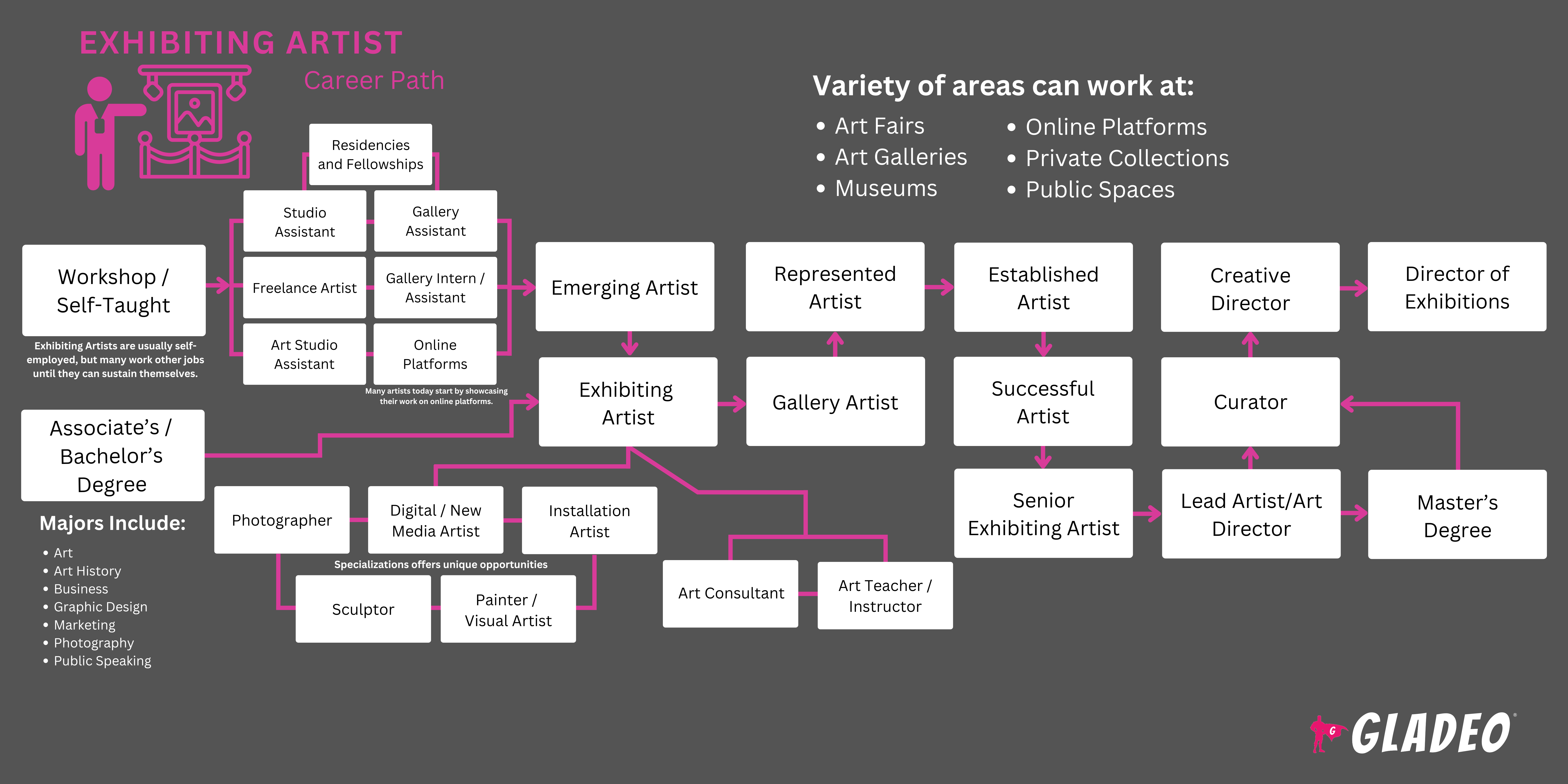
- Exhibiting Artists are usually self-employed, but many work other jobs until they can sustain themselves
- Use job portals like Indeed to find art-related work opportunities
- Prepare a strong portfolio, resume, and artist statement to highlight your skills and experience
- Utilize your school’s career services for job search assistance, resume writing, and interviewing
- Ask your program if they have industry connections that could help you
- Participate in art-related events where you can showcase your work and grow your reputation
- Enter art contests, promote yourself on social media, and garner an audience on popular art websites like DeviantArt
- Consider creating a hard copy portfolio with high-quality prints of your work. Take this with you to events, along with business cards or promotional materials
- Move to areas that have a vibrant arts community and plenty of galleries
- Research suitable galleries. Try to visit them or carefully review their websites or publications. Find out about their submission guidelines and submit a professional letter of inquiry, if needed
- Engage in online forums to get advice
- Ask your professors, supervisors, and peers if they’ll serve as personal references
- Network with other artists and art professionals
- Consistently deliver innovative, creative, high-quality artwork that attracts buyers
- Network with art dealers and advisors to promote your work to high-end clients and prestigious galleries
- Forge strong relationships with gallery staff, curators, collectors, and other buyers
- Diversify your techniques by experimenting with different mediums, styles, and approaches
- Develop a cohesive body of work that defines your style and makes your art recognizable
- Focus on building a strong personal brand that communicates your artistic vision, values, and identity to collectors and galleries
- Leverage social media and digital platforms to share your work, process, and exhibitions
- Continue to develop your online presence to market your work directly
- Branch out to include other products such as prints, apparel, or other merchandise featuring your designs or images
- Collaborate with other artists, designers, or creatives on projects to cross-promote and reach new audiences
- Pursue public art commissions to increase visibility and establish your reputation
- Offer workshops or classes to share your expertise and build your reputation as an expert
- Document and share your artistic journey through blogs, vlogs, or newsletters to build a deeper connection with your audience
- Secure a mentor who can provide guidance, feedback, and insider knowledge about the industry
- Watch and learn from more senior artists
- Join professional organizations and try to win awards or other recognition
- Apply for grants from the National Endowment for the Arts or other organizations
- Seek additional training and residencies to refine skills, learn new things, and meet other artists
- Participate in events, art fairs, and international exhibitions. Pay attention to trends while trying to express your unique style
Websites
- American Craft Council
- Artforum
- Artist-Blacksmith’s Association of North America
- ArtNet
- Artsy
- Glass Art Society
- National Assembly of State Arts Agencies
- National Association of Independent Artists
- National Association of Schools of Art and Design
- National Endowment for the Arts
- National Sculpture Society
- National Watercolor Society
- New York Foundation for the Arts
- Oil Painters of America
- Saatchi Art
- Sculptors Guild
- Society of Decorative Painters
- Society of Illustrators
- The Art Newspaper
Books
- ART/WORK: Everything You Need to Know (and Do) As You Pursue Your Art Career, by Heather Darcy Bhandari and Jonathan Melber
- Art Money Success: Finally Make Money Doing What You Love: A Complete and Easy-to-Follow System for the Artist Who Wasn’t Born with a Business Mind, by Maria Brophy
- How to Sell Art: A Systematic Approach to Creating Relationships with Collectors and Closing the Sale, by J. Jason Horejs
- How to Sell Your Art Online: Live a Successful Creative Life on Your Own Terms, by Cory Huff
- The Artist’s Guide: How to Make a Living Doing What You Love, by Jackie Battenfield
Working as an Exhibiting Artist can be an exhilarating but unpredictable career. If you’re looking for something with a more stable work life, consider some of the related options below:
- Animator
- Architectural Illustrator
- Art Teacher
- Children’s Book Illustrator
- Comic Artist
- Courtroom Sketch Artist
- Desktop Publisher
- Drafter
- Fashion Designer
- Gallery Manager
- Graphic Designer
- Illustrator
- Industrial Designer
- Medical Illustrator
- Museum Worker
- Set Designer
- Special Effects Artist
- Storyboard Artist
- Tattoo Artist
- Technical Illustrator
- Woodworker
Newsfeed

Featured Jobs
Online Courses and Tools
Annual Salary Expectations
New workers start around $38K. Median pay is $59K per year. Highly experienced workers can earn around $88K.