






Spotlights
Adjunct Professor, American Studies Professor, Assistant Professor, Associate Professor, Black Studies Professor, Ethnic Studies Professor, Humanities Professor, Lecturer, Professor, Women's Studies Professor, Cultural Studies Professor, Diversity Studies Professor
Imagine stepping into a classroom where every conversation challenges students to rethink society, identity, and culture—this is the impact a Gender/Multicultural Studies Professor has on shaping minds and fostering inclusive understanding.
These professors design and teach courses on race, gender, ethnicity, and cultural dynamics, engaging undergraduate and graduate students through lectures, discussions, and research. They collaborate with fellow faculty, advisors, and students to create a supportive learning environment that encourages critical thinking about diverse social perspectives.
Using digital learning platforms like Blackboard and tools such as Turnitin for academic integrity, these educators blend technology and scholarship to advance awareness about the complexities of identity, power structures, and social justice—preparing students to be thoughtful, informed citizens in a diverse world.
- Witnessing students grow in empathy and develop their own voices on important social issues.
- Contributing to academic research that expands understanding of culture, gender, and ethnicity.
- Creating a classroom environment that encourages open dialogue and critical thinking.
- Playing a vital role in shaping future leaders who value diversity and inclusion.
Working Schedule
Gender/Multicultural Studies Professors typically work in colleges or universities and often balance teaching with research and administrative duties. Their schedules can vary, with classroom time during weekdays and additional hours spent preparing lessons, grading, meeting students, and conducting research. Some professors work full-time, while adjunct or part-time roles offer more flexible hours but less job security. Deadlines for grading and publishing research can create periods of intense work, especially during semesters.
Typical Duties
- Design and update course curricula on topics like gender theory, ethnic studies, and cultural diversity.
- Prepare and deliver engaging lectures and presentations.
- Lead and moderate classroom discussions to encourage student participation and critical thinking.
- Develop assignments, exams, and grading rubrics tailored to course objectives.
- Evaluate and grade student work including essays, projects, and exams.
- Hold office hours to advise and mentor students individually.
- Collaborate with colleagues on interdisciplinary committees and academic events.
- Stay current with new research and theoretical developments in gender and multicultural studies.
- Publish scholarly articles or books to contribute to academic knowledge.
- Participate in departmental meetings and curriculum planning.
- Incorporate technology such as learning management systems and plagiarism detection software.
- Guide students in independent research or capstone projects.
Additional Responsibilities
- Attend academic conferences and present research findings.
- Serve on university committees focused on diversity and inclusion.
- Advise student organizations related to gender and multicultural topics.
- Apply for grants to fund research projects.
- Mentor junior faculty or teaching assistants.
- Engage in community outreach or public education programs.
- Organize campus events like speaker series or workshops on social justice.
- Contribute to the development of university policies supporting equity and inclusion.
A typical morning might start with reviewing lecture notes and preparing digital materials for the day's classes, ensuring all multimedia and online resources are ready. Professors often check emails from students or colleagues and respond to urgent academic requests.
Midday is usually spent teaching multiple class sessions, facilitating discussions that challenge students to think critically about complex identity and cultural issues. Between classes, the professor might meet with students for advising or work on grading assignments.
In the afternoon or evening, time is devoted to research activities such as reading scholarly articles, writing papers, or collaborating with peers. Professors may also attend faculty meetings or participate in community events promoting diversity and inclusion on campus.
Soft Skills
- Empathy to understand diverse perspectives and student experiences
- Strong communication to explain complex ideas clearly
- Critical thinking to analyze social theories and cultural phenomena
- Patience in guiding students through challenging topics
- Adaptability to incorporate new research and teaching methods
- Collaboration to work with colleagues and student groups
- Cultural sensitivity to respect and validate all identities
- Creativity in designing engaging course materials
- Organizational skills to manage multiple classes and responsibilities
- Public speaking to lead lectures and presentations
- Mentoring to support student growth
- Problem-solving to address classroom challenges and conflicts
Technical Skills
- Proficiency with learning management systems like Blackboard and Sakai
- Use of plagiarism detection tools such as Turnitin
- Familiarity with email and communication software like Microsoft Outlook
- Skills in word processing and collaborative editing software (Google Docs, Microsoft Word)
- Basic data analysis using spreadsheet software such as Microsoft Excel
- Ability to create multimedia presentations using PowerPoint or similar tools
- Experience with online grading and assessment platforms
- Research database navigation and academic journal access
- Use of video conferencing tools for remote teaching
- Digital content creation for course materials
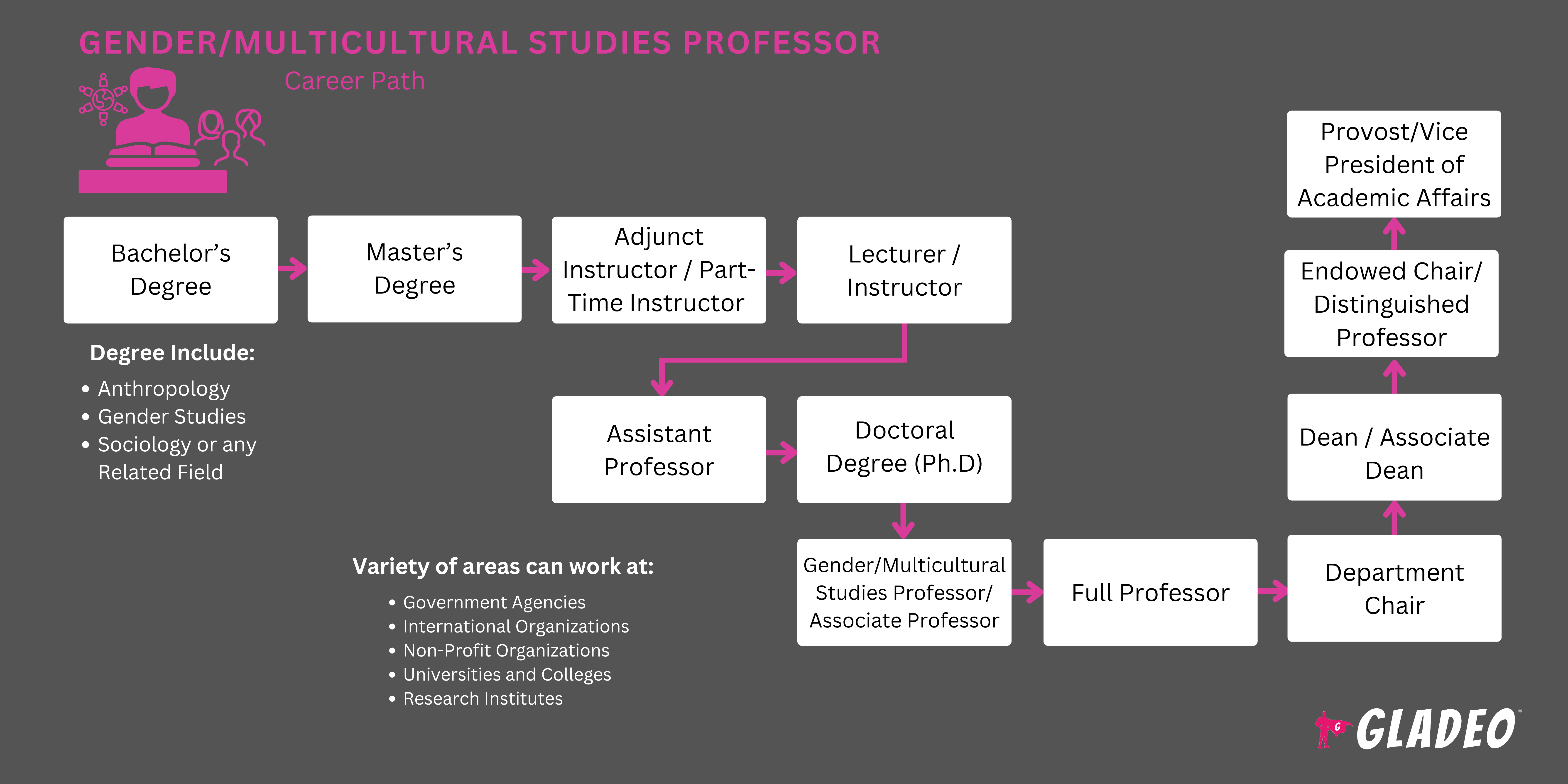
- Adjunct Professor: Part-time instructor focusing mainly on teaching specific courses without research obligations.
- Assistant Professor: Entry-level tenure-track faculty balancing teaching, research, and service duties.
- Associate Professor: Mid-career faculty with tenure, experienced in teaching and research leadership.
- Full Professor: Senior tenured faculty recognized for significant contributions to scholarship and education.
- Lecturer: Primarily teaching-focused faculty with limited research responsibilities, often non-tenure track.
- Clinical Professor: Teacher-practitioner who integrates professional experience into academic instruction.
- Research Professor: Focuses mainly on scholarly research with minimal teaching duties.
- Interdisciplinary Professor: Combines Gender/Multicultural Studies with other fields like sociology or political science.
- Universities and Colleges
- Community Colleges
- Research Institutes
- Cultural Centers
- Nonprofit Educational Organizations
- Government Education Departments
- Public Policy Think Tanks
- Diversity and Inclusion Offices
- Online Education Platforms
- Libraries and Archives
- Academic Journals and Publishers
- Conference Organizers
Professors often face high pressure to balance teaching excellence, research productivity, and service commitments, especially when seeking tenure. The workload can be intense with tight deadlines for grading, publishing, and grant applications.
Work hours typically extend beyond the classroom, including evenings and weekends spent on lesson planning, student meetings, and scholarly work. Adjunct professors may have less predictable schedules but often work multiple jobs to secure enough hours.
Sacrifices include managing stress from competing priorities and navigating sensitive topics that require diplomacy and emotional resilience. Professors must continuously update their knowledge and adapt teaching styles to meet diverse student needs.
- Increasing integration of online and hybrid learning models.
- Growing emphasis on intersectionality in gender and multicultural curricula.
- Use of digital tools for collaborative and inclusive teaching.
- Expansion of community engagement and activism as part of academic roles.
- Greater focus on mental health and well-being in student support.
- Increased funding for diversity-related research projects.
- Cross-disciplinary approaches combining technology and social sciences.
- More emphasis on global perspectives in multicultural education.
- Rise of open-access publishing and digital scholarship.
- Development of micro-credentials and certificates in diversity studies.
Many Gender/Multicultural Studies Professors showed early interest in social justice, reading widely about history and culture, and questioning societal norms. They often enjoyed writing, debating, and participating in clubs focused on community or human rights.
They were curious about different cultures and identities, eager to engage in conversations about fairness and equality, and motivated by a desire to make a positive impact on the world through education and advocacy.
Becoming a Gender/Multicultural Studies Professor generally requires earning advanced degrees, typically a Ph.D., in fields like Gender Studies, Ethnic Studies, Sociology, or Cultural Studies. Graduate programs combine coursework with original research and teaching assistantships to build expertise.
Students can take courses in relevant subjects such as:
- Introduction to Gender Studies
- Race and Ethnicity in Society
- Feminist Theory
- Cultural Anthropology
- Sociology of Race and Ethnicity
- Queer Theory and LGBTQ+ Studies
- Research Methods in Social Sciences
- Intersectionality and Social Justice
- History of Multicultural Movements
- Qualitative and Quantitative Data Analysis
Hands-on experience through teaching assistant roles and internships is invaluable for developing classroom skills and academic confidence. Building a strong portfolio of research and publications during graduate studies enhances job prospects. Many universities also offer workshops on pedagogy and diversity-focused teaching strategies.
- Take advanced courses in history, sociology, psychology, and literature to build a strong foundation.
- Participate in debate clubs or student government to develop public speaking and leadership.
- Engage in community service projects focused on social issues and diversity.
- Attend lectures or events on cultural studies, gender equality, or human rights.
- Practice writing analytical essays and research papers.
- Learn to use digital tools like Google Docs and presentation software.
- Explore college programs with strong humanities and social science departments.
- Seek internships or volunteer positions related to education or advocacy.
- Join multicultural or social justice clubs to gain experience working with diverse groups.
- Develop critical thinking by analyzing current events and social movements.
- Choose programs accredited and recognized for gender or ethnic studies.
- Look for faculty with active research and publications in your interest area.
- Check if the program offers opportunities for teaching assistantships.
- Ensure access to technology resources and learning management systems.
- Consider interdisciplinary programs combining sociology, history, and cultural studies.
- Evaluate support for student research and conference participation.
- Find programs that emphasize diversity, equity, and inclusion in curriculum.
- Look for mentorship opportunities with experienced professors.
- Seek programs offering career services and networking in academia.
- Verify availability of workshops on pedagogy and classroom management.
- Explore options for online or hybrid course flexibility.
- Check alumni success in academic and advocacy careers.
- Apply for teaching assistant positions during graduate school to gain experience.
- Build a portfolio with sample syllabi, lesson plans, and student evaluations.
- Network with professors and attend academic conferences to meet potential employers.
- Seek adjunct professor openings at community colleges or local universities.
- Publish articles or papers to demonstrate research skills.
- Volunteer to lead workshops or guest lectures.
- Utilize university career centers for job postings and interview prep.
- Develop a professional website or academic profile highlighting your work.
- Practice interview questions related to teaching philosophy and diversity topics.
- Prepare a teaching demo showcasing your classroom style.
- Join academic associations focused on gender and multicultural studies.
- Stay flexible with location and contract type to gain initial experience.
- Pursue a doctoral degree and postdoctoral research opportunities.
- Publish consistently in respected academic journals.
- Gain teaching experience with increasing responsibility and course variety.
- Build relationships with mentors and colleagues for recommendations and collaboration.
- Serve on university committees and engage in service roles.
- Apply for tenure-track positions and prepare for tenure review.
- Attend and present at national and international conferences.
- Expand research focus and seek grant funding to support projects.
Websites:
- National Women's Studies Association (NWSA) - nwsawomensstudies.org
- American Studies Association - americanstudies.org
- Sociologists for Women in Society - swsociety.org
- Modern Language Association (MLA) - mla.org
- Association for the Study of African American Life and History - asalh.org
- Teaching Tolerance - learningforjustice.org
- Diversity Abroad - diversityabroad.com
- National Association for Multicultural Education - NAMEorg.org
- The Gender and Sexuality Studies Project - gendersexuality.org
- Inside Higher Ed - insidehighered.com
- Chronicle of Higher Education - chronicle.com
- H-Net Humanities and Social Sciences Online - hnet.org
- The Society for the Study of Social Problems - sssp1.org
- Academia.edu - academia.edu
Books:
- Gender Trouble by Judith Butler
- The Second Sex by Simone de Beauvoir
- Black Feminist Thought by Patricia Hill Collins
- Pedagogy of the Oppressed by Paulo Freire
- Multicultural Education: Issues and Perspectives by James A. Banks
If pursuing a career as a Gender/Multicultural Studies Professor doesn’t work out or if you want to explore related fields, there are many options where your skills in cultural understanding, research, and communication are valuable.
- Diversity and Inclusion Specialist
- Social Worker
- Human Rights Advocate
- Community College Instructor
- Educational Consultant
- Nonprofit Program Coordinator
- Policy Analyst
- Journalist specializing in social issues
- Corporate Social Responsibility Manager
- Museum Educator
Newsfeed

Featured Jobs
Online Courses and Tools
Annual Salary Expectations
New workers start around $0K. Median pay is $97K per year. Highly experienced workers can earn around $0K.