





Spotlights
Therapeutic Horticulturist, Garden Therapist, Horticultural Therapy Specialist, Plant Therapist, Green Therapy Practitioner, Therapeutic Garden Coordinator, Horticultural Rehabilitation Therapist, Nature Therapy Facilitator, Botanical Therapy Consultant, Healing Garden Facilitator, Eco-Therapy Specialist, Landscape Therapy Coordinator
Imagine walking into a hospital or community center and seeing patients, veterans, or children visibly brighten as they dig their hands into soil, nurture plants, and connect with nature. Horticultural Therapists make this healing happen by using gardening and plant-based activities to improve people’s physical, emotional, and social well-being.
On a daily basis, Horticultural Therapists design customized therapy programs that involve planting, pruning, watering, and garden maintenance tailored to each participant’s needs. They collaborate closely with healthcare providers, social workers, occupational therapists, and educators to support rehabilitation, mental health, and social skills development. The ultimate outcome is helping individuals regain movement, reduce stress, build confidence, and find joy through nature.
Using tools like raised garden beds, adaptive gardening equipment, and sometimes even hydroponic systems, these therapists blend knowledge of plant science with psychology and therapy techniques. Their work matters because it offers a holistic, hands-on approach to healing that improves quality of life for people of all ages and abilities.
- Witnessing clients improve their physical abilities and emotional state through engaging with plants and nature.
- Designing creative and personalized therapy activities that make a real difference in people’s lives.
- Building meaningful relationships with clients, families, and healthcare teams.
- Seeing the transformative power of nature on mental health, rehabilitation, and social connection firsthand.
Working Schedule
Horticultural Therapists typically work full-time in healthcare facilities, rehabilitation centers, community organizations, or botanical gardens. Their work often follows typical business hours, but may include some weekends or evenings depending on program schedules. Many work under tight deadlines to meet patient progress goals and coordinate with interdisciplinary teams. The environment is a mix of indoor therapy rooms and outdoor garden spaces, requiring flexibility and adaptability.
Typical Duties
- Assess clients’ physical, emotional, and cognitive abilities to develop individualized horticultural therapy plans.
- Plan and lead gardening and plant-related activities that promote therapeutic goals.
- Collaborate with medical professionals, therapists, and social workers to integrate horticultural therapy into overall treatment plans.
- Monitor and document clients’ progress and adjust activities accordingly.
- Maintain garden areas, tools, and supplies to ensure a safe and accessible environment.
- Educate clients and families about the benefits of horticultural therapy and plant care.
- Advocate for the inclusion of horticultural therapy in healthcare and community services.
- Train volunteers or support staff in assisting therapy sessions.
- Organize group therapy sessions focusing on social skills and teamwork through gardening.
- Stay updated on research and best practices in horticultural therapy and related fields.
Additional Responsibilities
- Develop community outreach programs to raise awareness about horticultural therapy.
- Assist in grant writing and fundraising efforts for therapy garden projects.
- Coordinate with landscape designers to create accessible garden spaces.
- Participate in professional development and continuing education.
- Collect data for research studies to demonstrate therapy effectiveness.
- Ensure compliance with health and safety regulations in therapy environments.
- Support clients in transitioning therapy skills to home or community settings.
- Prepare reports and presentations for stakeholders and funding agencies.
A Horticultural Therapist’s day might begin by reviewing client notes and therapy goals to plan individualized sessions. They check the garden areas and prepare tools and materials needed for activities, making sure everything is safe and accessible.
Midday is often spent leading sessions, guiding clients through planting seeds, tending to plants, or engaging in sensory garden activities. They observe clients’ physical movement, emotional responses, and social interactions while offering encouragement and adjustments as needed.
Later in the day, the therapist documents client progress, collaborates with healthcare team members to discuss outcomes, and plans future therapy sessions. They may also attend meetings, conduct outreach, or maintain garden spaces to prepare for upcoming programs.
Soft Skills
- Empathy and patience to connect with clients facing various challenges.
- Strong communication to explain therapy activities and collaborate with teams.
- Creativity in designing engaging and therapeutic gardening exercises.
- Problem-solving to adapt therapy plans for individual needs.
- Observation skills to assess client progress and safety.
- Teamwork to work alongside healthcare professionals and support staff.
- Organization to manage therapy schedules and garden maintenance.
- Flexibility to handle indoor and outdoor work environments.
- Motivation to advocate for the benefits of horticultural therapy.
- Cultural sensitivity to respect diverse client backgrounds.
- Attention to detail in monitoring plant health and client responses.
- Leadership when training volunteers and coordinating group sessions.
Technical Skills
- Knowledge of plant biology and horticulture.
- Understanding of therapeutic principles and rehabilitation techniques.
- Skill in using adaptive gardening tools and equipment.
- Ability to assess physical and cognitive abilities related to therapy.
- Proficiency in documenting client progress and therapy outcomes.
- Familiarity with safety and accessibility standards in therapy settings.
- Experience with garden design and maintenance.
- Basic first aid and emergency response skills.
- Competence in using software for scheduling and record-keeping.
- Awareness of research methods and evidence-based practices.
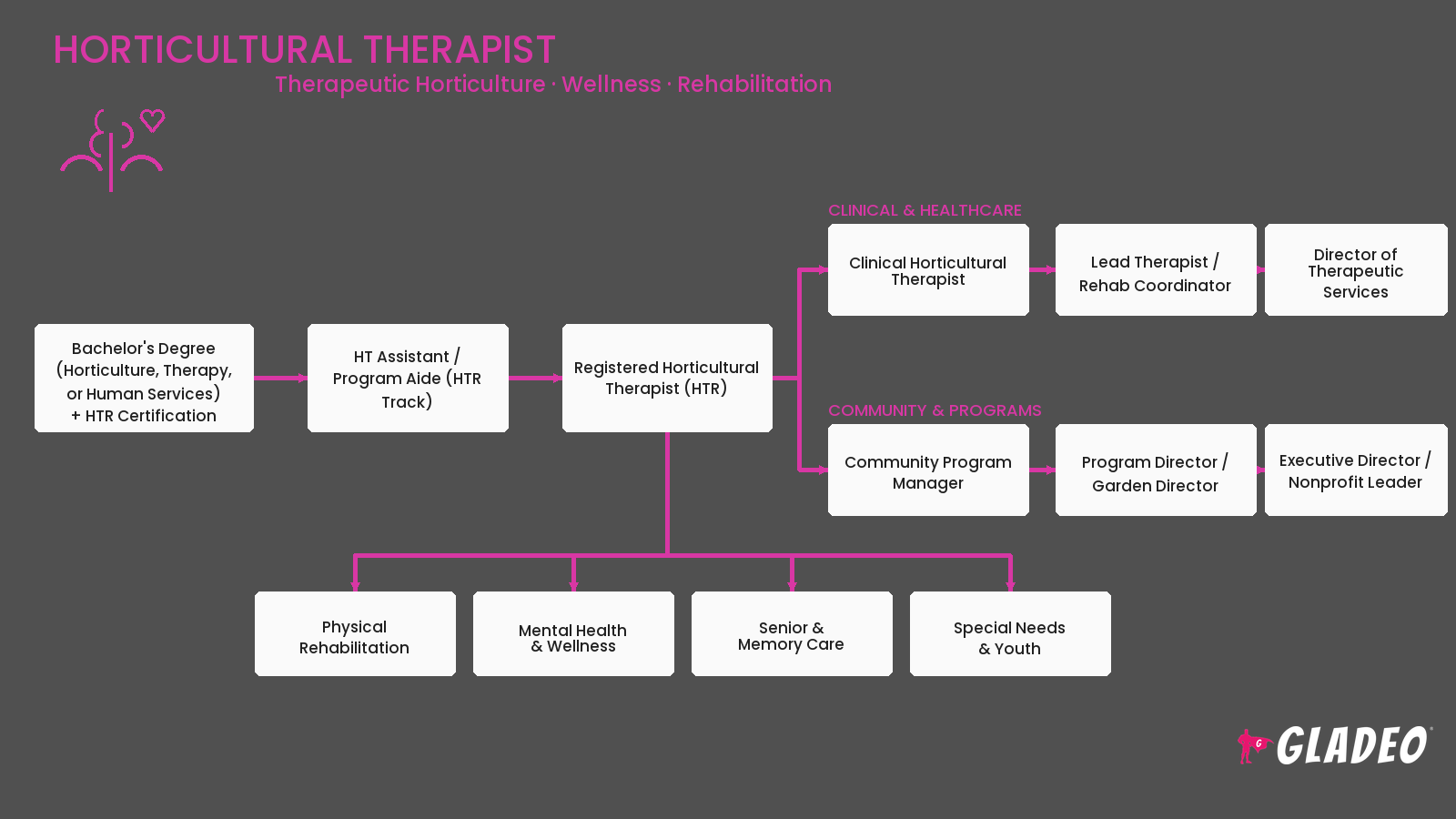
- Clinical Horticultural Therapist: Works primarily in healthcare settings to support physical and mental rehabilitation.
- Community Horticultural Therapist: Focuses on group therapy and social skills development in community centers.
- School-Based Horticultural Therapist: Integrates therapy into educational programs for children with special needs.
- Senior Care Horticultural Therapist: Designs programs that improve mobility and well-being for older adults.
- Veteran Horticultural Therapist: Provides therapy tailored to military veterans’ physical and emotional recovery.
- Correctional Facility Horticultural Therapist: Uses gardening activities to support rehabilitation of incarcerated individuals.
- Mental Health Horticultural Therapist: Specializes in addressing anxiety, depression, and trauma through nature therapy.
- Rehabilitation Horticultural Therapist: Combines physical therapy goals with horticultural practices for injury recovery.
- Hospitals and Rehabilitation Centers
- Nursing Homes and Senior Care Facilities
- Community Mental Health Centers
- Public and Private Schools
- Veterans Affairs Medical Centers
- Botanical Gardens and Arboretums
- Nonprofit Organizations Focused on Therapy or Disability
- Correctional Facilities and Rehabilitation Programs
- Hospice and Palliative Care Centers
- Municipal Parks and Recreation Departments
- Therapeutic Riding and Animal-Assisted Therapy Centers
- University Research and Therapy Programs
Horticultural Therapists often operate under pressure to show measurable improvements in clients’ health and well-being, which can require creativity and persistence when progress is slow or clients face setbacks.
Work hours are usually standard but can include some early mornings or weekends to accommodate therapy sessions or community events. Outdoor work means adapting to weather conditions and physical demands like bending, lifting, and standing for long periods.
The role demands ongoing learning to stay current with therapeutic methods and plant science, plus emotional resilience to support clients dealing with trauma, disability, or chronic illness. Patience is key as therapy outcomes may take time to appear.
- Increased integration of horticultural therapy in mental health treatment plans.
- Growing use of technology such as virtual gardens and plant monitoring apps.
- Emphasis on accessible and inclusive garden design for people with disabilities.
- Expansion of community-based therapy programs to reach diverse populations.
- Research supporting nature’s role in neurorehabilitation and stress reduction.
- Collaborations between horticultural therapists and occupational or physical therapists.
- Use of sustainable and native plants in therapy gardens.
- Incorporation of sensory gardens to enhance therapy for clients with sensory processing issues.
- Funding growth for green therapy initiatives through healthcare and nonprofit grants.
- Development of certification programs and professional standards for horticultural therapy.
Many Horticultural Therapists found joy in gardening, nature exploration, or caring for plants as children. They often enjoyed spending time outdoors, observing plant growth cycles, or helping family members with gardening tasks.
Early interests in science, biology, helping others, and creative arts like landscape design also pointed toward this career path. Participating in community gardens or volunteering for environmental causes helped develop skills and passion for healing through nature.
To become a Horticultural Therapist, students typically pursue degrees or certifications that blend horticulture, psychology, and therapy. Educational paths often include programs in therapeutic horticulture, occupational therapy, social work, or related fields.
Students can take courses in relevant subjects such as:
- Plant Biology and Botany
- Horticulture and Garden Design
- Psychology and Human Development
- Therapeutic Techniques and Counseling
- Rehabilitation Science
- Anatomy and Physiology
- Community Health and Social Services
- Adaptive Gardening Methods
- Research Methods and Data Analysis
- Health and Safety in Therapy Settings
Hands-on experience through internships, volunteering, or clinical placements is essential to develop practical therapy skills. Building a portfolio of client work and therapy program designs can help demonstrate expertise. Many therapists also pursue professional certifications to enhance credibility and career opportunities.
- Take biology, psychology, and environmental science classes in high school.
- Join gardening clubs or volunteer at community gardens to gain hands-on experience.
- Develop communication and teamwork skills through group projects and extracurricular activities.
- Explore health and social service programs offered at your school.
- Attend workshops or camps focused on therapy or horticulture.
- Seek summer internships or volunteer positions in healthcare or garden settings.
- Consider colleges that offer degrees in therapeutic horticulture or related fields.
- Engage in research projects or science fairs related to plants and health.
- Network with professionals in therapy or horticulture through school events.
- Learn basic first aid and safety practices to prepare for therapy work.
- Develop computer skills for documentation and scheduling.
- Practice patience, empathy, and creativity in everyday interactions.
- Choose programs that offer hands-on clinical or community internship opportunities.
- Look for courses that integrate psychology, healthcare, and plant science.
- Ensure the program includes training on adaptive tools and accessibility.
- Check for faculty with experience in horticultural therapy or related fields.
- Seek programs accredited by professional organizations in therapy or horticulture.
- Consider programs offering certifications recognized by industry associations.
- Evaluate the availability of research projects and fieldwork options.
- Find programs that teach grant writing and program development skills.
- Look for strong support services like career counseling and networking events.
- Choose schools near botanical gardens or healthcare facilities for practical learning.
- Prioritize programs emphasizing interdisciplinary collaboration.
- Check for flexible course schedules to accommodate hands-on experiences.
- Apply for internships or volunteer positions at hospitals, rehabilitation centers, or community gardens.
- Create a portfolio showcasing your therapy session plans and gardening projects.
- Develop a resume highlighting relevant coursework and hands-on experiences.
- Join professional horticultural therapy or healthcare associations for networking.
- Attend job fairs focused on healthcare and therapeutic services.
- Seek entry-level roles such as therapy aide, garden assistant, or volunteer coordinator.
- Prepare for interviews by practicing explanations of how horticulture supports therapy goals.
- Ask for letters of recommendation from professors or supervisors.
- Learn to use scheduling and client management software.
- Stay updated on certification requirements and pursue entry-level credentials.
- Show willingness to adapt and learn from experienced therapists.
- Demonstrate strong communication and empathy during client interactions.
- Gain certifications in horticultural therapy or related healthcare fields.
- Specialize in therapy for specific populations like veterans, seniors, or children.
- Build expertise in garden design for therapeutic environments.
- Develop leadership skills to manage therapy programs or teams.
- Publish research or case studies to advance the field.
- Network actively at professional conferences and workshops.
- Pursue advanced degrees in therapy, counseling, or horticulture.
- Transition into roles such as program director, educator, or consultant.
Websites:
- American Horticultural Therapy Association (AHTA) - ahta.org
- Society for Therapeutic Horticulture - therapeutichorticulture.org
- National Garden Clubs, Inc. - gardenclub.org
- Therapeutic Landscapes Network - therapeuticlandscapesnetwork.org
- Horticultural Therapy Institute - horticulturaltherapyinstitute.org
- American Society of Landscape Architects (ASLA) - asla.org
- Green Cities California - greencitiescalifornia.org
- Mental Health America - mhanational.org
- National Recreation and Park Association - nrpa.org
- The Center for Health Design - healthdesign.org
- Veterans Horticultural Therapy Programs - va.gov
- Association for Nature and Forest Therapy - natureandforesttherapy.org
- The Royal Horticultural Society - rhs.org.uk
- International Federation of Therapeutic Horticulture - ifth.org
Books:
- Therapeutic Horticulture: Using Plants to Improve Well-Being by Clare Cooper Marcus and Naomi Sachs
- Horticultural Therapy Methods: Connecting People and Plants in Health Care, Human Services, and Therapeutic Programs by Rebecca Haller and Dorothy Relf
- Healing Gardens: Therapeutic Benefits and Design Recommendations by Clare Cooper Marcus and Marni Barnes
- Plants & Gardens in Healing by Ann H. Whiston Spirn
- Nature and Therapy: Understanding Counselling and Psychotherapy in Outdoor Spaces by Sarah L. Gerrard
If a career as a Horticultural Therapist doesn’t work out or you want to explore other options, there are many related fields that combine care, nature, and therapy.
- Occupational Therapist
- Physical Therapist Assistant
- Recreational Therapist
- Mental Health Counselor
- Landscape Designer
- Environmental Educator
- Social Worker
- Botanical Garden Educator
- Agricultural Therapist
- Community Health Worker
Newsfeed

Featured Jobs
Online Courses and Tools