





Spotlights
Mechanical Engineering Technician, Mechanical Technologist, Engineering Technologist, Mechanical Design Technician, Mechanical Test Technician, Product Development Technician, Manufacturing Engineering Technician, CAD Technician, Research and Development Technician, Prototype Technician, Mechanical Lab Technician, Applied Engineering Technologist
The roller coaster that pins you to your seat, the electric car that glides silently down the street, the robotic arm that assembles your phone, and the wind turbine spinning on the horizon all started as sketches and calculations. Turning those ideas into machines that actually work, and proving they work safely, is the job of Mechanical Engineering Technologists!
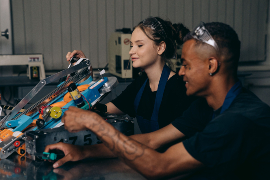
Mechanical Engineering Technologists are the hands-on bridge between engineering design and real-world production. Working alongside mechanical engineers, machinists, and quality teams, they build and test prototypes, create detailed 3D models and drawings, set up test rigs, collect performance data, and troubleshoot parts that do not behave the way the design predicted. When an engineer sketches a new gearbox or cooling system, the technologist is the one who figures out how to build it, measure it, and make it better.
Using computer-aided design (CAD) software, 3D printers, CNC machines, sensors, and data acquisition systems, Mechanical Engineering Technologists translate theory into tested, working hardware. Their work keeps products reliable, keeps factories running, and catches problems long before a part ever reaches a customer. Every safe airplane landing gear, efficient HVAC system, and dependable medical device depends on someone who took the time to build it right and test it thoroughly.
- Watching a design go from a computer screen to a physical machine you helped build and prove
- Solving real problems with your hands and your head, often in the same afternoon
- Working across exciting industries like aerospace, robotics, clean energy, and automotive
- Knowing the products you tested keep people safe and make everyday life work better
Working Schedule
Most Mechanical Engineering Technologists work full-time, typically 40 hours a week during regular business hours, though testing schedules and production deadlines can require early mornings, occasional evenings, or weekend shifts. The work splits between an office or design lab where they model parts and analyze data, and a shop floor, test lab, or manufacturing facility where they build, measure, and run experiments. Some travel to customer sites or field installations to install equipment or investigate failures. Most are employed directly by manufacturers, engineering firms, research labs, or government agencies, while a smaller number work as contractors on specific projects.
Typical Duties
- Creating 2D drawings and 3D models of parts and assemblies using CAD software
- Building and assembling prototypes from engineering designs
- Setting up test equipment, sensors, and fixtures to measure how parts perform
- Running tests for strength, vibration, temperature, pressure, and fatigue
- Recording and analyzing test data and preparing reports for engineers
- Troubleshooting mechanical failures and recommending design changes
- Estimating materials, labor, and costs for new designs
- Reviewing drawings and specifications for accuracy and manufacturability
- Programming and operating 3D printers, CNC machines, and other fabrication tools
- Inspecting finished parts with calipers, micrometers, and coordinate measuring machines
- Writing assembly instructions, work procedures, and technical documentation
- Supporting installation, calibration, and maintenance of machinery and equipment
Additional Responsibilities
- Sourcing parts and communicating with suppliers and vendors
- Maintaining lab equipment and keeping calibration records up to date
- Following safety procedures and helping enforce them on the shop floor
- Participating in design reviews and suggesting improvements
- Training production staff on new equipment or assembly processes
- Tracking project progress and updating schedules for the engineering team
- Assisting with quality control audits and root cause investigations
- Learning new software, tools, and industry standards as they emerge
A Mechanical Engineering Technologist's morning often starts with a quick check-in with the engineering team to review test results from the day before and plan the day's priorities. They might spend the first hour or two at a workstation refining a CAD model, updating a drawing based on an engineer's feedback, or preparing a bill of materials for a new prototype. If a part came back from the machine shop, they inspect it against the drawing to confirm every dimension is within tolerance.
Midday usually shifts to the lab or shop floor. The technologist sets up a test fixture, mounts sensors, and runs a component through its paces, whether that means cycling a hinge ten thousand times, loading a bracket until it bends, or measuring how hot a motor housing gets under full power. They watch the data come in, note anything unexpected, and adjust the setup as needed. If a prototype needs a new bracket or adapter, they may design it and print or machine it on the spot.
Afternoons are often about communication and problem solving. The technologist compiles test data into charts and a short report, walks the engineer through what worked and what failed, and brainstorms fixes. They might join a design review, call a supplier about a delayed part, or document a new assembly procedure so the production team can follow it. Before leaving, they tidy the lab, log equipment usage, and line up tomorrow's tests.
Soft Skills
- Curiosity about how things work
- Attention to detail
- Clear written and verbal communication
- Problem solving and troubleshooting mindset
- Patience and persistence when tests do not go as planned
- Teamwork and collaboration with engineers, machinists, and technicians
- Time management and ability to juggle multiple projects
- Adaptability to new tools and changing priorities
- Safety awareness
- Organization and record keeping
- Willingness to ask questions and keep learning
- Hands-on dexterity and mechanical aptitude
Technical Skills
- CAD software such as SolidWorks, AutoCAD, Inventor, or Creo
- Reading and creating engineering drawings, including geometric dimensioning and tolerancing (GD&T)
- Precision measurement tools like calipers, micrometers, and coordinate measuring machines
- Test equipment including strain gauges, thermocouples, load cells, and data acquisition systems
- 3D printing, CNC machining, and basic fabrication and welding
- Applied math, physics, and mechanics of materials
- Data analysis and reporting using spreadsheets or tools like MATLAB or Python
- Knowledge of materials, fasteners, bearings, gears, and hydraulic and pneumatic systems
- Familiarity with manufacturing processes such as casting, molding, and sheet metal forming
- Understanding of industry standards from organizations like ASME and ISO
- Design Technologist: Focuses on CAD modeling, drawings, and turning concepts into manufacturable designs
- Test Technologist: Builds test rigs, runs experiments, and collects performance and failure data
- Manufacturing Technologist: Improves production processes, tooling, and assembly lines on the factory floor
- Research and Development Technologist: Builds and evaluates prototypes for brand-new products in a lab setting
- Quality Technologist: Inspects parts, investigates defects, and makes sure products meet specifications
- Field Service Technologist: Installs, calibrates, and troubleshoots equipment at customer sites
- HVAC and Energy Systems Technologist: Works on heating, cooling, and energy equipment for buildings and plants
- Automation and Robotics Technologist: Supports the design, setup, and testing of robotic and automated systems
- Aerospace and defense manufacturers
- Automotive and electric vehicle companies
- Robotics and automation firms
- Industrial machinery and equipment manufacturers
- Medical device companies
- Renewable energy companies including wind, solar, and battery makers
- Consumer product and appliance manufacturers
- Engineering consulting and design firms
- Government research labs and agencies such as NASA and the Department of Energy
- University and private research laboratories
- HVAC, refrigeration, and building systems companies
- Oil, gas, and utility companies
Mechanical Engineering Technologists are expected to be precise. A measurement that is off by a fraction of a millimeter or a test that skips a step can mean a failed part, wasted materials, or a safety risk down the line. Engineers rely on technologists' data to make decisions, so accuracy and honest reporting matter more than speed. There is also pressure to keep projects on schedule, which can mean juggling several builds and tests at once.
The work is physically active. Technologists spend hours on their feet in labs and shops, lift equipment, work around machinery, and sometimes deal with noise, heat, oils, and fumes. Following safety procedures and wearing protective gear is non-negotiable. Deadlines before product launches or plant shutdowns can push hours beyond the standard workday.
The field also demands constant learning. Software updates, new materials, new manufacturing techniques like additive manufacturing, and new industry standards keep arriving, and technologists who stop learning fall behind. Many pursue certifications or additional coursework throughout their careers to stay current and open doors to advancement.
- Rapid growth of additive manufacturing (3D printing) for prototypes and production parts
- Increased use of simulation and finite element analysis (FEA) before physical testing
- Expansion of robotics and automated assembly in factories
- Rising demand in electric vehicles, batteries, and charging infrastructure
- Growth in wind, solar, and energy storage projects that need mechanical support
- Digital twins and sensor-rich equipment that generate huge amounts of test data
- Adoption of model-based definition, where 3D models replace paper drawings
- Sustainability goals driving lighter materials and more energy-efficient designs
- Reshoring of manufacturing creating new technologist jobs in the United States
- Cross-training in electronics and programming as machines become smarter
Many Mechanical Engineering Technologists grew up taking things apart to see how they worked, from bicycles and remote-control cars to old appliances, and then trying to put them back together. They gravitated toward building sets, model kits, robotics clubs, and science fair projects where they could design something and test whether it worked. Shop class, woodworking, and fixing things around the house or garage were often favorites.
Others found their spark in video games about building and physics, in tinkering with go-karts or dirt bikes, or in helping a parent or relative repair cars and machinery. They tended to enjoy math and science when it was tied to something real, and they liked the satisfaction of a project that ends with a working machine rather than just a grade on paper.
Most Mechanical Engineering Technologists earn an associate degree in mechanical engineering technology from a community college or technical school, which typically takes two years. Those who want the technologist title, broader responsibilities, and a faster path to advancement often pursue a bachelor's degree in mechanical engineering technology, a four-year program that blends applied engineering coursework with extensive lab and project work. Look for programs accredited by ABET, which employers recognize as meeting industry standards.
Students can take courses in relevant subjects such as:
- Engineering Drawing and CAD
- Statics and Strength of Materials
- Manufacturing Processes
- Materials Science
- Fluid Power and Thermodynamics
- Machine Design and Mechanisms
- Metrology and Quality Control
- Applied Physics and Technical Math
- Instrumentation and Data Acquisition
- Automation, Robotics, and Programmable Logic Controllers
Hands-on experience is just as important as coursework. Internships, co-op programs, and part-time jobs in machine shops or manufacturing plants give students real experience with equipment and workplace expectations. Some technologists enter the field through apprenticeships or by advancing from machinist, drafter, or maintenance roles. Professional certifications, such as those offered through NICET or in specific CAD platforms, can strengthen a resume and support advancement.
- Take algebra, geometry, trigonometry, and physics, and aim for pre-calculus or calculus
- Sign up for drafting, CAD, shop, engineering, or manufacturing technology classes
- Join a robotics team such as FIRST Robotics, VEX, or a SkillsUSA chapter
- Learn a free or student CAD program like Onshape, Fusion 360, or Tinkercad on your own
- Build things at home: model kits, 3D printing projects, small repairs, or a go-kart
- Enter science fairs or engineering competitions that involve building and testing
- Visit a local manufacturer or engineering firm on a tour or job shadow
- Look for summer programs at community colleges or universities focused on engineering technology
- Practice documenting your projects with photos, sketches, and notes to start a portfolio
- Get comfortable with spreadsheets and basic programming for handling data
- Apply for internships or part-time jobs in machine shops, maintenance departments, or makerspaces
- Talk to technologists and engineers about what their days actually look like
- ABET accreditation for engineering technology programs
- Modern labs with CAD workstations, 3D printers, CNC machines, and test equipment
- Required co-op or internship placements with local employers
- Instructors with real industry experience
- Coursework in current CAD software and geometric dimensioning and tolerancing
- A capstone or senior project where you design, build, and test something real
- Transfer agreements that let an associate degree count toward a bachelor's degree
- Strong relationships with regional manufacturers, aerospace, or energy companies
- Preparation for industry certifications such as SolidWorks or NICET credentials
- Small lab sections so you get real time on the equipment
- Career services that track job placement rates for graduates
- Flexible or evening options if you plan to work while studying
- Complete at least one internship or co-op before graduation; many turn into full-time offers
- Build a portfolio of CAD models, drawings, prototypes, and test reports from school projects
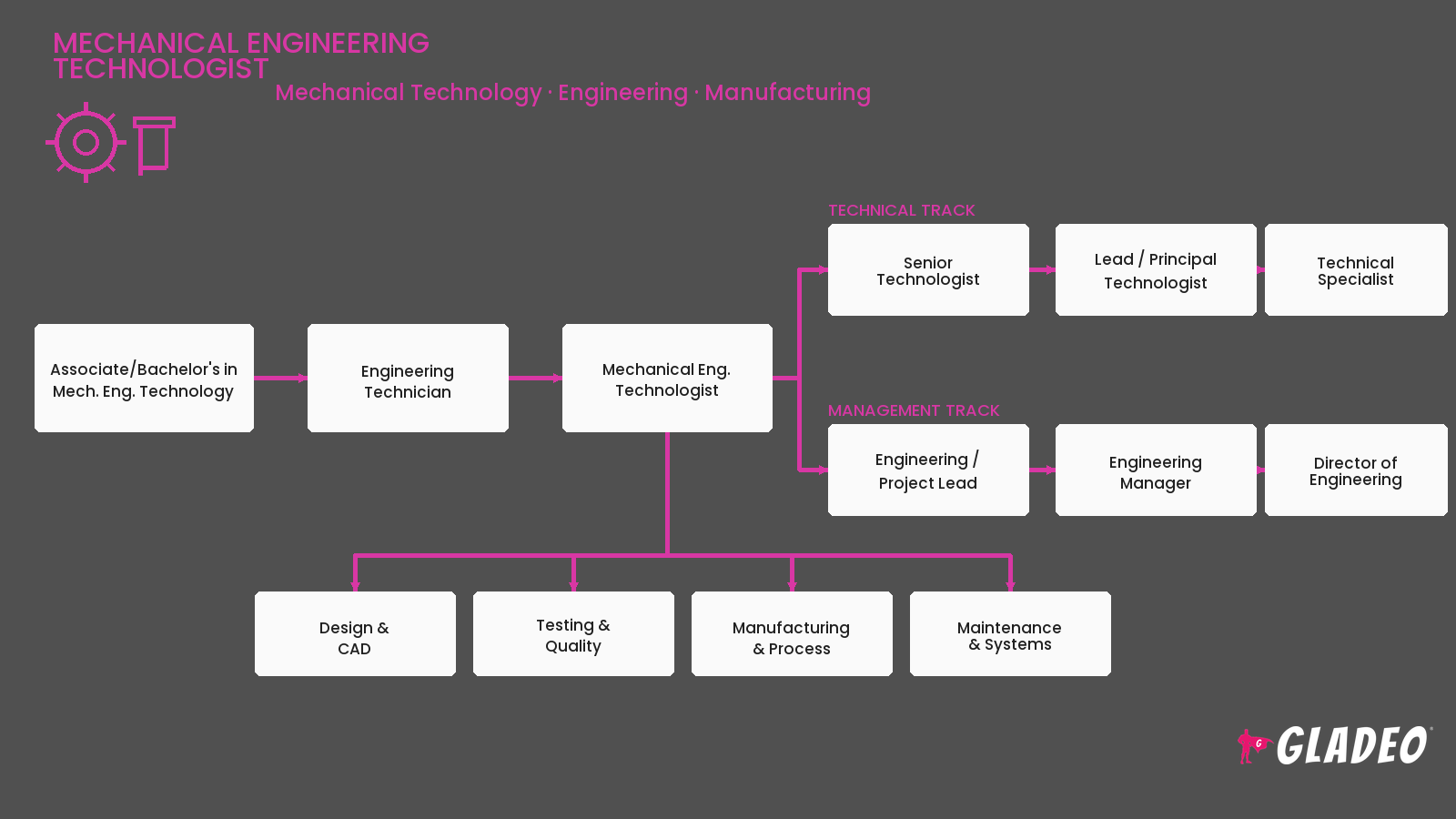
- Apply for entry-level titles like Engineering Technician, Mechanical Technician, CAD Technician, Test Technician, or Lab Technician
- Search job boards such as Indeed, LinkedIn, and company career pages, plus manufacturing-focused sites
- Attend career fairs hosted by your college and by organizations like SME and ASME
- Earn a CAD certification such as Certified SolidWorks Associate to stand out
- Highlight hands-on skills on your resume: machines you have run, tools you have used, and tests you have performed
- Practice explaining a project from your portfolio clearly in interviews, including what went wrong and how you fixed it
- Consider starting as a machinist, drafter, or quality inspector to gain shop experience and move up
- Network with instructors, alumni, and guest speakers who often know about openings first
- Be open to relocating to regions with strong aerospace, automotive, or energy manufacturing
- Show up with safety awareness and a willingness to learn; employers value attitude as much as skills
- Master advanced CAD, simulation, and data analysis tools beyond what your job requires
- Volunteer for challenging tests, new equipment, and cross-functional projects
- Complete a bachelor's degree in engineering technology if you started with an associate degree
- Pursue certifications in quality, project management, or specialized systems like robotics or HVAC
- Build a reputation for accurate data and reliable documentation that engineers trust
- Move into senior technologist, lab supervisor, manufacturing engineer, or project lead roles
- Develop mentoring and training skills by helping new technicians get up to speed
- Stay active in professional organizations to learn about new methods and job opportunities
Websites:
- American Society of Mechanical Engineers (ASME) - asme.org
- SME (Society of Manufacturing Engineers) - sme.org
- ABET - abet.org
- NICET (National Institute for Certification in Engineering Technologies) - nicet.org
- American Society of Certified Engineering Technicians (ASCET) - ascet.org
- SkillsUSA - skillsusa.org
- FIRST Robotics - firstinspires.org
- American Society for Quality (ASQ) - asq.org
- Association for Advancing Automation (A3) - automate.org
- Engineering.com - engineering.com
- Machine Design - machinedesign.com
- GrabCAD Community - grabcad.com
- Onshape Learning Center - learn.onshape.com
- Instructables - instructables.com
Books:
- Machinery's Handbook by Erik Oberg, Franklin D. Jones, Holbrook L. Horton, and Henry H. Ryffel
- Engineering Drawing and Design by David A. Madsen and David P. Madsen
- Applied Strength of Materials by Robert L. Mott and Joseph A. Untener
- Fundamentals of Geometric Dimensioning and Tolerancing by Alex Krulikowski
- Manufacturing Processes for Engineering Materials by Serope Kalpakjian and Steven Schmid
If you find that being a Mechanical Engineering Technologist isn't the right fit, your skills in CAD, testing, fabrication, and problem solving transfer to many related careers.
- Mechanical Engineer
- CNC Machinist and Operator
- Mechanical Drafter
- Industrial Engineering Technologist
- Electro-Mechanical Technician
- Robotics Technician
- Quality Control Inspector
- Manufacturing Engineer
- HVAC Technician
- Industrial Maintenance Technician
Click here to download the infographic
Newsfeed

Featured Jobs
Online Courses and Tools