





Spotlights
Environmental Manager, Conservation Manager, Wildlife Manager, Forestry Manager, Resource Manager, Habitat Manager, Land Steward, Ecosystem Manager, Natural Resource Supervisor, Conservation Scientist, Land Use Coordinator, Ecological Manager
Imagine walking through a thriving forest, a vibrant wetland, or an expansive grassland, knowing that the health and balance of these natural spaces depend on your careful planning and decisions. Natural Land Managers protect and restore the lands that support wildlife, plants, and communities, making sure ecosystems stay healthy for future generations to enjoy.
Natural Land Managers oversee the use and conservation of natural areas like forests, parks, reserves, and rangelands. They work alongside ecologists, wildlife biologists, government agencies, and local communities to develop management plans that balance environmental protection with sustainable use. Their daily tasks include monitoring habitats, coordinating restoration projects, managing invasive species, and ensuring compliance with environmental laws.
Using GIS mapping tools, ecological data, and environmental policies, Natural Land Managers guide decisions that impact land health and biodiversity. Their role is crucial in preserving ecosystems, supporting wildlife populations, and promoting sustainable practices that affect everything from clean air and water to recreational spaces.
- Seeing a damaged natural area recover and thrive under your care
- Knowing your work protects endangered species and promotes biodiversity
- Collaborating with communities to balance human needs with environmental health
- Contributing to climate change solutions through sustainable land management
Working Schedule
Natural Land Managers typically work full-time, splitting time between outdoor fieldwork and office tasks. The schedule can be seasonal, with more field visits in spring and summer. Deadlines and emergencies like wildfire or pest outbreaks can require flexible hours. Many work for government agencies or nonprofits, but some are consultants or contractors, balancing multiple projects.
Typical Duties
- Develop and implement land management and conservation plans
- Monitor ecosystems and wildlife populations for health and changes
- Coordinate restoration projects such as reforestation or wetland rehabilitation
- Manage invasive species control and native species protection
- Work with government agencies to ensure compliance with environmental regulations
- Use GIS and remote sensing to map and analyze land features
- Engage with local communities and stakeholders about land use and conservation
- Prepare reports and documentation for regulatory and funding purposes
- Supervise field staff and volunteers during projects
- Evaluate environmental impact assessments for proposed land use changes
Additional Responsibilities
- Advise policymakers on land conservation strategies
- Secure funding through grants and partnerships for projects
- Educate the public on environmental stewardship and sustainable practices
- Collaborate with researchers on ecological studies
- Respond to environmental emergencies such as wildfires or floods
- Maintain relationships with private landowners and conservation groups
- Attend professional conferences and training to stay current
- Develop sustainable tourism or recreational use plans for natural areas
Morning often starts with reviewing recent environmental data and planning field visits or meetings. Natural Land Managers check weather and coordinate with their team to prioritize site inspections or restoration work.
Midday is spent outdoors monitoring habitats, taking soil or water samples, or overseeing restoration activities. They may meet with local stakeholders or contractors to discuss ongoing projects and address challenges such as invasive species or habitat threats.
Afternoons focus on analyzing collected data, updating management plans, and preparing reports. They often collaborate with government officials, scientists, and community leaders to ensure that land use decisions align with conservation goals and legal requirements.
Soft Skills
- Problem-solving mindset to address complex environmental challenges
- Strong communication to explain plans to diverse audiences
- Collaboration skills to work with scientists, officials, and communities
- Attention to detail for monitoring ecosystems and compliance
- Adaptability to changing weather and unforeseen environmental events
- Leadership to guide teams and coordinate projects
- Time management to balance field and office work
- Negotiation skills to manage land use conflicts
- Patience and persistence for long-term ecological outcomes
- Critical thinking to evaluate environmental data and policies
- Empathy towards nature and community needs
- Organizational skills to handle multiple projects and documentation
Technical Skills
- GIS mapping and spatial analysis
- Data collection and environmental monitoring techniques
- Knowledge of ecology and natural resource management
- Familiarity with environmental laws and regulations
- Use of remote sensing tools and drones
- Project management software
- Report writing and documentation
- Grant writing and funding proposal development
- Species identification and habitat assessment
- Use of computer models for ecosystem simulation
- Forest Manager: Oversees sustainable management of forest lands, including timber harvesting and habitat conservation
- Wildlife Manager: Focuses on protecting and managing wildlife populations and their habitats
- Wetland Manager: Specializes in conserving and restoring wetland ecosystems
- Rangeland Manager: Manages grassland and pasture ecosystems for livestock and wildlife
- Park Naturalist Manager: Balances recreational use with conservation in parks and protected areas
- Conservation Scientist: Conducts research to inform land management practices
- Land Use Planner: Integrates land conservation with urban and rural development planning
- Ecological Restoration Specialist: Designs and implements projects to restore damaged ecosystems
- Federal agencies like U.S. Forest Service, National Park Service, Bureau of Land Management
- State departments of natural resources or environmental protection
- Nonprofit conservation organizations such as The Nature Conservancy, Audubon Society
- Environmental consulting firms
- Universities and research institutions
- Tribal land management offices
- Private land trusts and foundations
- Agricultural cooperatives and ranching associations
- Municipal parks and recreation departments
- Environmental advocacy groups
Natural Land Managers often face pressure to balance competing interests between development, agriculture, recreation, and conservation. They must make decisions that satisfy environmental goals while considering economic and social factors.
Work hours can be irregular, especially during field seasons or emergency responses like wildfires or pest outbreaks. Time outdoors means dealing with weather, terrain, and physical demands.
Patience is crucial since ecological improvements can take years or decades to show results. Frequent revisions to plans are common as new data emerges or policies change, requiring flexibility and resilience.
- Increased use of drones and remote sensing for monitoring large and remote areas
- Growing focus on climate change resilience and adaptation in land management plans
- Integration of Indigenous knowledge and community-based conservation practices
- Advances in ecosystem restoration science and techniques
- Greater collaboration across agencies and sectors for landscape-scale conservation
- Use of big data and AI to analyze environmental trends
- Rise of sustainable agriculture and regenerative land use methods
- Expansion of urban green spaces and natural corridors
- Increasing public demand for transparency and participation in land decisions
- Development of new policies supporting carbon sequestration and biodiversity protection
Many Natural Land Managers showed an early love for outdoor activities like hiking, birdwatching, or gardening. They were often curious about how ecosystems work and enjoyed exploring nature firsthand.
They might have been involved in school clubs focused on environment or science, participated in community cleanups, or volunteered at parks. These interests laid the foundation for their passion for protecting natural spaces.
Becoming a Natural Land Manager typically requires a bachelor's degree in natural resource management, environmental science, forestry, ecology, or a related field. Advanced degrees can open more leadership and research opportunities. Hands-on experience through internships, fieldwork, and volunteering is essential to develop practical skills.
Students can take courses in relevant subjects such as:
- Environmental Science
- Ecology and Ecosystems
- Forestry Principles
- Wildlife Biology
- Soil Science
- Geographic Information Systems (GIS)
- Natural Resource Policy and Law
- Environmental Ethics
- Statistics and Data Analysis
- Restoration Ecology
Building a strong portfolio of fieldwork and project experience helps candidates stand out. Many learn on the job through mentorship, continuing education, and certifications related to land management and environmental compliance.
- Join environmental or biology clubs at school
- Take advanced science courses like biology, chemistry, and earth science
- Participate in outdoor education programs and summer camps
- Volunteer with local parks or conservation groups
- Explore GIS and computer science basics
- Attend environmental seminars or workshops
- Build a science fair project related to ecology or conservation
- Seek internships with environmental agencies
- Network with professionals at career fairs
- Maintain good grades for college admission
- Look for programs accredited in environmental science or natural resource management
- Choose schools with strong fieldwork and internship opportunities
- Check if faculty have active research or land management experience
- Find programs offering GIS and remote sensing training
- Consider programs with partnerships to government or nonprofit agencies
- Evaluate availability of scholarships for environmental studies
- Look for hands-on labs and outdoor field courses
- Seek programs that teach environmental policy and law
- Prioritize schools with active student environmental organizations
- Check for career services with connections to conservation employers
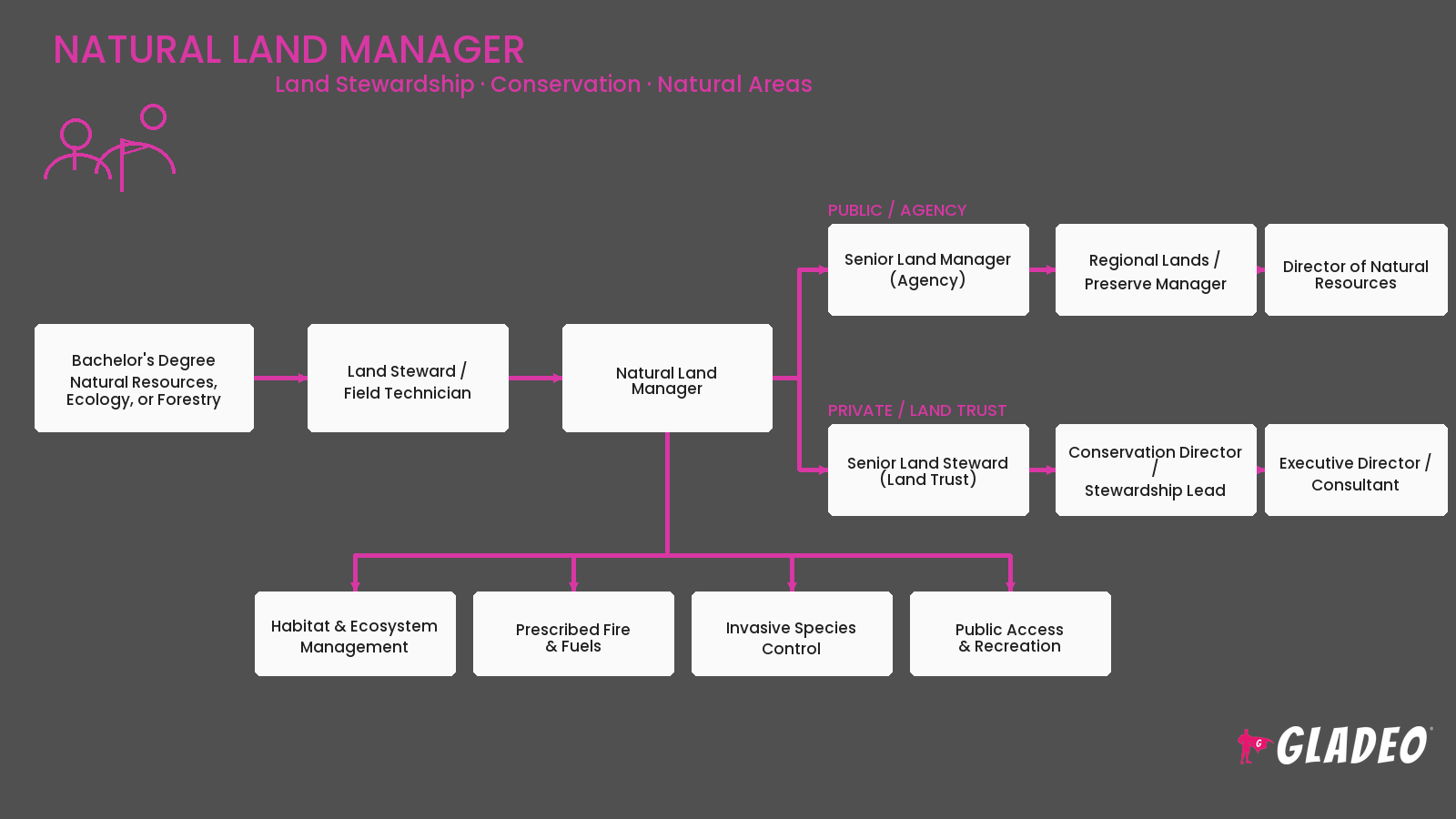
- Apply for internships or technician roles with land management agencies
- Volunteer for habitat restoration or wildlife monitoring projects
- Create a portfolio of field observations, maps, and reports
- Attend networking events for environmental professionals
- Seek entry-level jobs as environmental technicians or assistants
- Develop proficiency in GIS and data analysis software
- Practice communicating environmental information clearly
- Take certifications like pesticide applicator or habitat restoration
- Build relationships with mentors in the field
- Be willing to work outdoors in varied conditions
- Stay informed on current environmental issues
- Demonstrate teamwork and leadership in projects
- Gain experience managing larger projects and budgets
- Build expertise in specialized ecosystems or species
- Pursue advanced degrees or certifications
- Develop leadership and conflict resolution skills
- Expand professional network through associations and conferences
- Contribute to published research or environmental plans
- Take on roles influencing policy and land use decisions
- Become a consultant or start a conservation-focused business
Websites:
- Society of American Foresters (www.eforester.org)
- The Nature Conservancy (www.nature.org)
- Ecological Society of America (www.esa.org)
- U.S. Forest Service (www.fs.usda.gov)
- National Park Service (www.nps.gov)
- Bureau of Land Management (www.blm.gov)
- Land Trust Alliance (www.landtrustalliance.org)
- Environmental Protection Agency (www.epa.gov)
- Conservation International (www.conservation.org)
- Society for Conservation Biology (www.conbio.org)
- American Society for Environmental Management (www.asem.org)
- International Association for Landscape Ecology (www.landscape-ecology.org)
Books:
- Land Stewardship by Thomas J. Dean
- Restoring Ecological Health to Your Land by Steven I. Apfelbaum
- Ecological Restoration by Susan M. Galatowitsch
- Managing Forest Ecosystems by Martin F. Jurgensen
- Conservation Biology: Foundations, Concepts, Applications by Fred Van Dyke
If managing natural lands directly isn't the perfect fit, there are many related careers where you can still protect the environment and work with nature.
- Environmental Scientist
- Wildlife Biologist
- Forester
- Park Ranger
- Environmental Educator
- GIS Specialist
- Ecological Consultant
- Conservation Policy Analyst
- Agricultural Extension Agent
- Sustainability Coordinator
Click here to download the infographic
Newsfeed

Featured Jobs
Online Courses and Tools