




Spotlights
Agronomist, Arboriculture Researcher, Crop Nutrition Scientist, Forage Physiologist, Horticulture Specialist, Plant Physiologist, Plant Research Geneticist, Research Scientist, Research Soil Scientist, Scientist
“Plants are vital to all life on Earth,” says the Smithsonian Institute. They not only remove carbon dioxide from the air we breathe, they literally produce oxygen, too! If that weren’t enough, nutrient-rich plants are the primary food source for most living things—including humans, who cultivate crops and consume their edible parts (i.e., vegetables). We also rely on seed-bearing plants which produce tasty fruits!
Plant Scientists and Botanists study our world’s treasure trove of plants and ensure they’re well taken care of. From critical farm crops like corn, wheat, barley, and potatoes to plants we use for medicines or ornamentation, all these plants have unique needs related to the amount of sun and water they get and the type of soil they grow in. Workers must also identify and control pests, diseases, fungi, and other hazards to each plant type.
Botanists focus more on classification, genetics, and ecology, while Plant Scientists prioritize cultivation, breeding, and disease management. Other related job titles include agronomists, horticulturists, plant pathologists, plant geneticists, and arboriculture researchers.
- Protecting plants and related ecosystems
- Ensuring human populations have enough crops to eat and plants for medicinal purposes
- Impacting the physical health and well-being of communities
- Flexibility and variety of work that is available
Working Schedule
Plant Scientists and Botanists work full-time jobs with nights, weekends, and holidays off. However, overtime may be needed to meet deadlines or during emergencies. Travel for fieldwork and site visits to farms or research stations may be needed, so there could be exposure to inclement weather or hazards such as pests or chemicals.
Typical Duties
- Research better ways for planting, spraying, cultivating, and harvesting plants
- Assess the effects of climate and soil conditions on crops
- Run tests and experiments to find safe methods of storing and moving plants
- Develop ways to boost crop quality and yields
- Understand pests, pesticides, plant diseases, fungi, and their effects on ecosystems
- Classify pests; assist with pest control methods and means
- Determine which insects may be useful, such as pollinators like bees and butterflies, or pest-eating bugs such as ladybugs and tiger beetles
- Find methods to enhance soil, improve disease resistance, and control weeds
- Review findings with employers, stakeholders, governmental agencies, etc.
- Make recommendations to farmers about land usage and problem avoidance, such as mitigating erosion
- Investigate problems such as poor growth; try to determine root causes like lack of nutrients in the soil or tainted water supplies
- Examine how soil changes under various natural or manmade circumstances. Look for ways to amend or alternate soils to boost productivity
- Develop and help implement sustainable farming methods
- Conduct fieldwork and site visits to take soil samples, monitor situations, and look for hazards
- Collect data from site sensors; compile data using software and analyze results
- Look for signs of pollutants and environmental changes that impact plants
- Collaborate with appropriate governmental agencies when reporting pollution activities
- Survey lands for classification and planning purposes
- Research requirements for urban green spaces
- Supervise land conservation/reclamation projects
- Research plants to use for green fuels
Additional Responsibilities
- Stay up-to-date on crop/plant-related regulations, standards, and challenges
- Write and publish papers for peer-reviewed journals
- Offer advice regarding environmental management and conservation
- Submit records and technical reports to local, state, or federal agencies
- Help with public education and awareness programs
- Calibrate equipment, track samples, enter data, and coordinate with labs
A Plant Scientist and Botanist's day often begins with checking plants in a laboratory, greenhouse, nursery, or research field. They may examine leaves, roots, stems, flowers, and seeds to understand how plants grow, reproduce, and respond to their environment. Some days involve collecting plant samples, identifying unfamiliar species, studying plant diseases, or conducting experiments to determine how different conditions affect plant growth.
Much of the work involves research, observation, and experimentation. Plant Scientists may investigate ways to develop crops that resist pests, tolerate drought, or produce higher yields, while Botanists often focus on understanding plant species, their structures, classification, and relationships within ecosystems. They may use microscopes, laboratory equipment, DNA analysis, and computer software to study plant characteristics and record their findings. Some work outdoors in forests, grasslands, wetlands, or agricultural fields, while others spend most of their time in laboratories, universities, or research institutions. Whether studying rare plants, improving food crops, or protecting natural habitats, Plant Scientists and Botanists help expand our understanding of the plant world and contribute to agriculture, conservation, medicine, and environmental sustainability.
Soft Skills
- Active learning
- Activities coordination
- Analytical
- Attention to detail
- Communication skills
- Critical thinking
- Decisive
- Detail-oriented
- Independent
- Investigative
- Monitoring
- Objective
- Organized
- Perceptive
- Persistence
- Problem-solving
- Reasoning
- Safety-oriented
Technical Skills
- Analytical Chemistry
- Botanical knowledge
- Data visualization programs
- Environmental monitoring tools
- Familiarity with local, state, and federal water quality regulations
- Fieldwork, sampling, and lab techniques
- First aid
- Genomics and bioinformatics
- Geographic Information Systems (GIS) and remote sensing tools
- ImageJ image analysis software
- MATLAB
- Microbiology and molecular biology
- Personal protective equipment use
- Plant breeding and genetics, physiology and biochemistry, propagation, cultivation, and pathology
- Programming languages like R and Python
- Safety protocols working around pests, pesticides, and chemicals
- Scientific writing
- Statistical analysis
- Plant Physiologist: Studies how plants function, including photosynthesis, respiration, water absorption, nutrient transport, and responses to environmental conditions.
- Plant Geneticist: Examines plant genes and inherited traits to develop improved varieties with desirable characteristics, such as disease resistance, better yields, or drought tolerance.
- Plant Pathologist: Studies plant diseases caused by fungi, bacteria, viruses, and other pathogens and develops ways to prevent and manage them.
- Plant Ecologist: Investigates how plants interact with other organisms and their surroundings, including how they respond to climate, soil conditions, and environmental changes.
- Plant Taxonomist: Identifies, classifies, and names plant species based on their physical characteristics, genetic information, and evolutionary relationships.
- Plant Breeder: Develops new plant varieties by selecting and crossing plants with desirable traits, such as improved quality, productivity, and resistance to pests.
- Economic Botanist: Studies plants that have practical and commercial value, including those used for food, medicine, fibers, timber, and other products.
- Conservation Botanist: Focuses on protecting endangered plant species, restoring damaged habitats, and preserving plant diversity.
- Horticultural Scientist: Researches the cultivation, improvement, and management of fruits, vegetables, ornamental plants, and other horticultural crops.
- Systematic Botanist: Studies the evolutionary history and relationships among plant species to understand how plants are related and how they have diversified over time.
- Biotechnology companies
- Botanical gardens
- Educational institutions
- Horticulture businesses
- Laboratories
- Nurseries
- Local, state, and federal governmental agencies
- Pest management companies
We rely on Plant Scientists and Botanists to conduct diligent research that enhances our understanding of plant biology, ecology, and agriculture. Through their tests, experiments, and findings, society can benefit from better agricultural practices, enhanced plant traits, and more sustainable solutions for food security and environmental challenges. Without their hard work, we could face crop shortages or ecological nightmares.
The responsibilities are huge, but workers often serve as part of larger interdisciplinary teams! They must sometimes get out in the field to conduct assessments and gather samples, so expect regular travel and exposure to inclement weather or other environmental conditions. In addition, there may be potential for exposure to pests, pesticides, and chemicals, so it is important to wear appropriate protective gear like gloves, goggles, or face masks.
There are several trends in the plant science industry right now, with three of the most important being precision agriculture, the demand for more plant-based foods, and the need for climate-resilient crops.
Precision agriculture relies on high-tech, data-driven approaches to optimize agricultural practices. Sensors, drones, GPS technology, and data analytics all play a part in this new wave of smart farming, which lets farmers tailor irrigation, fertilization, and pest control to improve yields and reduce waste and environmental impacts!
The demand for plant-based foods has risen thanks to health and environmental concerns, not to mention many consumers just don’t want to eat meat anymore. Plant Scientists are hard at work developing ways to improve plant-based alternatives to meat-based products. They are also striving to enhance climate-resilient crop varieties, breeding plants that can tolerate extreme temperatures, drought, flooding, and other environmental stresses.
Plant Scientists and Botanists are often very patient and probably always loved working in the garden, getting their hands in the soil. They care about plants and the important benefits they contribute to our fragile ecosystems. They’re also analytical and likely excelled in STEM subjects from an early age, and liked being able to apply science concepts in practical ways.
Becoming a Plant Scientist or Botanist typically requires a bachelor's degree in Botany, Plant Science, Plant Biology, Biology, or a related field. These programs provide a foundation in plant structure, genetics, ecology, physiology, and the scientific methods used to study plants.
Relevant coursework may include:
- Botany: Studying plant structures, classification, reproduction, evolution, and diversity.
- Plant Physiology: Learning how plants grow, absorb nutrients, perform photosynthesis, and respond to environmental conditions.
- Plant Genetics: Understanding how genes influence plant characteristics and how genetic research can improve plant varieties.
- Plant Ecology: Studying how plants interact with animals, other plants, soil, climate, and their surrounding ecosystems.
- Plant Pathology: Learning to identify plant diseases and understand how fungi, bacteria, viruses, and other pathogens affect plant health.
- Plant Taxonomy: Studying how plants are identified, classified, and scientifically named.
- Soil Science: Understanding soil composition, fertility, nutrients, and their effects on plant growth.
- Molecular Biology: Learning laboratory techniques used to study plant DNA, genes, and cellular processes.
- Horticulture: Studying the cultivation and management of fruits, vegetables, flowers, and ornamental plants.
Practical experience is especially valuable in this career. Students can gain experience through laboratory research, greenhouse work, botanical gardens, agricultural facilities, and environmental conservation projects. A master's degree or Ph.D. may be required for advanced research positions, university teaching, or specialized scientific roles.
- Take biology, chemistry, environmental science, and math classes to build a strong foundation in plant biology and scientific research.
- Join gardening, agriculture, science, or environmental clubs to develop an interest in plants and their ecosystems.
- Volunteer at botanical gardens, plant nurseries, farms, or conservation organizations to gain hands-on experience.
- Start a small garden or plant collection and observe how different species grow under varying conditions.
- Participate in science fairs or research projects involving plant growth, genetics, diseases, or environmental conditions.
- Learn to identify local plant species, understand their characteristics, and recognize their ecological importance.
- Read about botany, plant conservation, agricultural research, and new developments in plant biotechnology.
- Pursue a degree in Botany, Plant Science, Plant Biology, Biology, or a related field.
- Apply for internships at botanical gardens, agricultural research centers, universities, plant laboratories, or environmental organizations.
- Gain practical experience with plant identification, specimen collection, microscopy, laboratory testing, and field research.
- Learn to use scientific equipment, research databases, and data analysis software to support plant studies.
- Keep a record of your research projects, plant collections, laboratory experience, and achievements to use for college and job applications.
- Hands-on learning and internships at botanical gardens, plant research laboratories, agricultural facilities, or conservation organizations.
- Courses in botany, plant physiology, genetics, ecology, plant pathology, and plant taxonomy.
- Opportunities to conduct plant experiments, identify species, collect specimens, and participate in scientific research.
- Access to greenhouses, botanical collections, laboratories, microscopes, and plant-growing facilities.
- Strong connections to universities, botanical gardens, agricultural research institutions, and environmental organizations.
- Opportunities to participate in plant conservation, biodiversity studies, agricultural research, and plant breeding projects.
- Exposure to modern scientific technologies, including DNA analysis, molecular biology techniques, GIS mapping, and laboratory equipment.
- Training in scientific writing, research methods, data analysis, and fieldwork documentation.
- Access to instructors with professional experience in botany, plant biology, horticulture, or plant research.
- Opportunities to pursue graduate studies or specialized research in plant genetics, plant ecology, conservation, or plant pathology.
- Career services that help students find internships, research assistant positions, and employment opportunities in plant science and botanical research.
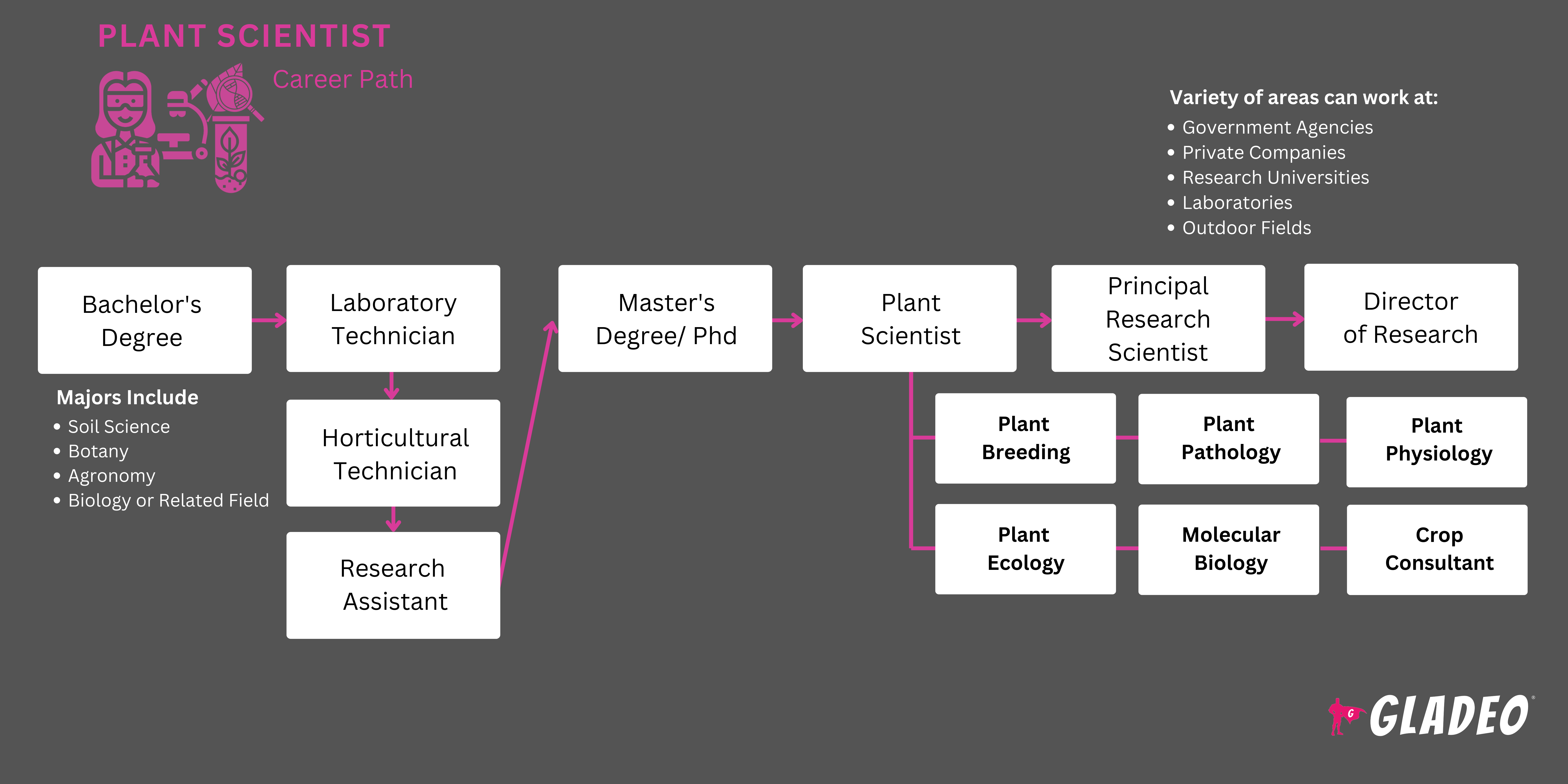
- Apply for internships or assistant roles at botanical gardens, plant laboratories, agricultural research centers, or conservation organizations.
- Build a portfolio showcasing plant identification, research projects, laboratory experiments, and fieldwork experience.
- Network with botanists, plant scientists, agricultural researchers, and environmental professionals.
- Prepare for interviews by studying plant biology, genetics, ecology, and basic laboratory procedures.
- Seek entry-level jobs like Botanical Technician, Plant Research Assistant, Laboratory Technician, or Horticultural Technician.
- Volunteer in plant conservation programs, botanical surveys, or agricultural research projects to make professional contacts.
- Connect with plant science professionals and researchers through social media and scientific organizations.
- Practice collecting plant specimens, recording observations, analyzing data, and documenting research findings clearly.
- Learn to operate microscopes, laboratory equipment, and plant identification tools confidently.
- Stay updated on plant biotechnology, biodiversity conservation, climate change research, and agricultural developments.
- Demonstrate curiosity, attention to detail, and strong scientific observation skills during interviews.
- Attend botanical conferences, scientific workshops, and research seminars to strengthen your knowledge and professional connections.
- Do your current job to the best of your ability, delivering high-quality work on time
- Let your supervisor know you want to take on additional responsibilities and are willing to undergo additional training, as needed. Be sure you understand the promotion criteria
- Keep up with environmental trends and challenges that impact soil and plants, especially vital crops
- Learn about emerging technologies through continuing education courses, workshops, or conferences
- Demonstrate independence, integrity, and leadership. Talk to colleagues to exchange information and tips. Teach and mentor others
- Stay on top of the latest software developments, and master programs or languages like R, Python, MATLAB, ImageJ, plant genome databases, etc.
- Participate in professional organizations like the American Society of Agronomy. Go to conferences and workshops. Give lectures. Keep learning and expanding your knowledge base and skills
- Collaborate effectively with team members and develop strong relationships with local environmental agencies
- Knock out a specialty certification such as the American Society of Farm Managers and Rural Appraisers’ Accredited Agricultural Consultant cert
- Publish papers in high-impact journals to demonstrate your research skills and to get your work seen by a wider audience
- Complete a graduate degree and consider specializing in a hard-to-fill niche. Currently, there’s a need for experts in plant breeding, plant pathology, soil science, environmental plant science, and molecular plant biology
- Keep an eye out for internal job postings! Apply to jobs that match your career goals
Websites
- AgCareers.com
- American Association for the Advancement of Science
- American Geophysical Union
- American Phytopathological Society
- American Society for Horticultural Science
- American Society for Microbiology
- American Society of Agronomy
- American Society of Plant Biologists
- ASA/CSSA/SSSA
- BASF
- Botanical Society of America
- Center for Disease Control
- Crop Science Society of America
- Department of Agriculture
- Dow AgroScience
- Ecological Society of America
- Entomological Society of America
- Environmental Protection Agency
- Forestry Service
- Institute of Hazardous Materials Management
- International Erosion Control Association
- Mycological Society of America
- National Environmental Health Association
- National Institute of Food and Agriculture
- National Institutes of Health
- National Park Service
- Nature Conservancy
- Plant Based Foods Association
- Society of Nematologists
- Syngenta
- The National Academy of Science
- U.S. Food and Drug Administration
- USDA Animal and Plant Health Inspection Service
Books
- A Gardener's Guide to Botany: The biology behind the plants you love, how they grow, and what they need, by Scott Zona
- How Plants Work: The Science Behind the Amazing Things Plants Do, by Linda Chalker-Scott
- Plant Science: Growth, Development, and Utilization of Cultivated Plants, by Margaret McMahon
- The Science of Plants: Inside Their Secret World, by DK
Most Plant Scientists and Botanists express satisfaction with their careers, but of course, not everyone wants to work in these fields. Some may want more money; others might want more job opportunities in the area where they live. Many towns and cities simply don’t have a lot of openings for Plant Scientists and Botanists.
If you’re interested in related career options, consider the below similar occupations:
- Agricultural and Food Science Technician
- Agricultural Engineer
- Biochemists and Biophysicist
- Biologist
- Chemical Technician
- Conservation Scientist and Forester
- Environmental Scientist and Specialist
- Farmer, Rancher, and Agricultural Manager
- Industrial Ecologist
- Microbiologist
- Precision Agriculture Technician
- Veterinarian
- Zoologist and Wildlife Biologist
Newsfeed

Featured Jobs
Online Courses and Tools
Annual Salary Expectations
New workers start around $60K. Median pay is $78K per year. Highly experienced workers can earn around $103K.