






Spotlights
Public Relations Manager, Media Relations Specialist, Corporate Communications Manager, Community Relations Coordinator, Government Affairs Manager, Entertainment Communications Director, Public Information Officer, Outreach Coordinator, Press Secretary, Spokesperson, Event Communications Manager, Strategic Communications Planner
When you see a blockbuster movie premiere, a charity gala, or a major concert, the buzz and excitement you feel is often shaped by the strategic communications crafted by Public Affairs professionals in entertainment. These experts create the stories, messages, and campaigns that connect artists and entertainment companies with fans, media, and communities, shaping public perception and ensuring everyone hears the right message.
Public Affairs specialists in entertainment manage communication strategies for studios, production companies, or entertainment venues. Each day, they collaborate with marketing teams, artists’ representatives, media outlets, and sometimes government officials to craft press releases, manage social media campaigns, and coordinate events that highlight new projects or corporate initiatives. Their goal is clear: build positive relationships between the entertainment entity and the public while handling any issues that could affect reputation.
Using tools like social media platforms, media monitoring software, and press release distribution systems, these professionals analyze public opinion and develop messaging that resonates with varied audiences. Their work matters because it controls the narrative around entertainment projects, helps manage crises, and ultimately influences how fans and communities engage with the entertainment world.
- Shaping the public image of favorite artists, films, or events and seeing the positive impact on their success.
- Crafting messages that connect deeply with diverse audiences and influence public opinion.
- Collaborating with creative teams, media professionals, and community leaders to tell compelling stories.
- Playing a key role in managing crises and turning challenges into opportunities for growth.
Working Schedule
Public Affairs professionals usually work full-time, often within fast-paced environments where deadlines are tight and news cycles move quickly. They may need to work evenings or weekends, especially when managing live events or responding to breaking news. Many are employed by entertainment companies, while others work as consultants or freelancers, adapting to the needs of projects and campaigns.
Typical Duties
- Develop and implement public affairs campaigns for entertainment projects.
- Write and distribute press releases, media advisories, and public statements.
- Coordinate media interviews and press conferences involving artists or executives.
- Monitor media coverage and public opinion to inform communication strategies.
- Manage social media accounts and digital communications.
- Liaise with government agencies or community groups when projects involve public interest or regulations.
- Organize and promote public events, premieres, or charity functions.
- Handle crisis communications and reputation management when needed.
- Collaborate with marketing, legal, and creative teams to ensure consistent messaging.
- Prepare briefing materials and talking points for executives or talent.
- Track campaign performance using analytics and adjust strategies accordingly.
- Maintain relationships with journalists, bloggers, and influencers.
Additional Responsibilities
- Train team members or junior staff on communication best practices.
- Manage budgets related to public affairs campaigns and events.
- Ensure compliance with industry regulations and company policies.
- Develop internal communication plans to keep staff informed.
- Attend industry conferences and networking events to stay current.
- Advise leadership on public sentiment and potential risks.
- Build partnerships with community organizations or advocacy groups.
- Create reports summarizing media coverage and campaign outcomes.
A typical morning might start with reviewing news stories, social media trends, and media monitoring reports to catch any mentions of their company or projects. Then they meet with marketing and production teams to align messaging for upcoming releases or events.
By midday, they might be writing press releases, drafting social media posts, or preparing briefing documents for an executive interview. They often coordinate with media outlets or influencers to set up interviews or coverage opportunities.
Afternoons could involve crisis management meetings if urgent issues arise, or event planning sessions to finalize details for a premiere or public appearance. They wrap up by reviewing analytics from recent campaigns and adjusting strategies for better engagement.
Soft Skills
- Exceptional communication and writing abilities
- Strong interpersonal and relationship-building skills
- Flexibility and adaptability under pressure
- Creative thinking for messaging and campaigns
- Problem-solving and crisis management
- Attention to detail
- Time management and organizational skills
- Teamwork and collaboration
- Cultural sensitivity and awareness
- Persuasion and negotiation
- Confidence in public speaking
- Emotional intelligence and empathy
Technical Skills
- Proficiency with social media platforms (Instagram, Twitter, Facebook, TikTok)
- Experience with media monitoring tools (e.g., Cision, Meltwater)
- Basic graphic design and video editing skills
- Knowledge of press release writing and distribution
- Familiarity with analytics tools (Google Analytics, social media insights)
- Event planning and coordination software
- Understanding of content management systems (CMS)
- Use of customer relationship management (CRM) software
- Crisis communication protocols
- Basic knowledge of copyright and media law
- Entertainment Public Affairs Specialist: Focuses on communication strategies for film, music, and live events.
- Corporate Public Affairs Manager: Oversees internal and external communication for entertainment companies.
- Government Liaison: Works with regulatory agencies and public officials on entertainment-related policies.
- Crisis Communications Manager: Specializes in handling urgent reputation issues and media crises.
- Community Relations Coordinator: Builds connections between entertainment entities and local communities.
- Media Relations Specialist: Manages relationships with journalists and controls media messaging.
- Digital Communications Manager: Focuses on social media strategy and online presence.
- Event Communications Manager: Plans and executes communication for premieres, festivals, and other events.
- Film studios
- Music labels
- Theater companies
- Television networks
- Streaming platforms
- Event production firms
- Talent agencies
- Public relations agencies
- Nonprofit arts organizations
- Government cultural departments
- Media outlets
- Marketing and advertising agencies
Public Affairs professionals often work in high-pressure environments where timing is critical and public opinion can shift quickly. They need to stay calm and think clearly during crises or negative publicity and be ready to respond immediately.
Work hours can be irregular, especially around major events, premieres, or breaking news. Long days, weekend work, and travel to events or media appearances are common.
The role requires balancing multiple stakeholders’ demands, from executives and artists to media and the public. Managing conflicting interests and maintaining a positive public image can involve significant mental and emotional effort.
- Growing importance of social media in shaping public opinion and direct communication with fans.
- Increasing use of data analytics to measure campaign effectiveness and tailor messages.
- Rising focus on diversity, equity, and inclusion in entertainment messaging.
- More collaboration with influencers and content creators for authentic outreach.
- Emphasis on corporate social responsibility and sustainability in communications.
- Integration of virtual and augmented reality for immersive audience engagement.
- Heightened need for quick crisis response due to 24/7 news cycles.
- Shift toward personalized and targeted messaging through digital platforms.
- Expansion of global entertainment markets requiring multilingual and multicultural strategies.
- Use of AI tools for media monitoring and content generation.
Many Public Affairs professionals in entertainment enjoyed storytelling, writing, or performing from a young age. They might have been active in school newspapers, drama clubs, or debate teams, where they honed their communication skills and learned how to engage audiences.
They also tended to be curious about current events, media, and popular culture, often analyzing how stories were told in the news or entertainment. Their early interest in connecting with people and influencing opinions set the foundation for this career.
Most Public Affairs roles in entertainment require a bachelor’s degree in communications, public relations, journalism, marketing, or a related field. Some professionals also pursue specialized certificates in entertainment industry studies or media relations.
Students can take courses in relevant subjects such as:
- Public Relations Fundamentals
- Media Writing and Reporting
- Communication Strategies
- Social Media Marketing
- Crisis Communication
- Event Planning and Management
- Marketing Principles
- Introduction to Entertainment Industry
- Media Law and Ethics
- Digital Media Production
Hands-on experience through internships, campus media, or volunteering with entertainment projects is crucial for building a strong portfolio. Many employers also value practical skills gained through workshops or certificate programs focused on digital communication tools and media relations.
- Join your high school’s newspaper, yearbook, or broadcast club to practice writing and media skills.
- Take courses in English, journalism, marketing, or media studies to build a strong foundation.
- Participate in debate teams or speech clubs to improve public speaking and persuasion.
- Volunteer or intern at local theaters, radio stations, or community events.
- Develop basic skills in social media management and digital content creation.
- Attend workshops or summer programs related to communications or entertainment.
- Network with professionals at career fairs and industry panels.
- Create a personal blog or social media channel to showcase your communication style.
- Study current events and entertainment news to understand audience interests.
- Practice teamwork and leadership through clubs or group projects.
- Look for programs with strong internship or co-op opportunities in entertainment or media companies.
- Choose schools that offer courses in both public relations and entertainment industry studies.
- Consider programs that teach digital media skills alongside traditional communication.
- Check for access to industry-standard software and tools for media monitoring and social media management.
- Seek programs with active alumni networks in entertainment communications.
- Prioritize institutions that emphasize hands-on projects and portfolio development.
- Verify that faculty have real-world experience in public affairs or entertainment sectors.
- Look for programs offering workshops in crisis communication and event planning.
- Explore opportunities for study abroad or cultural communication to prepare for global markets.
- Check for career services that support job placement in entertainment communications.
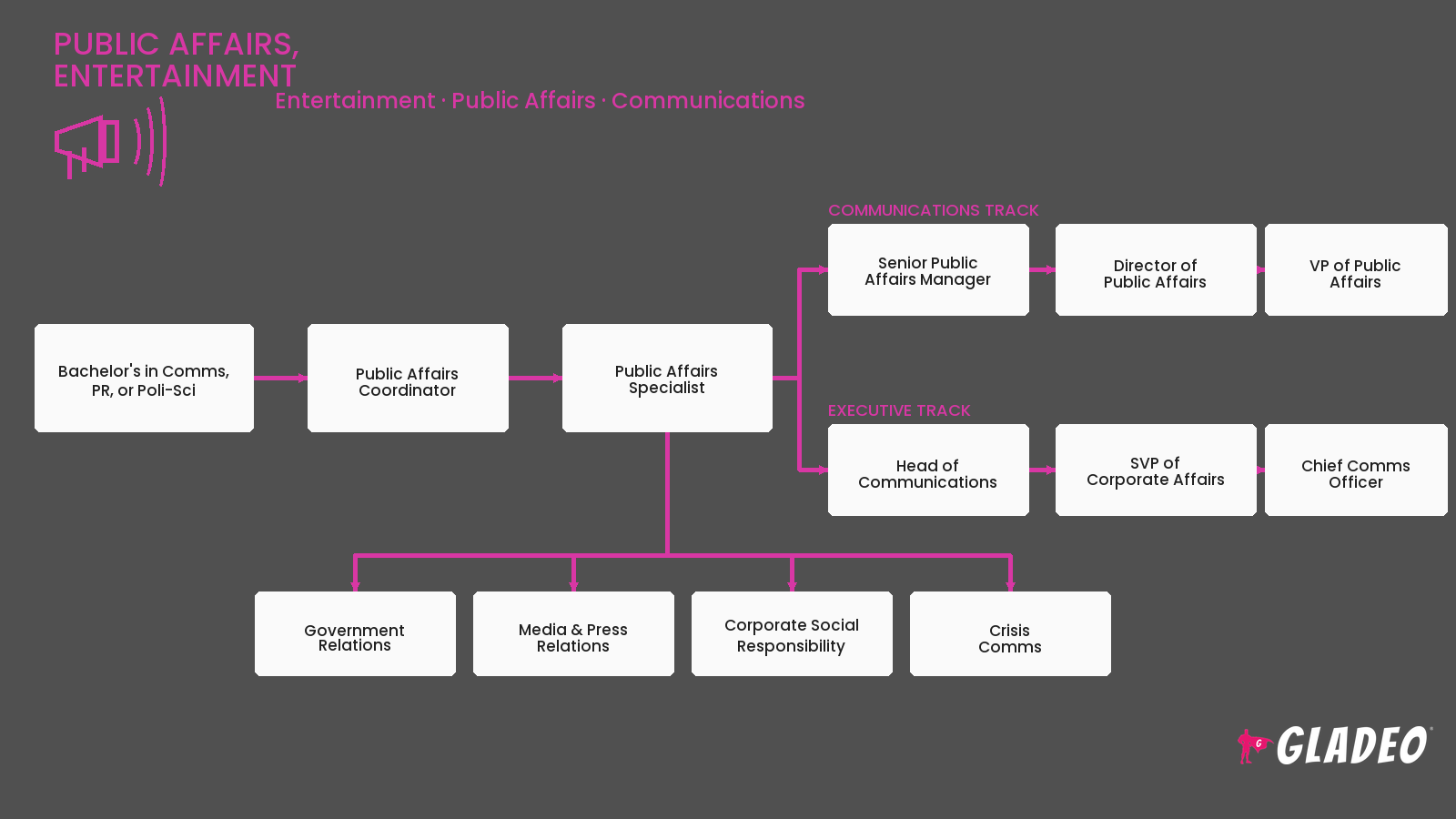
- Apply for internships with entertainment companies, PR firms, or media outlets to gain experience.
- Build a portfolio with writing samples, press releases, and social media campaigns.
- Network with professionals through LinkedIn, industry events, and mentorship programs.
- Volunteer to manage communications for local theater productions or music festivals.
- Create a personal brand by maintaining active, professional social media accounts.
- Practice pitching story ideas to journalists or bloggers.
- Seek entry-level roles such as Communications Assistant or Social Media Coordinator.
- Develop familiarity with media monitoring software and content management systems.
- Attend workshops on interview skills and professional communication.
- Stay informed about entertainment trends and public affairs news.
- Ask for feedback on your writing and communication style to improve.
- Be willing to start in related roles like marketing or event coordination to gain relevant skills.
- Master crisis communication and media relations to handle high-stakes situations.
- Build a broad network of media contacts, influencers, and industry professionals.
- Gain experience managing larger teams and bigger campaigns over time.
- Develop expertise in digital strategy and analytics to lead data-driven communications.
- Pursue advanced certifications or a master’s degree in communications or public affairs.
- Seek leadership roles such as Public Affairs Manager or Director of Communications.
- Stay adaptable to emerging technologies and platform changes.
- Mentor junior staff and contribute to company strategy and culture.
Websites:
- Public Relations Society of America (PRSA) - https://www.prsa.org
- Hollywood Public Relations & Communications Association (HPRA) - https://www.hpranyc.org
- International Association of Business Communicators (IABC) - https://www.iabc.com
- Entertainment Publicists International (EPI) - https://www.entertainmentpublicists.org
- National Academy of Television Arts & Sciences - https://theemmys.tv
- Social Media Examiner - https://www.socialmediaexaminer.com
- PRWeek - https://www.prweek.com
- Adweek - https://www.adweek.com
- Muck Rack - https://muckrack.com
- MediaBistro - https://www.mediabistro.com
- Cision - https://www.cision.com
- Eventbrite Blog - https://www.eventbrite.com/blog
- Crisis Communications Network - https://www.crisiscommunicationsnetwork.org
- LinkedIn Learning - https://www.linkedin.com/learning
Books:
- Cutlip and Center's Effective Public Relations by Glen M. Broom and Bey-Ling Sha
- The New Rules of Marketing and PR by David Meerman Scott
- Spin Sucks: Communication and Reputation Management in the Digital Age by Gini Dietrich
- Everybody Writes: Your Go-To Guide to Creating Ridiculously Good Content by Ann Handley
- Crisis Communications: A Casebook Approach by Kathleen Fearn-Banks
If a career in Public Affairs within entertainment doesn’t fit your path, many related roles use similar skills and interests in communication, media, and public engagement.
- Marketing Coordinator
- Social Media Manager
- Event Planner
- Journalist or Reporter
- Talent Agent Assistant
- Corporate Communications Specialist
- Community Outreach Coordinator
- Advertising Account Executive
- Media Buyer
- Broadcast Producer
Click here to download the infographic
Newsfeed

Featured Jobs
Online Courses and Tools