





Spotlights
Solar Engineer, Renewable Energy Engineer, Photovoltaic Systems Engineer, Solar Power Engineer, Solar Design Engineer, Solar Project Engineer, Solar Installation Engineer, Solar Energy Consultant, Solar Systems Designer, Solar PV Engineer, Sustainable Energy Engineer, Solar Technical Engineer
Imagine powering entire communities with clean, limitless energy from the sun—Solar Energy Systems Engineers make that vision a reality by designing and optimizing the solar technologies that transform sunlight into electricity.
These engineers spend their days creating detailed plans for solar power systems, analyzing site conditions, calculating energy outputs, and collaborating with architects, electricians, and environmental scientists to ensure solar installations are efficient and reliable. They manage project timelines and budgets, troubleshoot technical issues, and oversee the integration of solar arrays into buildings or utility grids.
Using advanced software for modeling and simulation, as well as hands-on testing equipment, Solar Energy Systems Engineers play a critical role in pushing renewable energy forward. Their expertise ensures solar power systems are safe, cost-effective, and environmentally friendly, helping society reduce its carbon footprint and build a sustainable future.
- Knowing your work directly contributes to reducing pollution and combating climate change.
- Solving complex engineering challenges that lead to innovative renewable energy solutions.
- Collaborating with diverse teams to bring impactful solar projects from concept to reality.
- Seeing solar systems you designed powering homes, businesses, and entire communities worldwide.
Working Schedule
Solar Energy Systems Engineers typically work full-time in office settings, often with regular 40-hour weeks. However, project deadlines or site visits may require occasional overtime or travel to solar installation sites, sometimes outdoors in varying weather conditions. Many engineers work in teams within engineering firms, energy companies, or government agencies, balancing design work with field assessments and client meetings.
Typical Duties
- Conduct site assessments to evaluate solar potential and environmental factors.
- Design solar photovoltaic (PV) systems tailored to specific locations and energy needs.
- Calculate energy production estimates and system efficiency using modeling software.
- Prepare technical drawings, specifications, and project documentation.
- Coordinate with architects, electricians, and contractors to integrate solar systems.
- Manage project schedules, budgets, and compliance with safety and environmental regulations.
- Perform system testing and troubleshooting before and after installation.
- Analyze and select solar panels, inverters, and other components for optimal performance.
- Research new solar technologies and materials to improve system design.
- Ensure systems comply with local codes, standards, and utility requirements.
- Provide technical support and training for installation teams.
- Participate in presentations to clients and stakeholders about project designs and benefits.
Additional Responsibilities
- Monitor system performance data and recommend maintenance or upgrades.
- Stay updated on changing policies, incentives, and renewable energy regulations.
- Develop proposals and cost estimates for new solar projects.
- Assist in securing permits and navigating regulatory processes.
- Contribute to sustainability and environmental impact assessments.
- Engage in community outreach or education about solar energy benefits.
- Collaborate on interdisciplinary renewable energy research projects.
- Document lessons learned and best practices for continuous improvement.
Mornings often start with reviewing project plans, energy models, and any feedback from previous days’ site visits or meetings. Engineers prioritize tasks and communicate with team members to align on goals.
Midday usually involves detailed design work using CAD and simulation tools, analyzing site data, and preparing technical reports or client presentations. Engineers may also attend meetings with contractors or clients to discuss progress or resolve issues.
Afternoons can include site visits to oversee installations, conduct inspections, or troubleshoot problems. The day often ends with updating project documentation, coordinating with suppliers, and planning next steps to keep projects on track.
Soft Skills
- Problem-solving mindset
- Strong communication and teamwork abilities
- Attention to detail
- Adaptability to changing project needs
- Critical thinking and analytical skills
- Time management and organization
- Creativity in system design
- Patience and persistence
- Customer service orientation
- Environmental awareness
- Collaboration across disciplines
- Ability to explain technical concepts clearly
Technical Skills
- Proficiency in CAD software (AutoCAD, SolidWorks)
- Experience with solar design and simulation tools (PVsyst, Helioscope)
- Knowledge of electrical systems and circuitry
- Familiarity with renewable energy standards and codes
- Ability to perform energy yield calculations and analysis
- Skills in project management software (Microsoft Project, Primavera)
- Understanding of solar PV hardware components
- Competency in data analysis and monitoring software
- Basic knowledge of structural engineering principles
- Experience with geographic information systems (GIS)
- Residential Solar Engineer: Designs solar systems for homes and small buildings.
- Commercial Solar Engineer: Focuses on solar installations for businesses and industrial facilities.
- Utility-Scale Solar Engineer: Develops large solar farms that feed power into the electrical grid.
- Solar Project Engineer: Manages the planning and execution phases of solar energy projects.
- Solar Systems Designer: Specializes in the layout and integration of solar panels and components.
- Solar Energy Consultant: Advises clients on solar solutions, costs, and benefits.
- Solar Installation Engineer: Oversees the technical aspects of solar panel installation on-site.
- Research and Development Engineer: Innovates new solar technologies and improves existing systems.
- Renewable energy companies
- Engineering consulting firms
- Solar panel manufacturers
- Utility companies
- Government energy agencies
- Environmental organizations
- Architecture and construction firms
- Research institutions and universities
- Nonprofit sustainability groups
- Energy storage companies
- Project development firms
- Technology startups focused on clean energy
Solar Energy Systems Engineers often face tight deadlines and the pressure of balancing cost, efficiency, and environmental impact. Projects can be complex, requiring careful problem-solving and coordination with multiple stakeholders.
Work hours are generally standard business hours, but site visits, client meetings, or urgent troubleshooting can extend the day. Travel to remote or outdoor locations is sometimes necessary, exposing engineers to various weather conditions.
The role demands continuous learning to keep up with evolving solar technologies and regulations. Engineers must also be prepared for revisions and rework based on testing results or changing client requirements, which can be mentally and physically demanding.
- Growing use of energy storage systems with solar installations.
- Integration of smart grid technologies and IoT for energy management.
- Advancements in solar panel efficiency and materials.
- Increased adoption of bifacial and flexible solar panels.
- Rising importance of software for predictive maintenance and system monitoring.
- Expansion of community solar projects and microgrids.
- Focus on sustainability certifications and green building standards.
- Development of floating and agrivoltaic solar systems.
- Government incentives and policies boosting solar adoption.
- Greater emphasis on recycling and lifecycle management of solar components.
Many Solar Energy Systems Engineers enjoyed tinkering with electronics, building models, or experimenting with renewable energy kits as kids. They were curious about how things work and often loved spending time outdoors exploring nature’s energy sources.
They might have been drawn to science fairs, math clubs, or environmental groups during school, showing early interest in technology, problem-solving, and making a difference in the world’s energy future.
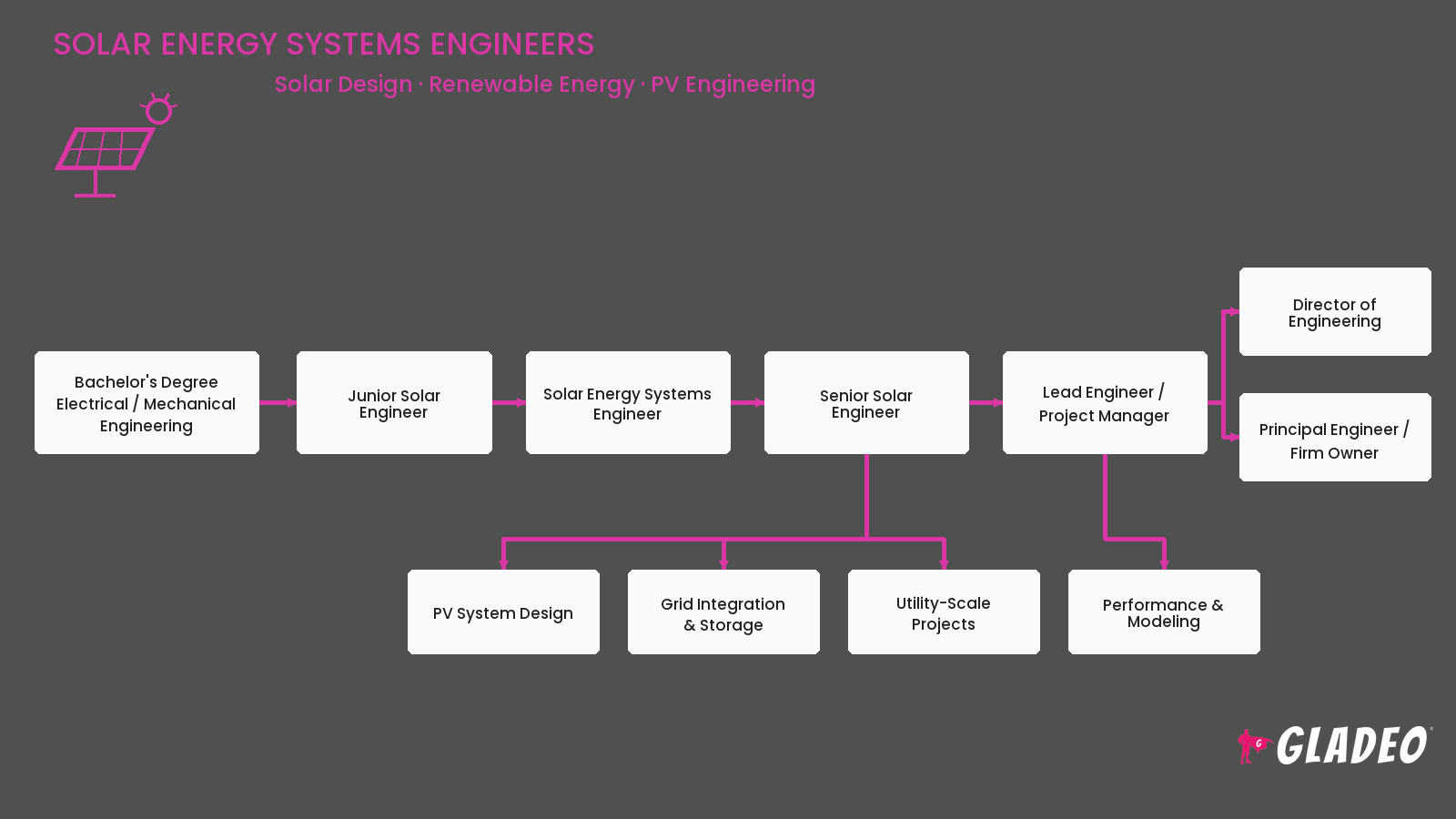
Becoming a Solar Energy Systems Engineer usually involves earning a bachelor’s degree in engineering fields such as electrical, mechanical, or renewable energy engineering. Specialized training in solar technologies and sustainable design can be gained through certifications and internships.
Students can take courses in relevant subjects such as:
- Physics and Chemistry
- Mathematics (Calculus, Algebra)
- Electrical Circuits and Systems
- Thermodynamics
- Renewable Energy Technologies
- Computer-Aided Design (CAD)
- Environmental Science
- Project Management
- Sustainability and Energy Policy
- Data Analysis and Statistics
Hands-on experience through internships, cooperative education, or research projects is crucial for building practical skills. Developing a strong portfolio of solar design projects and staying current with industry certifications can open doors to advanced positions and specialized roles.
- Take advanced math and science classes (physics, chemistry, calculus).
- Join engineering or environmental science clubs.
- Participate in STEM competitions and fairs.
- Complete internships or volunteer with renewable energy organizations.
- Learn computer skills, especially CAD and simulation software.
- Attend workshops or summer programs focused on solar energy.
- Explore online courses about renewable energy technologies.
- Develop teamwork and communication skills through group projects.
- Stay informed about energy issues and sustainability.
- Seek mentorship from professionals in the energy sector.
- Engage in community clean energy initiatives.
- Practice problem-solving through hands-on projects.
- Choose accredited engineering programs with renewable energy focus.
- Look for schools offering solar energy labs or research opportunities.
- Prioritize programs with strong industry partnerships for internships.
- Check for availability of certification prep courses (e.g., NABCEP).
- Consider programs that include project management training.
- Seek programs with multidisciplinary coursework (engineering, environmental science, policy).
- Evaluate faculty expertise in solar and renewable energy.
- Ensure program offers modern CAD and simulation software access.
- Look for opportunities to participate in real-world solar projects.
- Assess support for career services and networking events.
- Consider location near solar industry hubs or companies.
- Verify availability of financial aid or scholarships for green energy studies.
- Apply for internships or entry-level engineering assistant roles at renewable energy firms.
- Build a portfolio showcasing solar design projects or coursework.
- Join professional organizations, such as the Solar Energy Industries Association, to network.
- Attend industry conferences and workshops to learn and connect.
- Develop proficiency in solar design software and CAD tools.
- Seek mentorship from experienced solar engineers.
- Volunteer for local solar installation or community energy projects.
- Prepare strong resumes and practice technical interview questions.
- Stay updated on solar technology trends and regulations.
- Obtain relevant certifications like NABCEP Entry Level.
- Demonstrate problem-solving skills through project examples.
- Be open to relocating to areas with strong solar industry presence.
- Gain experience managing larger and more complex solar projects.
- Develop expertise in emerging solar technologies and energy storage.
- Build leadership skills to supervise multidisciplinary teams.
- Pursue advanced degrees or certifications in renewable energy.
- Expand professional network through industry events and associations.
- Take on roles in project management or consultancy.
- Contribute to research and development initiatives.
- Aim for positions influencing solar policy or sustainability strategies.
Websites:
- Solar Energy Industries Association (SEIA)
- National Renewable Energy Laboratory (NREL)
- American Solar Energy Society (ASES)
- North American Board of Certified Energy Practitioners (NABCEP)
- Renewable Energy World
- Energy.gov Solar Energy Section
- Solar Power World
- Clean Technica
- IEEE Power & Energy Society
- International Renewable Energy Agency (IRENA)
- Green Technology Media
- Solar Energy Research Institute of Singapore (SERIS)
- Solar Reviews
- Solar Energy International (SEI)
Books:
- Solar Energy Engineering: Processes and Systems by Soteris A. Kalogirou
- Renewable Energy: Power for a Sustainable Future by Godfrey Boyle
- Photovoltaic Systems by James P. Dunlop
- Solar Electricity Handbook by Michael Boxwell
- Introduction to Renewable Energy by Vaughn C. Nelson
If a career as a Solar Energy Systems Engineer doesn’t work out, there are many related paths where your skills in engineering, sustainability, and technology can shine.
- Electrical Engineer
- Mechanical Engineer
- Energy Analyst
- Environmental Engineer
- Project Manager in Renewable Energy
- Building Systems Engineer
- Energy Auditor
- Sustainability Consultant
- Construction Manager
- Power Systems Engineer
Click here to download the infographic
Newsfeed

Featured Jobs
Online Courses and Tools