




Spotlights
Personal Trainer, Certified Personal Trainer, Fitness Trainer, Fitness Coach, Group Fitness Instructor, Group Exercise Instructor, Fitness Instructor, Online Fitness Coach, Small Group Trainer, Studio Instructor, Fitness Director, Wellness Coach
Think about the moment a client does their first real push-up, finishes a first 5K, climbs a flight of stairs without stopping, or realizes they can carry all the groceries in one trip. Moments like that are the whole point of a Trainer's work. Trainers help people feel stronger, move better, and believe in themselves, and they do it one rep, one class, and one conversation at a time. For anyone who loves fitness and loves people, few careers let you turn your passion into a daily difference in someone else's life.
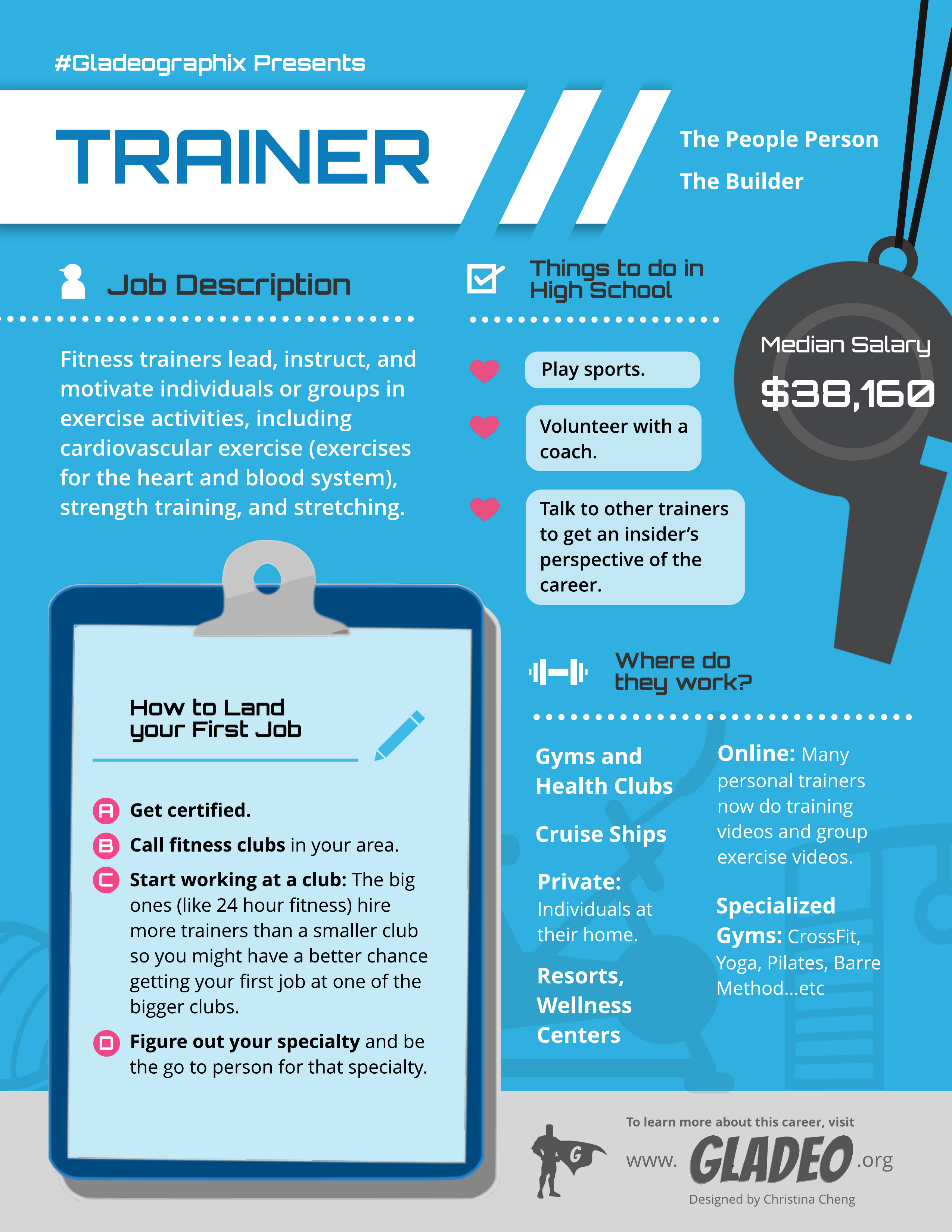
Trainers, which includes personal trainers who work one on one and group fitness instructors who lead classes, teach people how to exercise safely and effectively. A personal trainer might meet a new client, learn their goals and history, test their strength and movement, and then design and coach a program that fits their needs, whether that means building muscle, recovering from a setback, preparing for a sport, managing stress, or simply feeling better in everyday life. A group fitness instructor plans a class, chooses music, demonstrates the moves, offers easier and harder versions, and keeps a room full of people moving and motivated. Both work with clients of many ages, body types, and abilities, and both are experts at cheering people on without making anyone feel judged.
Trainers use weights, resistance bands, cardio machines, mats, stability tools, heart rate monitors, fitness apps, wearable devices, and a lot of coaching skill. They explain exercises clearly, adjust workouts in real time, track progress, and keep clients accountable. Their work matters because regular movement improves health, mood, energy, and independence, and a good Trainer helps people build lasting habits instead of quick fixes. Trainers are not doctors, physical therapists, or athletic trainers, who are separate health care professionals, but they play a powerful role in helping everyday people stay active for life.
- Watching clients get stronger, healthier, and more confident, and knowing you helped them get there
- Building real relationships with people who trust you with their goals, setbacks, and wins
- Working in an active, energetic environment instead of behind a desk
- Having creative freedom to design workouts, classes, and a coaching style that is your own
- Gaining independence, since many Trainers shape their own schedules, choose their clients, and build their own brand or business
Working Schedule
Trainers work when their clients are free, which usually means early mornings before the workday, evenings after work, and weekends, with a quiet stretch in the middle of the day. Many Trainers split their day into two shifts and use the break for programming, marketing, studying, or their own workouts. Plenty of Trainers start part-time while holding another job or attending school, and others build a full-time practice over several years. Group fitness instructors may teach a few classes each week at several locations. Gyms and studios are open long hours, but income depends on how many sessions you book, so busy seasons like the start of the year and spring can be packed, while holidays and summer can be slow. Trainers might work for a gym, rent space as independent professionals, train clients at homes or parks, or coach online from anywhere.
Typical Duties
- Meeting with new clients to learn their goals, health history, schedule, and preferences
- Screening clients for health concerns and referring them to a doctor or other professional when needed
- Assessing posture, movement, strength, flexibility, and endurance
- Designing safe, effective workout programs and adjusting them as clients progress
- Demonstrating exercises, coaching technique, and spotting clients to keep them safe
- Motivating and encouraging clients, and holding them accountable between sessions
- Leading group classes with planned routines, clear cues, and options for different fitness levels
- Tracking progress with notes, measurements, and apps, and celebrating milestones
- Teaching clients about warming up, cooling down, rest, recovery, and healthy habits
- Sharing general nutrition and lifestyle tips within the limits of a Trainer's training
- Keeping equipment clean, safe, and organized
- Responding to emergencies with first aid, CPR, and an AED if needed
Additional Responsibilities
- Selling memberships, training packages, and classes, and giving facility tours
- Marketing yourself through social media, a website, email newsletters, and community events
- Handling scheduling, payments, contracts, and liability insurance
- Staying current through continuing education, workshops, and new certifications
- Checking in with clients by text or app between sessions
- Building referral relationships with physical therapists, doctors, dietitians, and coaches
- Hosting challenges, workshops, and special events that bring clients together
- Overseeing equipment, schedules, and staff, if you become a fitness director or manager
A Trainer's day often starts before the sun comes up. They arrive early to wipe down equipment, set up the space, and review the plan for the first client. The first session might be a busy parent who comes in before work to build strength for a half marathon, and the Trainer greets them, asks how they slept and how their body feels, and adjusts the warm-up accordingly. During the workout, the Trainer watches every rep, makes small corrections, swaps in new options when something hurts, and finishes with stretching and a quick plan for the week. Back-to-back clients keep the morning moving, and a good Trainer gives each one full attention.
Midday is for everything else that makes the business run. A Trainer might eat, answer client messages, update workout plans, film a short exercise video for social media, plan next week's class playlist, study for a continuing education course, or complete their own training session. Some Trainers meet with a physical therapist to coordinate care for a shared client, or stop by a community center to teach a free class. Many use this time to take care of the business side, such as scheduling and billing, because no one else will do it for them.
Late afternoon and evening bring the second rush. After-work clients arrive, classes fill up, and the energy rises. A group instructor leads a 45-minute class with a mix of beginners and regulars, watching the whole room and calling out options so everyone has a good experience. The day ends with cleanup, notes on each client's progress, and a few messages to check in on people who missed a session. Trainers often finish tired, and they know that taking care of their own sleep, nutrition, and workouts is part of the job.
Soft Skills
- Motivating others in a way that feels encouraging, not pushy
- Empathy, patience, and the ability to meet clients where they are
- Active listening to understand goals, fears, and obstacles
- Clear, friendly communication and simple instructions
- Positivity and the ability to make fitness feel welcoming for every body
- Professionalism and respect for boundaries
- Reliability, since clients depend on you to show up on time and prepared
- Adaptability when a client is tired, injured, or off their routine
- Relationship-building and a natural comfort with talking to new people
- Self-discipline and the ability to model the healthy habits you teach
- An entrepreneurial mindset and willingness to promote yourself
- Resilience when clients cancel, quit, or do not get results as fast as they hoped
Technical Skills
- Knowledge of anatomy, physiology, and how the body responds to exercise
- Understanding of biomechanics and proper technique for common exercises
- Program design, including progression, rest, and recovery
- Fitness assessment and movement screening
- Safe spotting, equipment setup, and coaching a wide range of exercises
- CPR, AED, and first aid
- Basic nutrition knowledge and understanding of where a Trainer's scope of practice ends
- Experience adapting workouts for beginners, older adults, youth, pregnancy, and common health conditions
- Use of fitness technology, such as heart rate monitors, wearable devices, workout apps, and video tools
- Business basics, including scheduling, billing, contracts, marketing, and liability insurance
- Personal Trainer: Works one on one with clients to build programs for goals like strength, weight management, mobility, and general health
- Small Group Trainer: Coaches groups of a few clients at once, mixing personal attention with group energy
- Group Fitness Instructor: Leads classes such as cycling, dance fitness, step, circuit training, high-intensity interval training, and boot camp
- Mind-Body Instructor: Teaches yoga, Pilates, barre, or tai chi, often with a separate specialty certification
- Strength and Conditioning Trainer: Helps athletes and active people improve speed, power, and sport performance
- Online Fitness Coach: Delivers programs, classes, and check-ins by app, video, and messaging
- Specialty Trainer: Focuses on a population such as older adults, youth, pre- and postnatal clients, or people returning to exercise after an injury
- Fitness Director or Manager: Oversees trainers, programs, schedules, equipment, and member experience for a gym or club
- Commercial gyms and health clubs
- Boutique fitness studios for cycling, yoga, Pilates, barre, boxing, or CrossFit-style training
- YMCAs, community recreation centers, and parks departments
- Corporate wellness programs and employer fitness centers
- Hospitals, medical fitness centers, and wellness clinics
- Colleges, universities, and high schools
- Resorts, hotels, and cruise ships
- Senior living communities and active adult centers
- Sports performance centers and athletic organizations
- Independent training studios and rented space
- Online fitness platforms and apps
- Client homes, apartment complexes, and outdoor spaces
Being a Trainer is rewarding, and it is also a business. At most gyms, you are expected to find your own clients, which means marketing, networking, and selling your services as hard as you coach. Early on, income can be uneven because clients cancel, move, or take breaks, and new Trainers often work part-time or hold a second job while they build a book of clients. The people who succeed treat their work like a small company, with a brand, a plan, clear policies, and a habit of following up. Trainers also need to carry liability insurance and keep records.
The hours and the physical demands add up. Early mornings, evenings, and weekends are when your clients want you, so social plans and sleep can suffer. You are on your feet, demonstrating moves, spotting weights, moving equipment, and projecting energy for hours at a time, whether or not you feel at your best. Trainers must stay positive and focused even on a hard day, and many find the emotional side of coaching surprising, since clients may share struggles with body image, injuries, grief, or life changes.
Responsibility is part of the job, too. Most states do not license personal trainers, so anyone can use the title, which makes your training, certification, and professionalism what set you apart. You must know your scope of practice: Trainers help healthy people exercise safely, but they do not diagnose injuries, treat medical conditions, or prescribe diets. A good Trainer knows when to refer a client to a doctor, physical therapist, or registered dietitian, and keeps learning so advice stays accurate.
- Hybrid coaching that combines in-person sessions with online programs, video check-ins, and messaging
- Wearable technology and fitness apps that track heart rate, sleep, steps, and workouts, giving Trainers more data to work with
- Small group training and boutique studios that blend personalized coaching with a social atmosphere
- Growing interest in strength training for all ages, including older adults and women, and for protecting muscle during weight changes
- Greater attention to mobility, recovery, sleep, stress, and mental health as part of fitness
- Social media as a major tool for building a brand, attracting clients, and sharing free content
- Specialization in niches such as pre- and postnatal fitness, older adult fitness, youth athletic development, and injury prevention
- Inclusive, welcoming fitness that focuses on health and ability instead of appearance
- Corporate and community wellness programs that bring Trainers into workplaces, schools, and senior centers
- New business tools, including client management apps, online scheduling, automated billing, and AI-supported planning tools that still need a skilled human coach
Many Trainers were active kids who loved sports, dance, running, climbing, swimming, or any chance to move. They played on teams, joined PE and health classes, and often spent free time at the gym, the park, or the backyard with friends. Some found fitness after struggling with their own health, confidence, or an injury, and discovered how much exercise changed their life. Others grew up in families where movement was part of everyday life.
They also tended to be the encouraging friend, the team captain, or the person who showed others how to do something without making them feel silly. Many were curious about how bodies work, enjoyed anatomy, biology, and health class, and liked experimenting with new workouts or teaching a friend a move. They were comfortable talking with people of different ages and backgrounds, and they liked seeing someone improve.
There is no single required path to becoming a Trainer, and most states do not issue a license. Most employers expect at least a high school diploma or GED, current CPR and AED certification, and a personal trainer or group fitness certification from a reputable organization. The most widely recognized certifications include the National Academy of Sports Medicine (NASM), the American Council on Exercise (ACE), the American College of Sports Medicine (ACSM), the National Strength and Conditioning Association (NSCA), the National Council on Strength and Fitness (NCSF), and the International Sports Sciences Association (ISSA). Candidates usually must be at least 18, study on their own or with a course for weeks or months, and pass an exam.
Students can take courses in relevant subjects such as:
- Anatomy and Physiology
- Exercise Science
- Kinesiology and Biomechanics
- Nutrition and Wellness
- Exercise Program Design
- Fitness Assessment and Testing
- Health Coaching and Behavior Change
- Psychology of Exercise and Motivation
- First Aid, CPR, and AED
- Business, Marketing, and Entrepreneurship
When you compare certifications, look for exams that are accredited by the National Commission for Certifying Agencies (NCCA), because many employers prefer or require them. Some well-known organizations offer both accredited and non-accredited options, so check the exact credential before you pay. Certifications must be renewed every two to three years with continuing education, which keeps your knowledge current. Group fitness and specialty areas have their own credentials, such as the ACE Group Fitness Instructor certification, Yoga Alliance registered teacher training, Pilates certification programs, licensed class formats, and specialty courses in older adult fitness, youth fitness, pre- and postnatal exercise, and corrective exercise.
Many Trainers also earn an associate's or bachelor's degree in exercise science, kinesiology, physical education, recreation, or a related field, which can lead to higher-level roles and open doors in wellness, coaching, and health care. A degree is not required, but it can build a stronger science foundation and help you stand out. Remember that athletic trainers and physical therapists are different professions: athletic trainers need a master's degree from an accredited program and national certification, and physical therapists complete a doctoral program and state licensure. If you are drawn to rehabilitation and treating injuries, those paths may be a better fit. Most new Trainers learn the most by shadowing experienced coaches, assisting in classes, and working with real clients under supervision.
- Take PE, health, biology, anatomy, and nutrition classes
- Play a sport, join a team, or start your own consistent workout routine so you learn what training feels like
- Earn CPR, AED, and first aid certifications early, since they are required for most credentials
- Shadow a personal trainer or group fitness instructor and ask how they got started
- Volunteer to help coach youth sports, lead a warm-up, or assist at a community fitness event
- Get a job at a gym, recreation center, YMCA, camp, or school to learn the environment
- Practice explaining exercises clearly to friends and family and notice what makes instructions work
- Learn about different training styles such as strength, mobility, cycling, yoga, Pilates, and dance fitness, and try classes
- Study the basics of nutrition and sleep, and be careful to learn what is and is not within a Trainer's role
- Follow credible fitness and exercise science sources, and learn to tell evidence-based advice from trends
- Build your people skills with customer service, public speaking, and teamwork experiences
- Take a business, marketing, or entrepreneurship class and start a simple social account or portfolio of your coaching
- Certification exams accredited by the NCCA, or degree programs accredited by a recognized body
- Content that covers anatomy, program design, assessment, coaching, and professional responsibility
- Hands-on practice, internships, or mentored coaching opportunities
- Instructors with real coaching experience and current credentials
- Study materials, practice exams, and support that fit your learning style and schedule
- Clear costs for materials, exam fees, and renewals, plus what continuing education will cost later
- Recertification requirements that are reasonable and flexible
- Specialty options in areas that interest you, such as older adults, youth, or group fitness
- Recognition by employers in your area, which you can check by asking local gyms what they accept
- Business training or marketing resources for people who plan to work independently
- A strong community of trainers for networking and mentorship
- For college programs, strong internship placement and graduates working in fitness and wellness

- Earn a respected certification, along with CPR and AED, before you apply
- Apply to large gyms and health clubs, which often hire many new Trainers and offer training and client leads
- Contact boutique studios, community centers, YMCAs, and local gyms, and ask about openings, auditions, and apprenticeships
- Search job boards such as Indeed and the careers pages of fitness brands and facilities
- Offer to shadow, assist, or intern with an experienced Trainer to build experience and contacts
- Create a simple website or social media profile that shows who you are, how you coach, and what you offer
- Record a sample class or a short coaching video that shows your style and communication
- Be ready for a demonstration interview, where you may teach a short class or session
- Learn about the facility's culture and clients, because employers want Trainers who fit their brand and personality
- Pick a specialty or niche, such as beginners, older adults, strength training for women, or runners, and become known for it
- Ask early clients for reviews and referrals, and give each one your best
- Keep a backup income source while you build your client base
- Deliver real results and a great experience, since referrals are the best marketing
- Keep learning through continuing education, advanced certifications, and conferences
- Build a niche or signature program that sets you apart
- Develop strong business skills, including pricing, sales, marketing, and client retention
- Build a brand through consistent content, community presence, and word of mouth
- Grow your income by adding online coaching, small group sessions, workshops, or classes
- Move into leadership roles such as head trainer, fitness director, studio manager, or education lead
- Consider opening your own studio, building an online business, or coaching other Trainers
Websites:
- National Academy of Sports Medicine (NASM) - nasm.org
- American Council on Exercise (ACE) - acefitness.org
- American College of Sports Medicine (ACSM) - acsm.org
- National Strength and Conditioning Association (NSCA) - nsca.com
- International Sports Sciences Association (ISSA) - issaonline.com
- National Council on Strength and Fitness (NCSF) - ncsf.org
- Institute for Credentialing Excellence (home of the NCCA) - credentialingexcellence.org
- IDEA Health & Fitness Association - ideafit.com
- Yoga Alliance - yogaalliance.org
- Pilates Method Alliance - pilatesmethodalliance.org
- United States Registry of Exercise Professionals - usreps.org
- American Red Cross - redcross.org
- Physical Activity Guidelines for Americans - health.gov
Books:
- Essentials of Strength Training and Conditioning by the National Strength and Conditioning Association, edited by G. Gregory Haff and N. Travis Triplett
- Ignite the Fire: The Secrets to Building a Successful Personal Training Career by Jonathan Goodman
- Secrets of Successful Program Design: A How-To Guide for Busy Fitness Professionals by Alwyn Cosgrove and Craig Rasmussen
- Anatomy of Exercise: A Trainer's Inside Guide to Your Workout by Pat Manocchia
- Atomic Habits by James Clear
If you find that being a Trainer isn't the right fit, your skills in coaching, motivation, health, and communication can open many doors in wellness, sports, and health care.
- Athletic Trainer
- Physical Therapist Assistant
- Physical Therapist
- Exercise Physiologist
- Registered Dietitian or Nutritionist
- Strength and Conditioning Coach
- Recreation Therapist or Recreation Worker
- Health Educator or Wellness Coordinator
- Fitness Center Manager
- Sports Coach or Physical Education Teacher
“Don't do this job for the money. Do it because you're doing something that you love and the money will come over time.”
Newsfeed

Featured Jobs
Online Courses and Tools
Annual Salary Expectations
New workers start around $0K. Median pay is $61K per year. Highly experienced workers can earn around $0K.