


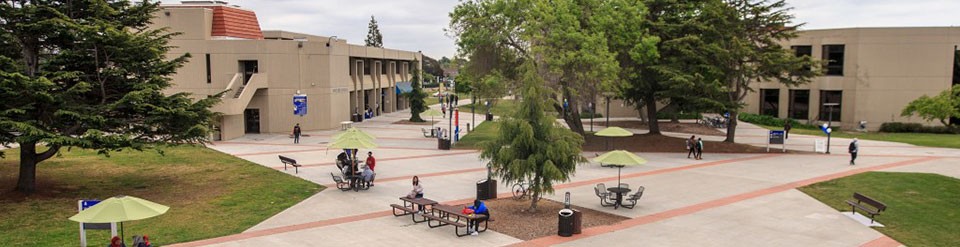

Associate in Arts for Transfer Degree in Sociology
College of Alameda
Alameda, CA
Sociology is the critical and applied investigation of everyday life. This approach to academic studies provides students with an analysis of social life, social change, and the social factors and consequences of human behavior using the methods of social science research. Sociologists examine the structure of groups, sub-cultures, organizations, and societies, and how people interact within these contexts. The subject ranges from the families of origin, families of choice, to organized crime, state crime and white collar crime, to religious cults; from the divisions of race, sexuality, gender and social class to the shared beliefs of a common culture; and from the sociology of work to the sociology of the environment.
In order to earn the AA-T in Sociology, students are required to:
- Complete 60 semester CSU- transferable units, including the major requirements for this subject.
• Complete the California State University-General Education-Breadth pattern (CSU GE-Breadth); or the Intersegmental General Education Transfer Curriculum (IGETC) pattern.
- Complete a minimum of 18-semester units in the major
- Obtain a minimum grade point average (GPA) of 2.0.
- Earn a grade of C or higher in all courses required for the major. A “P” (Pass) grade is also an acceptable grade for courses in major if the course is taken on a Pass/ No Pass basis.
Career Opportunities
The skills you gain with an Associate Arts Degree in Sociology for Transfer are applicable across fields of study and are useful for careers in education, community organizing, labor research, violence prevention advocates, activists, human service, community service, research and data science, marketing, social work, business, criminology, government, and with various non-profit organizations that help address systemic social problems.
Program Learning Outcomes
Upon successful completion of this program, students will be able to:
- Define the core concepts of sociology (sociological theories, social structures, culture, social inequality and stratification, race, ethnicity, gender, and globalization). {Foundational Knowledge in Sociology}
- Apply a working sociological imagination to everyday life with a commitment to social justice and equality in our diverse world. {Critical Sociological Thinking}
- Successfully transfer to a four-year college/university with robust sociological training. {Personal Enrichment & Lifelong Learning – Sociological Efficacy}